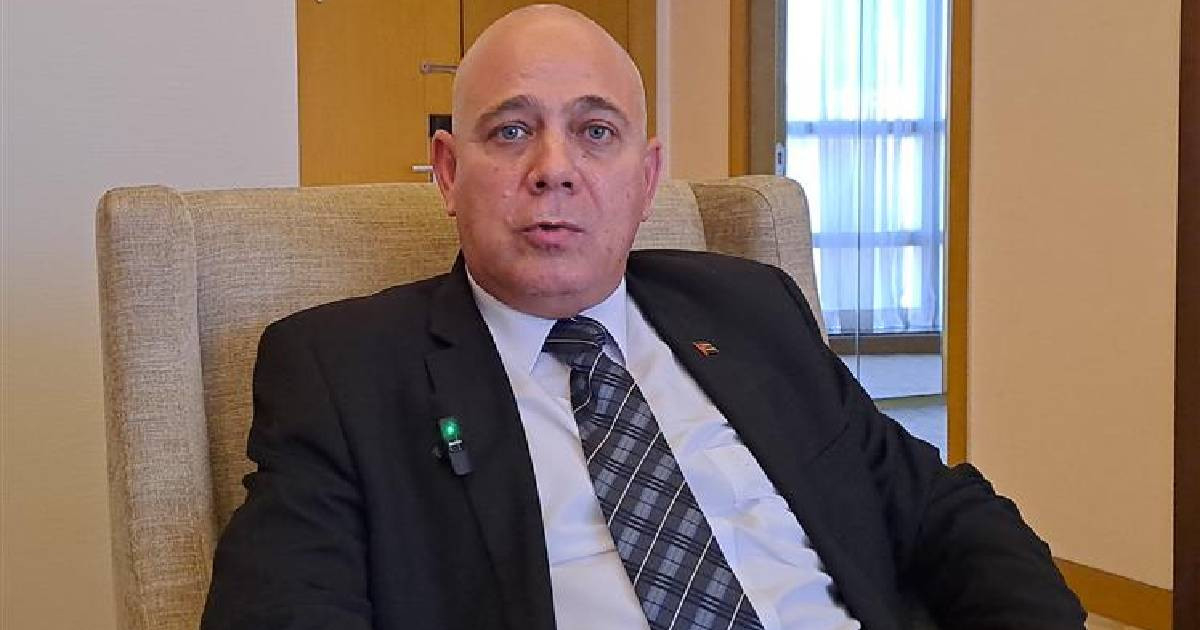
Roberto Morales Ojeda, Secretary of Organization of the Central Committee of the Communist Party of Cuba (PCC), stated this Saturday that "no policy towards Cuba should be based on electoral pressures, blackmail, and short-term opportunistic calculations," in a message posted on X amid the deteriorating relations between Havana and Washington.
The member of the Political Bureau accompanied his post with an image of the José Martí Memorial in the Plaza de la Revolución in Havana, stating that "history shows us that understanding is always possible above confrontation."
The statement comes a day after, during a Republican rally in Fort Myers, Florida, U.S. President Donald Trump threatened to stop a U.S. warship "about 50 yards" off the coast of Cuba when it returned from operations in Iran. In the same event, he announced that he would send Secretary of State Marco Rubio to "seal the deal."
On Friday, Rubio publicly called on Cuban citizens to discreetly collaborate with the Central Intelligence Agency (CIA) in pursuit of political change on the island.
The agency posted a guide in Spanish on Instagram with seven steps to establish contact safely and anonymously, which includes instructions on using virtual private networks (VPNs), incognito mode, disposable emails, and clearing browsing history.
Other high-ranking officials of the Cuban government also responded to the U.S. statements. The Foreign Minister Bruno Rodríguez Parrilla warned that the shores of Cuba have "dog teeth, inhospitable to those who arrive with hostile intentions," while the president Miguel Díaz-Canel affirmed January 1, 1959 as the date of the true independence of the country.
For his part, the Deputy Minister of Foreign Relations Carlos Fernández de Cossío labeled the government of the United States as a "terrorist and criminal state". He also sarcastically commented on the CIA initiative, stating that "there must be a lot of desperation or poverty within the agency's ranks if they have to market their offerings as toothpaste."
The use of the term "blackmail" by Morales Ojeda aligns with the language typically employed by Cuban authorities to denounce Washington's pressures on third countries regarding the annual vote in the United Nations General Assembly on the embargo, scheduled for October 28.
The Cuban chancellor accused Rubio of blackmailing foreign leaders to diminish support for the resolution against the embargo. According to the allegations, the pressures include threats of tariffs, sanctions, and visa denials to officials from countries that vote in favor of the text.
International support for the resolution dropped from 187 votes in 2024 to 165 in 2025. Cuban authorities anticipate a further reduction this year, amidst growing diplomatic pressure on Havana.
Related videos:
Filed under: