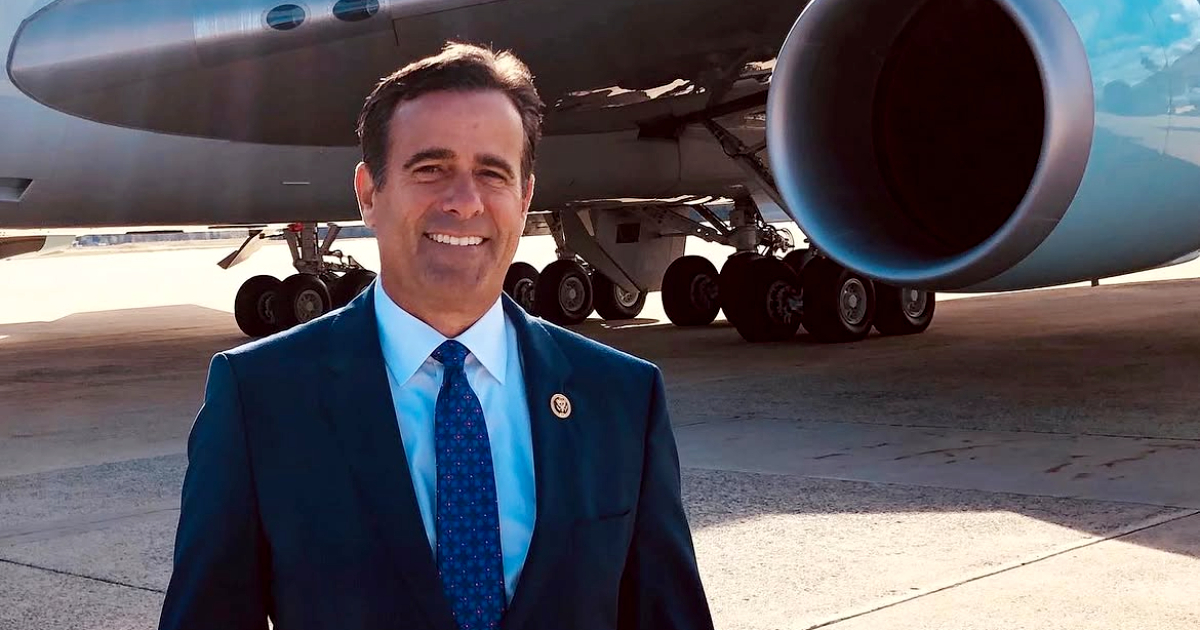
The CIA director, John Ratcliffe, brought to Havana a paramilitary operative who had participated in the capture of Nicolás Maduro, according to an investigation published in May by CBS News.
The issue takes on renewed relevance after the U.S. campaign to recruit collaborators within Cuba, willing to provide information to the Central Intelligence Agency (CIA), led by Ratcliffe.
This is joined by a report published by The Atlantic this Friday, October 23, which highlighted the growing prominence of Ratcliffe in U.S. covert operations.
The article recalls that the director stated in June that, “thanks to the CIA,” U.S. special forces managed to locate and capture Maduro within four minutes after landing at Venezuela's largest military complex.
The episode reported by CBS News occurred during Ratcliffe's visit to the Cuban capital in the week of May 14, just four months after the U.S. military operation that concluded with the capture of Maduro and the death of 32 members of the Cuban military and security forces tasked with protecting the Venezuelan leader.
According to this media outlet, citing various sources familiar with the meeting, Ratcliffe personally ensured that the operator was introduced to his interlocutors —high-ranking officials of the Cuban regime— as “the one who killed their people” in Venezuela, in a gesture interpreted as a deliberate warning.
The network did not identify the military officer nor specified his individual responsibility in the deaths. What it confirmed, based on its sources, was his involvement in the operation against Maduro and the way Ratcliffe chose to present him.
Among the Cuban officials present were the Minister of the Interior, Lázaro Alberto Álvarez Casas, and Raúl Guillermo Rodríguez Castro, "El Cangrejo," the grandson of Raúl Castro and a figure linked to secret contacts between Washington and Havana.
The presence of the operator introduced a particularly explicit element of pressure in a meeting aimed at discussing potential agreements between the two governments.
A warning with Maduro's precedent on the table
The U.S. operation on January 3 had demonstrated that U.S. special forces, backed by information from the CIA, were able to breach Maduro's security details and capture him despite the presence of Cuban agents responsible for his protection.
The 32 deceased were officially recognized by Havana, which transformed them into symbols of resistance and honored their actions during the American raid.
For the Cuban leaders, the man accompanying Ratcliffe represented, therefore, something more than just a member of the United States special services: he had participated in the operation that led to the downfall of their main regional ally and caused dozens of casualties among their own agents.
According to a CIA official at the time, Ratcliffe communicated to the Cuban authorities that Washington was willing to seriously negotiate economic and security issues, but only if the regime accepted fundamental changes.
He also recommended learning from what happened with Maduro and warned that the opportunity to reach an agreement would not remain open indefinitely.
The message matched the statements made by Marco Rubio just hours after the capture of the Venezuelan leader. The Secretary of State recalled the Cuban presence in Chávez's intelligence services and stated that if he lived in Havana and were part of the government, he would be “at least a little concerned”.
From showcasing its military capability to seeking collaborators within Cuba
Five months after that meeting, the CIA has taken a new step in its strategy towards Havana.
Since Friday, October 23, Rubio and the U.S. agency have disseminated messages specifically aimed at Cubans encouraging them to discreetly collaborate with American intelligence services.
The CIA published a video and a guide in Spanish for establishing confidential contacts, asking for information from individuals who are familiar with the workings of Cuban institutions and can provide relevant data.
The campaign later received support from the commander of the U.S. Southern Command, General Francis L. Donovan, who urged Cubans to seize the moment to drive change on the island.
The sequence highlights two dimensions of U.S. pressure on the regime: in May, Ratcliffe presented to his leaders the precedent of a successful military operation; in October, the agency he leads publicly seeks information and potential collaborators within the Cuban system itself.
The new call comes after months of discussions in which Havana has refused to negotiate changes to the political system, the leading role of the Communist Party, and the holding of multiparty elections.
Although there is no public confirmation of a U.S. decision to carry out an operation similar to the one in Venezuela, President Donald Trump has not explicitly ruled out that possibility.
The identity of the paramilitary who accompanied Ratcliffe remains publicly unknown. Furthermore, it has not been revealed what response the Cuban officials gave to his presentation.
What CBS News did document is that the CIA director decided to present one of the participants in the operation that ended with Maduro out of power to the Cuban security leadership, while negotiating with a regime that Washington demands fundamental changes from.
Related videos:
Filed under: