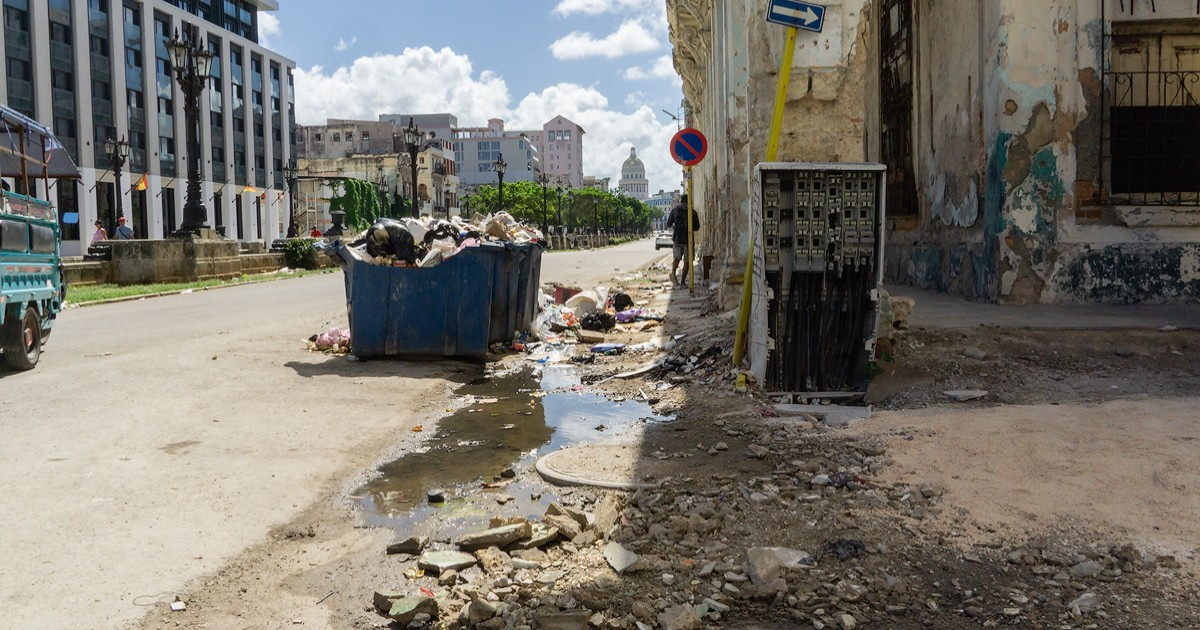
While Cuba endures blackouts lasting over 24 hours, hospitals are lacking medications, and streets are filled with garbage, the Ministry of Tourism (MINTUR) published a series of idyllic images of Varadero, Havana, Viñales, and Santiago de Cuba on its official X account this week, accompanied by the slogan “Cuba is not told: it is lived”, as if the country it promotes were a different one.
The messages, posted between Wednesday and this Friday, feature tourists lounging on turquoise waters, playing golf by the sea at the Xanadú Mansion in Varadero, and stilt walkers performing in colonial squares of Havana. The hashtags #CubaUnica, #CubaTravel, and #ViajaACuba complement a campaign that seems designed in a parallel universe to the one in which millions of Cubans live.
The reality that the MINTUR overlooks is devastating. According to data from the government itself, Cuba lost 65% of its international visitors between January and September 2026 compared to the same period the previous year, with just 477,707 arrivals. September was the worst month of the year: only 27,354 tourists set foot on the island.
The Prime Minister Manuel Marrero Cruz himself acknowledged in July that 73% of hotel facilities were closed and that around 25,000 workers in the sector remained inactive. Seven international chains left the island that year, including Blue Diamond Resorts, Iberostar, and Meliá. Hotel occupancy plummeted to 12.9% in the first quarter, according to sector data collected in the crisis that brought Cuban tourism to a near total standstill.
Airlines also couldn't hold out: Air Canada, Iberia, Turkish Airlines, and Sunwing, among others, canceled or reduced their routes due to a shortage of aviation fuel. By April, more than 1,700 flights had been suspended.
The MINTUR promotes Viñales as a dream valley, but in October, the destination was described as a place desert-like, with closed businesses and over six months without regular drinking water, experiencing power outages of up to 30 hours. The Soroa complex had been closed to the public for more than four months. Rental cars have fuel rationed: up to ten liters daily in some destinations, with travelers receiving vehicles nearly empty after waits of up to 12 hours.
The IX Report from the Cuban Observatory of Human Rights, published in August, documents that 94% of Cubans live in extreme poverty and that eight out of ten have skipped breakfast, lunch, or dinner at least once in the past six months due to lack of money or food. 87% view garbage collection negatively, 82% assess the condition of hospitals poorly, and 95% criticize the electrical grid.
The healthcare system is operating, in the words of Health Minister José Ángel Portal Miranda, "on the brink of collapse": only 30% of the essential medication was available, and nearly 98,500 patients—including about 12,000 children—were awaiting surgical intervention.
This behavior from MINTUR is not new. In March 2020, during the height of the COVID-19 pandemic, the marketing director of the ministry, Bárbara Cruz, publicly invited tourists to travel to Cuba, arguing that the healthcare system was "strong," even though there were already five confirmed cases of coronavirus on the island.
Related videos:
Filed under: