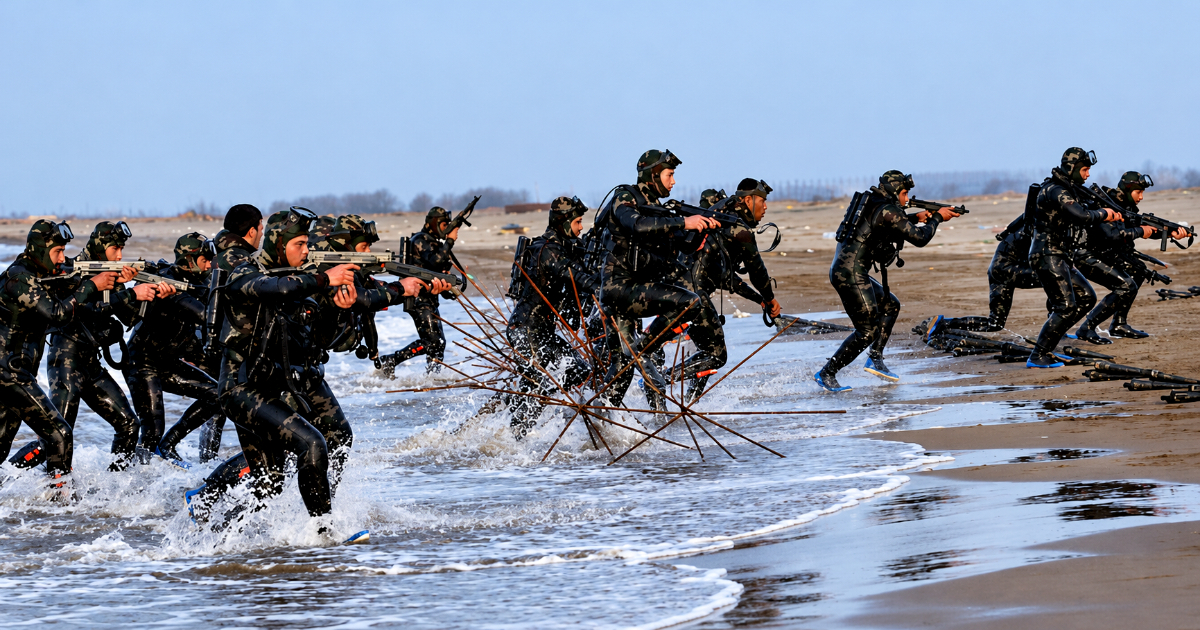
The Supreme Leader of Iran, Mojtaba Jameneí, ordered the country's Armed Forces this Saturday to provide a response that is «immediate, effective, and without geographical limits» to any possible threat coming from the United States or Israel, in a statement that raises the tension in a conflict that has already lasted nearly eight months.
According to the agency EFE from Tehran, the order was issued during a meeting with the highest military leaders of the country: the Chief of Staff, Major General Alí Abdolahi; the Commander-in-Chief of the Revolutionary Guard, Ahmad Vahidi; and the Commander-in-Chief of the Army, Major General Amir Hatami.
“Any threat, regardless of its level or nature, must receive an immediate, effective response without geographical limits”, stated Jameneí according to the official portal of the Supreme Leader.
The ayatollah went further and warned that “if the enemies launch military or terrorist attacks again, it will be the Armed Forces of the Islamic Republic and the Iranian nation who determine the time and conditions to end” the conflict.
In addition to the verbal warning, Jamenei ordered the update of the list of military targets so that all types of assets—both material and immaterial—of the U.S. and Israel are within reach of their forces.
In the same meeting, General Abdolahi presented reports on the preparedness of the troops deployed in the Persian Gulf, the Strait of Hormuz, the Sea of Oman, and the northwestern and southeastern borders of the country, and noted that the Armed Forces have significantly increased the production of ammunition and weapons.
The statement comes at a time of heightened tension. The war between the U.S., Israel, and Iran erupted on February 28, 2026, with the "Epic Fury Operation" and the "Roaring Lion" operation, which targeted Iranian military, nuclear, and missile facilities.
On that same day, the then supreme leader Ali Khamenei passed away; his son Mojtaba was appointed successor by the Assembly of Experts on March 8, a succession criticized for its dynastic nature. Trump described that election as a "grave error" and "unacceptable." Since then, the 57-year-old cleric has not appeared in public nor released any audio messages.
The announcement coincides with two immediate triggers. On one hand, the U.S. Secret Service deployed an Avenger air defense system at Mar-a-Lago, the residence of President Donald Trump in Florida, in anticipation of the leader's return home.
A spokesperson for that agency stated to the Palm Beach Daily News that they "continue to operate in a high-threat environment" and are adapting their operations "to incorporate cutting-edge tools, technology, and methods."
On the other hand, there are speculations about a new offensive by the U.S. and Israel against Iran following the midterm elections scheduled for November 3; Trump had stated that he would not attack before that date, but he left the possibility of resuming operations afterward open.
In the past two weeks, Jameneí had intensified his meetings with political and military authorities.
Last Tuesday, during a meeting with the Secretary of the Supreme National Security Council, Mohsen Rezaei, he emphasized that peace requires adherence to the so-called "seven-day plan": a ceasefire across the Middle East, lifting of the naval blockade and sanctions, and the release of frozen assets, followed by the reopening of the Strait of Hormuz and negotiations regarding the nuclear program with Washington.
Trump rejected that proposal, arguing that the U.S. already controlled the strait.
According to estimates from the Congressional Budget Office, the conflict had cost approximately 38 billion dollars by August 2026, while an AP-NORC survey from October recorded public support for the war at 35% compared to 55% opposition.
Related videos:
Filed under: