The U.S. Naval Base at Guantanamo is acquiring new military capabilities amid increasing tensions between Washington and Havana.
The inspections by high-ranking officials from the Pentagon, the incorporation of autonomous warfare technologies, and the recent anti-drone exercises are part of a series of actions that reflect the strategic importance of this facility to the United States.
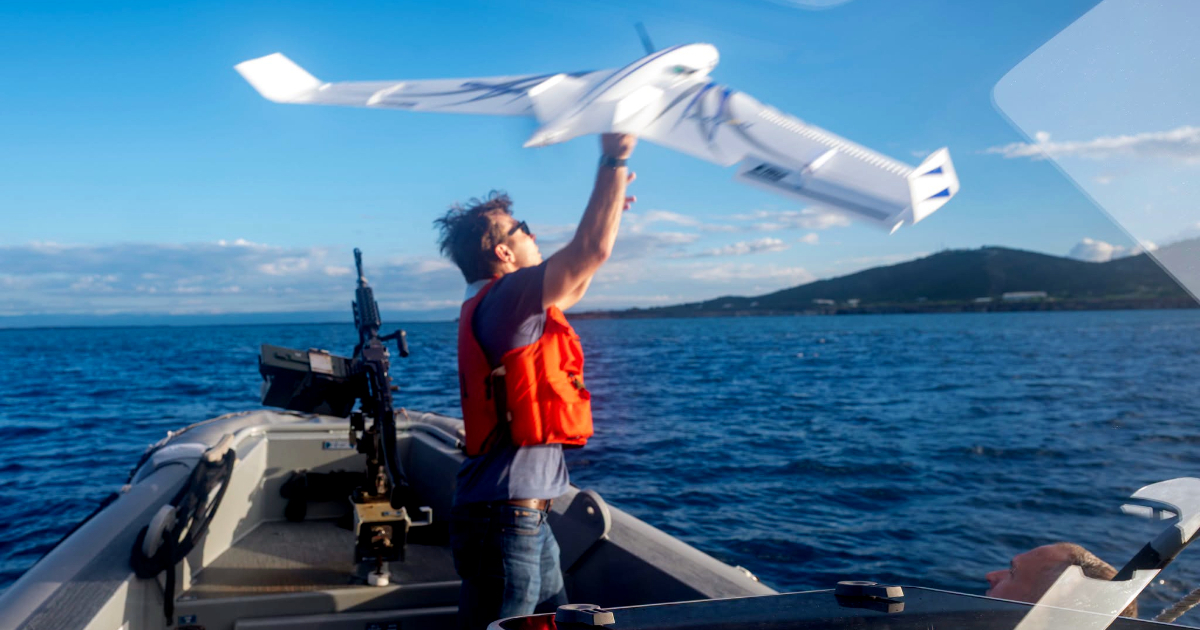
The latest was reported this Tuesday, November 3, when the Guantánamo Naval Station announced on Facebook that it had conducted maneuvers aimed at testing its ability to detect and counter small unmanned aerial systems.
Under the slogan No Fly Zone, U.S. forces practiced responses to drones simulating hostile operations, involving the Joint Interagency Task Force 401 (JIATF-401), the Naval Forces of Southern Command and the Fourth Fleet, the Army's Combat Capability Development Command, and Southern Command (SOUTHCOM).
The training comes after the Pentagon modified its guidelines to enhance the protection of military facilities against these threats and announced the introduction of new autonomous warfare capabilities in Guantánamo.
A new defense doctrine: beyond the perimeter of the bases
In January, the U.S. Department of Defense released a directive, signed by Secretary Pete Hegseth on December 8, 2025, which expanded the options available to military commanders in response to potential drone threats.
The instructions stated that the defense of the facilities should not be limited to their perimeter fences. The commanders would be able to identify and assess threats before the devices penetrated the bases and would have greater autonomy to implement protective measures.
The general Matt Ross, head of the JIATF-401, summarized the new direction with a significant phrase: “The fight against drones does not start or end at the perimeter fence.”
The directive was aimed at military installations on U.S. territory and does not automatically imply that the same legal powers apply to Guantánamo, whose territorial status is different.
Visits from the Pentagon and new military capabilities
US military activities in Guantanamo have been accompanied in 2026 by visits from key officials of the Department of Defense and Southern Command.
In May, General Francis L. Donovan, head of SOUTHCOM, personally inspected the security conditions and operational readiness of the facility.
During that visit, he had a remarkable meeting with Cuban General Roberto Legrá Sotolongo, head of the General Staff of the Revolutionary Armed Forces (FAR), at the boundary of the base.
Both parties presented the meeting as a contact related to operational security matters, despite the deterioration of political relations between the two governments.
On June 10, Pete Hegseth visited Guantánamo and warned that it would be reckless for the Cuban regime to attempt to acquire weaponry capable of reaching the facility or the continental United States.
The Secretary of Defense also insisted that U.S. forces must be prepared for any contingency related to Cuba.
Another significant move occurred at the beginning of October when Southern Command announced that Guantanamo would host a regional training and mission support center for its new Autonomous Warfare Command (SAWC).
The structure is designed to integrate drones, unmanned platforms, communications, and other advanced technologies to support military operations in Latin America and the Caribbean.
Its establishment expands Guantánamo's role as a center for training and supporting autonomous systems, in addition to its traditional missions in security, logistics, and naval operations.
Modernization is also extending to other regional scenarios. In April, the U.S. Navy conducted exercise FLEX2026 in Key West, Florida, involving drones, autonomous vessels, and artificial intelligence systems to enhance its maritime surveillance and interception capabilities.
Washington is also studying contingencies related to Cuba
The strengthening of U.S. military capabilities coincides with reports about the planning of possible operations in crisis scenarios related to the island.
On September 25, a report from CBS News revealed that the U.S. military was assessing the availability of logistical, medical, engineering, and military police units for potential missions under the responsibility of Southern Command.
Although the documentation reviewed by the network did not explicitly mention Cuba, several U.S. officials linked those efforts to contingency preparations concerning the island.
The information did not confirm that Washington had decided to carry out an intervention or that there were specific orders for deployment. Southern Command indicated that it continually assesses its operational needs in the geographic area under its responsibility.
Concerns about the security of Guantánamo also gained significance in May, when the American media outlet Axios published a report, based on intelligence sources, stating that Cuba has reportedly acquired over 300 military drones from Russia and Iran since 2023.
The report attributed to Cuban military officials conversations about possible scenarios for using those aircraft against the Guantanamo Naval Base, U.S. vessels, and even targets in Key West, Florida.
Cuban authorities rejected the allegations, and the Russian government denied the information, labeling it as disinformation. The existence of this alleged arsenal and the plans attributed to Havana have not been publicly confirmed through independent evidence.
The statement regarding this week's exercises also does not identify Cuba as the origin of a specific threat nor does it establish a direct connection between the maneuvers and the report from Axios.
However, security inspections, new autonomous warfare capabilities, and training for aerial threats demonstrate how Guantánamo is expanding its military functions at a time when Washington is considering various contingency scenarios in the Caribbean.
The facility, located in Cuban territory and under U.S. control for over a century, thus holds a prominent position in both protecting U.S. forces and developing new operational capabilities for the region.
Related videos:
Filed under: