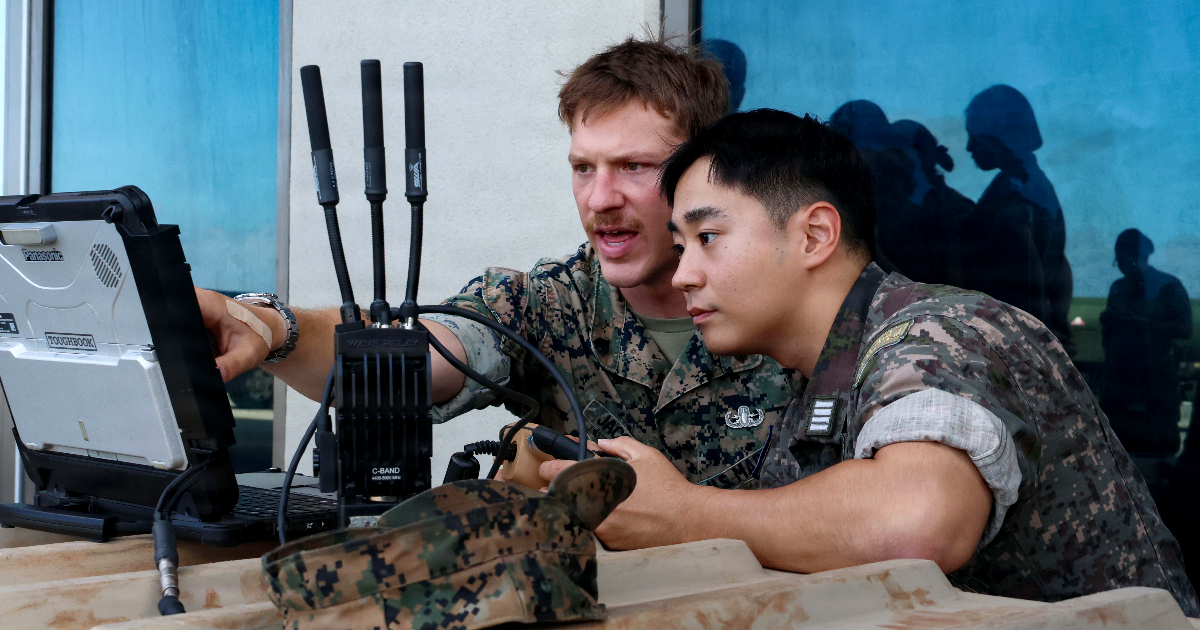
The United States Department of Defense issued a memorandum to accelerate the deployment of anti-drone systems at military bases, forces, and installations, a decision that becomes significant for Cuba due to the recent context of reports regarding drones allegedly acquired by the Havana regime.
The document, titled «Acceleration of Counter-Unmanned Aircraft Systems Employment to Protect the Sovereignty of U.S. Airspace», orders the removal of internal barriers that delay the employment of counter-unmanned aircraft systems, known as c-UAS, and establishes that delays in their approval must be treated as an operational risk.
The measure does not directly target Cuba nor does it alter the existing legal rules regarding the use of these systems. However, it arises at a time when Washington is accelerating both the so-called "drone dominance" and the capabilities to neutralize unmanned aircraft used by adversaries for surveillance, disruption, or attack.
Approvals from months to days or weeks
The memorandum orders the establishment of a uniform process across the Department to reduce the approval timelines for already tested and validated anti-drone systems from months to days or weeks.
It also requires that any refusal to employ a c-UAS capability be documented and sent to the Joint Interagency Task Force-401 (JIATF-401), which will act as the central coordination point to expedite these defenses, collect technical data, prevent duplicate reviews, and synchronize information on threats.
The document identifies four critical areas: authorizations to operate and connect systems, spectrum and frequency certification, weapon security reviews, and legal analyses. In the latter point, it stipulates that the legal evaluations required for weapons and anti-drone systems be expedited, generally within a period of 10 days after receiving the necessary information.
Another development is the support for the Project Spectrum Strike, an automated tool powered by artificial intelligence from the Defense Innovation Unit to coordinate, authorize, and prevent interference in the use of the radio frequency spectrum by these systems.
Lasers, perimeters, and base defense
The memorandum also reveals that the Pentagon had already been expanding the operational scope of its commanders to protect sensitive facilities. Pete Hegseth mentions a previous guideline from December 2025 that clarified that the perimeter line of a base should not necessarily be a limitation for anti-drone defense.
That point is particularly relevant for installations like the Guantanamo Naval Base, where an unmanned aerial threat could originate outside the physical perimeter of the base.
The text also refers to joint tests between the Federal Aviation Administration and the Department of Defense that validated the safe use of certain high-energy laser anti-drone systems in national airspace.
The logic of the memorandum is summarized in a central statement: a solution against drones that cannot be employed is not a capability. In other words, buying, testing, or delivering a system is not enough if bureaucracy prevents its use when the threat arises.
The Cuban context: Russian and Iranian drones 90 miles from Florida
The announcement comes after Axios reported in May, citing information based on classified U.S. intelligence, that the Cuban regime is believed to have acquired more than 300 military attack drones from Russia and Iran since 2023.
According to these reports, the drones would be stored in strategic locations within the island, and Cuban military officials would have discussed scenarios to employ them against the Guantanamo Naval Base, U.S. warships, and even Key West, Florida.
The information also indicated that Havana had requested more drones and military equipment from Russia, while Cuban intelligence was trying to learn from the way Iran has withstood pressure from Washington through asymmetric capabilities.
The Cuban regime rejected these accusations and portrayed them as part of a supposed dossier fabricated to justify an aggression. Nevertheless, the reports reignited concerns in Washington about the possibility that unmanned platforms could be used from Cuban territory against nearby U.S. interests.
Shahed, Geran, and asymmetric warfare
Concerns escalated due to the type of technology mentioned in the reports. In July, a replica of the Iranian drone Shahed-136 was displayed in Miami during an event by United Against a Nuclear Iran (UANI), precisely to warn about reports linking Cuba to drones of Russian and Iranian origin.
The Shahed-136, used by Russia in the war against Ukraine, has become a symbol of a low-cost, persistent, and hard-to-neutralize conflict. Its Russian version, known as Geran, has been employed in long-range attacks against infrastructure and military targets.
That debate also reached the Russian propaganda ecosystem. CiberCuba reported that the pro-Kremlin channel Rybar published a hypothetical scenario regarding drone attacks using Geran from Cuba against U.S. targets, including military installations, tech centers, refineries, and government sites.
There is no public evidence that Cuba possesses operational Shahed or Geran drones. However, the combination of intelligence reports, military cooperation with Russia and Iran, foreign advisory, and proximity to Florida has turned this issue into a growing concern for the United States.
Guantánamo comes into play
The anti-drone memorandum adds to another recent development: the decision to transform the Guantanamo Naval Base into the first site for training and support for missions of the SOUTHCOM Autonomous Warfare Command (SAWC), a regional structure of Southern Command dedicated to integrating drones, autonomous systems, data, and communications.
Guantánamo appears in two extremes of the new U.S. military doctrine: as a potential target mentioned in reports about Cuban drones and as a regional platform from which Washington will train and support autonomous warfare missions in the Caribbean.
The base, leased to Cuba since 1903 and condemned by the Havana regime as an illegal occupation, had already been defined by SOUTHCOM as a "vital operational and logistical center" for U.S. operations in the hemisphere. With the SAWC, it now gains an additional technological dimension.
This context includes other recent events: exercise FLEX2026 in Key West, which integrated artificial intelligence, long-range drones, and unmanned maritime vehicles approximately 90 miles from Cuba; and the DASH experiment, in which the island appeared on official screens as a visible scenario for artificial intelligence battle management applications.
Venezuela, Nicaragua, and the regional pattern
U.S. concern is not limited to Cuba. CiberCuba has previously documented the development of military drones in Venezuela with Iranian technology and assistance, including programs related to models such as the Mohajer-2 and its local version ANSU-100.
It has also reported alerts regarding the Punta Huete airbase in Nicaragua, where China is reportedly investing hundreds of millions of dollars in a facility capable of receiving strategic bombers, according to allegations from Congresswoman María Elvira Salazar.
Taken together, these cases highlight a broader concern for Washington: the possibility that allies of Russia, China, and Iran in the hemisphere could provide infrastructure, intelligence, logistics, or platforms to challenge the United States from the Caribbean and Central America.
Drones occupy a central place in this scenario because they allow governments with limited resources to acquire surveillance, pressure, and strike capabilities that previously required modern aircraft, expensive missiles, or large military deployments.
Without mentioning Cuba, but with Cuba in the background
The new memorandum does not accuse Havana, does not announce deployments against Cuba, and does not authorize violations of the law or compromises to public or military security. Its formal objective is to expedite the legal, safe, and effective use of counter-drone systems to defend U.S. airspace.
But its strategic reading changes when placed alongside recent developments: reports of more than 300 Russian and Iranian drones allegedly acquired by Cuba, possible scenarios targeting Guantánamo and Florida, exercises with autonomous systems near the island, the growth of SAWC in the Caribbean, and increased concern over hostile platforms just 90 miles from US shores.
For the Cuban regime, which is experiencing a deep economic crisis while maintaining military ties with Moscow and Tehran, the message is hard to ignore: the United States is not only developing more drones and autonomous capabilities, but is also accelerating mechanisms to neutralize them before they can become a real threat to its bases, ships, or territory.
Related videos:
Filed under: