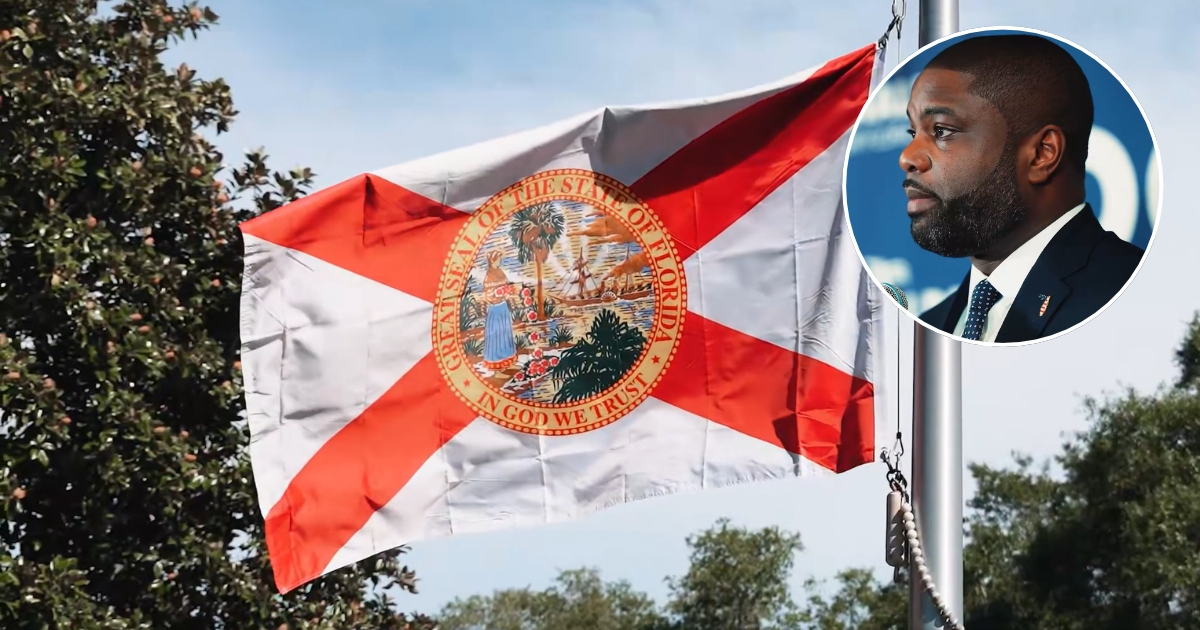
The victory of Republican Byron Donalds in the Florida gubernatorial elections, in contrast with the Democratic advances across the rest of the United States, has reignited political tensions among Latino immigrants and sparked strong criticism against Cubans who support President Donald Trump.
"The worst enemy of a Latino is a Cuban," wrote Alexander Lobo in a Facebook post that has generated numerous reactions following the elections on Tuesday, November 3rd.
In his message, Lobo criticized the Cubans who arrived in the United States by traveling through Central America, managed to regularize their immigration status, and now identify with the MAGA (Make America Great Again) movement led by Trump.
The author used offensive expressions to question those immigrants, whom he accused of forgetting the difficulties they faced before obtaining their documents.
The publication appeared in an electoral context marked by contrasting results. While the Democrats regained control of the House of Representatives and the Senate, Florida maintained the governorship in Republican hands with the victory of Donalds, supported by Trump.
Donalds received about 50% of the votes compared to the 48.7% of Democrat David Jolly, according to preliminary results. However, Jolly managed to prevail in Miami-Dade, where a large Cuban community resides, reflecting a more divided electoral scenario than the state Republican victory might suggest.
Cubans respond: "Not all of us are like that."
Lobo's publication received numerous endorsements, but it also drew responses from Cubans who rejected being collectively labeled for the political preferences of some compatriots.
"I am Cuban and I do not agree with you; I love all my Latino brothers," replied an internet user, who defended everyone's right to seek a better life.
Another Cuban, who claims to have been away from the island for 23 years, acknowledged that some immigrants have forgotten their origins, but insisted that an entire nationality cannot be judged based on that behavior.
Among those who shared the criticisms, one user lamented that some Cubans support restrictive immigration policies even when part of their own families still lack documentation.
Other comments questioned why immigrants who have been given opportunities to settle in the United States now show little solidarity with those facing deportation processes.
There were also those who openly defended their political positions. "My Latin family came here legally, and we are MAGA," stated one person.
The discussion reached other communities, including the Venezuelan one, although several participants urged avoiding generalizations and attacks based on nationality.
"Don't generalize, don't create stigmas," urged an internet user.
Other immigrants had already questioned Cubans for supporting Trump
The confrontation is not new. In March 2025, Mexican Edán Méndez criticized Cubans who voted for Trump, recalling the solidarity they received from other Latin Americans when fleeing from Cuba.
"They were the first to support Donald Trump because they thought Trump was only targeting Mexicans and Central Americans," he stated at the time.
Most recently, in August 2026, Honduran Jeffry Ulloa, a resident of Miami, delivered a strong message against those who supported the deportations.
"Many Cubans here in Miami always believed they were untouchable," he stated, before warning that the immigration measures were also affecting citizens from the island.
Republican Cuban women explained why they voted Democrat
On the eve of the elections on November 3, Lisbeth Arzola Fadragas, a Cuban Republican who previously voted for Trump, revealed that this time she is supporting the Democrats.
"Today I voted for my family. Today I voted for my clients," he explained, also referring to the immigrants who are working without having managed to regularize their status.
Another Cuban resident in Miami, Miriam Bidot, also identified as a Republican, defended her Democratic vote for reasons related to immigration, healthcare, and opposition to discrimination.
These positions coexist with significant support for the Republican Party. A survey by N+ Univision and YouGov conducted between October 2 and 15 placed Donalds with 51% of the preferences among the consulted Cuban Americans, compared to 42% for Jolly.
These positions coexist with significant support for the Republican Party. A survey by N+ Univision and YouGov conducted in October placed Donalds nine points ahead of Jolly among the consulted Cuban-American voters.
Related videos:
Filed under: