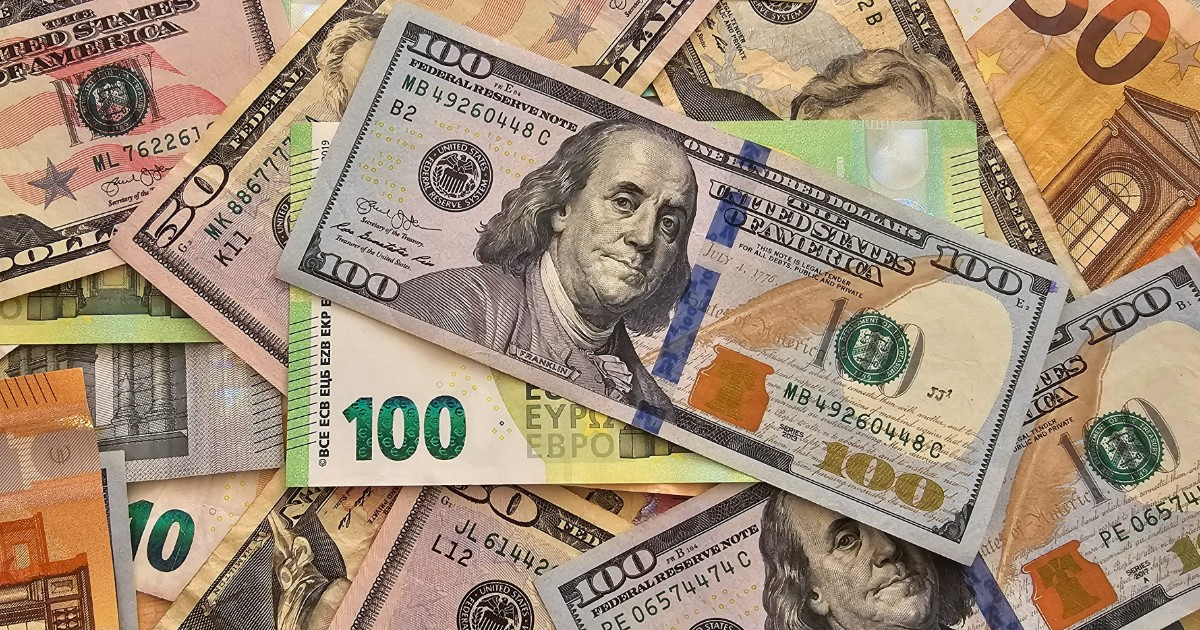
A photographer and entrepreneur from Pinar del Río articulated this Friday what millions of Cubans experience in silence: the insurmountable gap between earnings and the cost of living on the island, with the dollar surpassing 900 pesos and no signs of slowing down.
Mikely Arencibia Pantoja posted a reflection on Facebook titled "The Price of Prices", in which he accurately describes the impact of the currency crisis on the domestic economy of Cubans.
"The dollar is skyrocketing uncontrollably, surpassing 900 pesos and threatening to approach a thousand. And although most Cubans do not earn in that currency, they ultimately bear the consequences of its rate. Everything seems to move at its pace: food, essential goods, services... everything," wrote Arencibia.
The data supporting that perception is compelling: this Friday the dollar was trading in the informal market at an average of 935 Cuban pesos, while the euro hovered around 1,000. In just one week, the greenback rose by 57.5 pesos, which represents an increase of 6.6% compared to the 878 CUP from seven days ago.
The official exchange rate of the Central Bank remained at 793 CUP per dollar and 890 CUP per euro, well below the values prevailing in the informal market.
To illustrate the gap between salaries and prices, Arencibia proposes an arithmetic exercise: "A professional earning a salary of 6,000 pesos a month today has an income equivalent to about 6.60 dollars, using an exchange rate of 900 pesos per dollar as a reference. It is quite difficult to imagine how a family economy is organized with such (in)ability to purchase."
The contrast with reality is stark. The Cuban state average salary was 7,354 pesos per month in August 2026, which, based on the informal exchange rate, is equivalent to about nine dollars. Independent estimates calculate that the monthly cost of basic needs per person ranges between 50,000 and 96,060 pesos, which is seven to thirteen times that average salary.
The official year-on-year inflation reached 28.4% in September, with food and beverages skyrocketing by 42.66% compared to the previous year.
Arencibia also points to small private businesses, which many see as a lifeline but are not immune to the downward spiral: "Buying merchandise, restocking inventories, and maintaining commercial activity is becoming increasingly like an obstacle course. Costs are rising and ultimately get passed on to the consumer."
From that observation, the photographer poses the question that underpins his entire reflection: "Where does the Cuban really get the money to live? From salaries? From small businesses? From remittances? From relatives who help? From informal activities, multiple jobs, or a combination of all of the above?" A survey by Cubadata recorded that 43% of participants reported never receiving remittances, leaving that segment of the population without that external cushion.
Arencibia's reflection is not an isolated event, but rather part of a series of texts he has published throughout 2026 that have gained significant traction on social media. In July, he described the loss of a future horizon as a collective phenomenon —“in Cuba today, life is better than tomorrow”; in August, he denounced the “business of misery” that feeds speculators; and in October, he analyzed the paradox that those who need a product live in Cuba but those who can afford it are overseas.
The macroeconomic framework supports its diagnosis. The CEPAL projects a decline in Cuba's GDP of 10.3% in 2026, the largest contraction anticipated among the economies of Latin America and the Caribbean. Between 1.6 and 2.75 million Cubans are estimated to have left the island since 2020, according to the Council on Foreign Relations, with a large portion of the emigrants being under 35 years old.
"The 'price of prices' is measured not only in pesos. It is measured in quality of life, in missed opportunities, and in the daily strain of millions of people," concludes Arencibia, before leaving open the question that no regime official has answered: "How long can a household economy be sustained when the cost of living rises much faster than the ability to earn a living?"
Related videos:
Filed under: