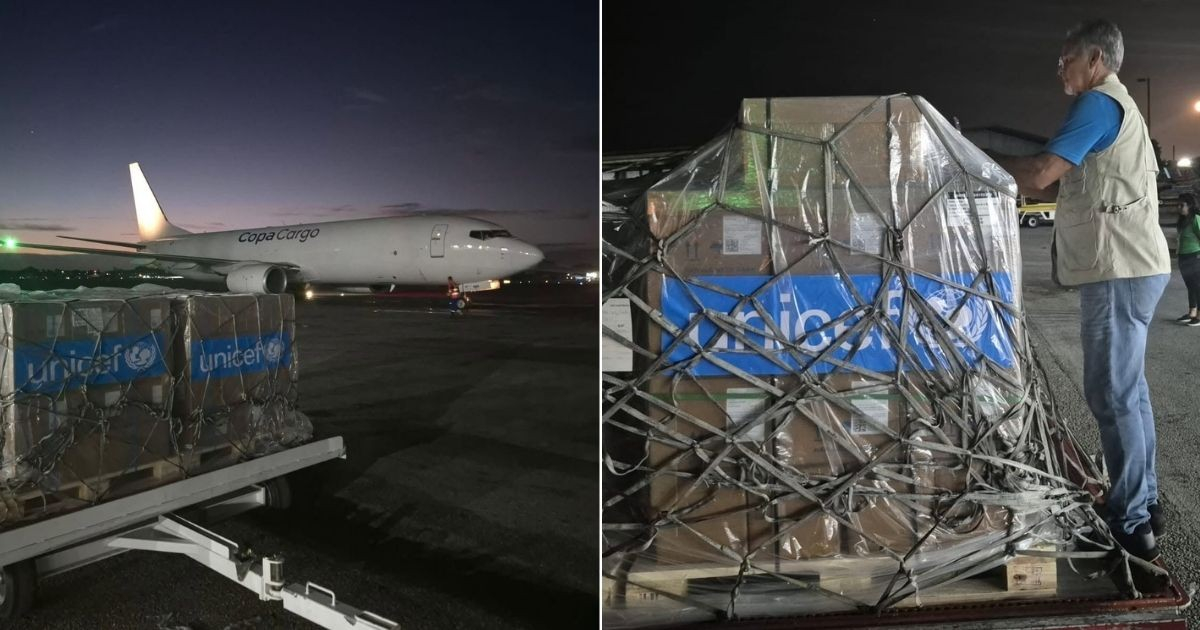
More than a million Cubans currently depend on international aid to eat, drink clean water, or receive medical care, as acknowledged this Wednesday by the resident coordinator of the UN System in Cuba, Pablo Ruiz Hiebra, in a video posted on social media platform X.
"The United Nations in Cuba are currently supporting the country's needs in areas such as food security, drinking water, and health during this difficult time. More than a million people are benefiting from this daily support," stated Ruiz Hiebra.
The figure managed by the organization is even higher in cumulative terms: by September, the UN Humanitarian Action Plan had benefited 1.7 million people in 46 municipalities across the country, with a target of two million set in the plan.
The problem is that this plan, presented in March with a budget of 94 million dollars, has only received 47.6 million, just over half, leaving a deficit of more than 46 million.
Cuba ranks among the 12 humanitarian crises with the least funding in the world, according to the classification by the UN Central Emergency Response Fund, which allocated only four million dollars to it in October from a global package of 160 million, the lowest allocation among the twelve included crises.
The emergency is especially severe in the eastern part of the island, where Hurricane Melissa made landfall in October 2025, leaving destruction that remains unresolved a year later.
The United Nations Development Programme (UNDP) has distributed a total of 6,415 roofing modules and 20,548 mattresses, along with rechargeable lamps and medical laboratory equipment, across all municipalities of Granma, Santiago de Cuba, and Guantánamo, benefiting 341,648 people.
The water crisis is another indicator of the magnitude of the collapse. Last week, UNICEF donated seven pumping units to Manzanillo, in Granma, to supply more than 100,000 residents who had been without service in some areas of the city for nearly three months.
The regime acknowledged on October 20 that 2.5 million Cubans were affected by the water supply due to blackouts, with only 32% of the population served by networks receiving water that day.
The National Institute of Hydraulic Resources attributes 88% of the incidents of shortages to power outages and pump failures, not to drought. The UN estimated in September that the actual number of affected individuals could reach 3.5 million.
The root of the problem is energy-related. The National Electro-Energy System has experienced at least seven massive collapses throughout 2026, resulting in blackouts lasting up to 48 consecutive hours in provinces such as Santiago, Holguín, and Matanzas.
On November 7th, the Electric Union projected an availability of only 1,070 megawatts against a demand of 2,830, covering less than 40% of the country's needs.
The food crisis shows no signs of relief. A survey published in May revealed that 33.9% of Cuban households had a member who went to bed hungry, compared to 24.6% recorded in 2024, marking a deterioration of more than nine percentage points in just one year.
The new UN coordinator in Cuba met earlier this month with Mike Hammer, the chargé d'affaires at the U.S. Embassy, to coordinate humanitarian response. Washington has announced a $100 million aid offer for Cuba, which will be channeled through the Catholic Church and independent non-governmental organizations, outside of the regime.
With the humanitarian plan partially funded and the energy crisis showing no signs of resolution —the installation of solar panels to make water pumping independent is not expected until early 2027— the UN warns that it is "concerned" about the impact of the situation "in all areas of life" for Cubans.
Related videos:
Filed under: