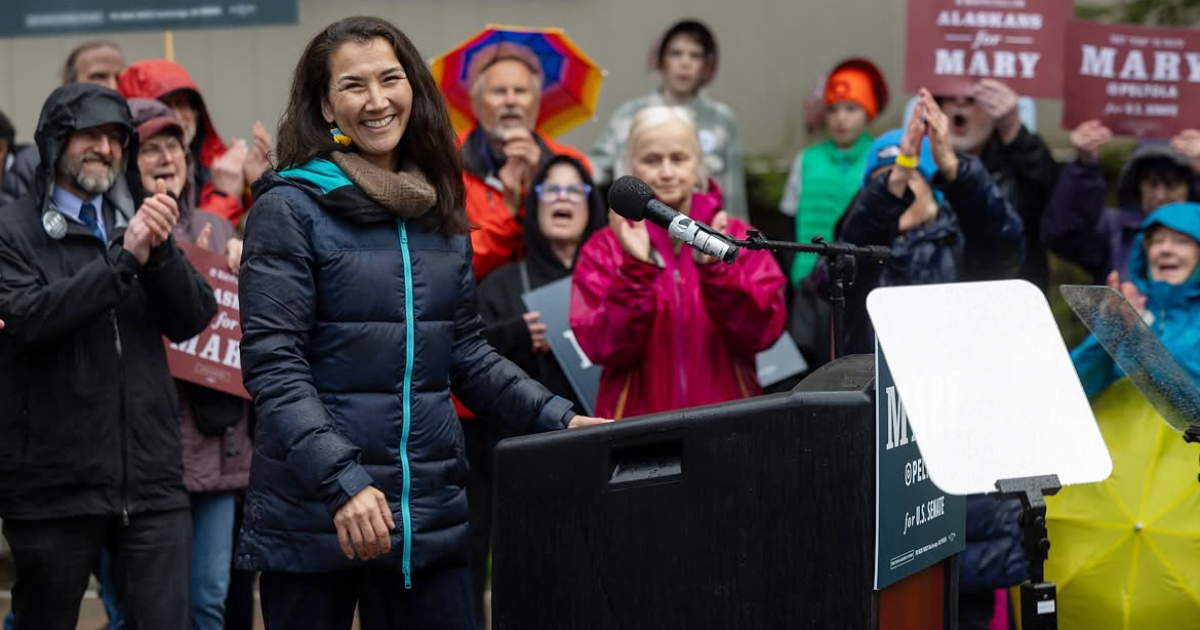
The Democrat Mary Peltola prevailed this Wednesday over the incumbent Republican senator Dan Sullivan in Alaska, the last seat yet to be filled following the midterm elections on November 3, expanding the Democratic majority in the Senate to 56 against 44 Republicans, according to media projections.
With 99% of the votes counted, Peltola received 50.1% of the votes —141,637 votes— and surpassed Sullivan by 11,475 votes, who secured 46.1% with 130,162 votes, according to projections from CNN.
By surpassing the 50% threshold, Peltola avoided the second phase of tabulation of the preferential voting system that governs federal elections in Alaska, clearing the way for a direct victory, according to EFE.
Peltola thereby becomes the first Democrat to win a Senate election in Alaska since 2008, when Mark Begich defeated Republican Ted Stevens.
Sullivan had held the seat since 2015 and was aiming for a third term; Wednesday's defeat is the first he has suffered in a general election for the Senate.
Alaska was the ninth Republican seat won by the Democrats in this midterm election, which took place midway through the second term of President Donald Trump.
The other eight seats taken from the Republican Party were from , a wave that completely transformed the Senate map.
Before the elections, the Republicans had 53 senators compared to 47 from the Democratic bloc, which included two allied independents; the Democrats needed a net gain of four seats to reach a majority.
The contest in Alaska was not without controversy: Republicans accused Democrats of orchestrating the registration of an independent candidate also named Dan Sullivan —Daniel J. Sullivan Jr.— with the aim of splitting the Republican vote, and the Trump administration even filed a lawsuit regarding this.
However, that independent candidate only received 4,684 votes, a figure lower than Peltola's final lead over the incumbent senator, which undermined the argument that their presence would have been decisive.
The delay in the counting of votes in Alaska is due to the logistical challenges faced by its most remote communities and the deadlines for mail-in voting, which allow ballots sent from abroad to be received up to fifteen days after Election Day.
The victory of Peltola in the Senate adds to the success of the Democrat Jonathan Kreiss-Tomkins in the governorship of the state, projected last Saturday: Kreiss-Tomkins, 37 years old, became the first Democratic governor of Alaska since 2002 and the youngest in the state's history, bringing the total number of governorships controlled by Democrats nationwide to 30.
The new 56-44 majority in the Senate will allow the Democrats to chair committees, call hearings, and drive investigations, though it will formally take effect when the new Congress is established in January 2027.
Related videos:
Filed under: