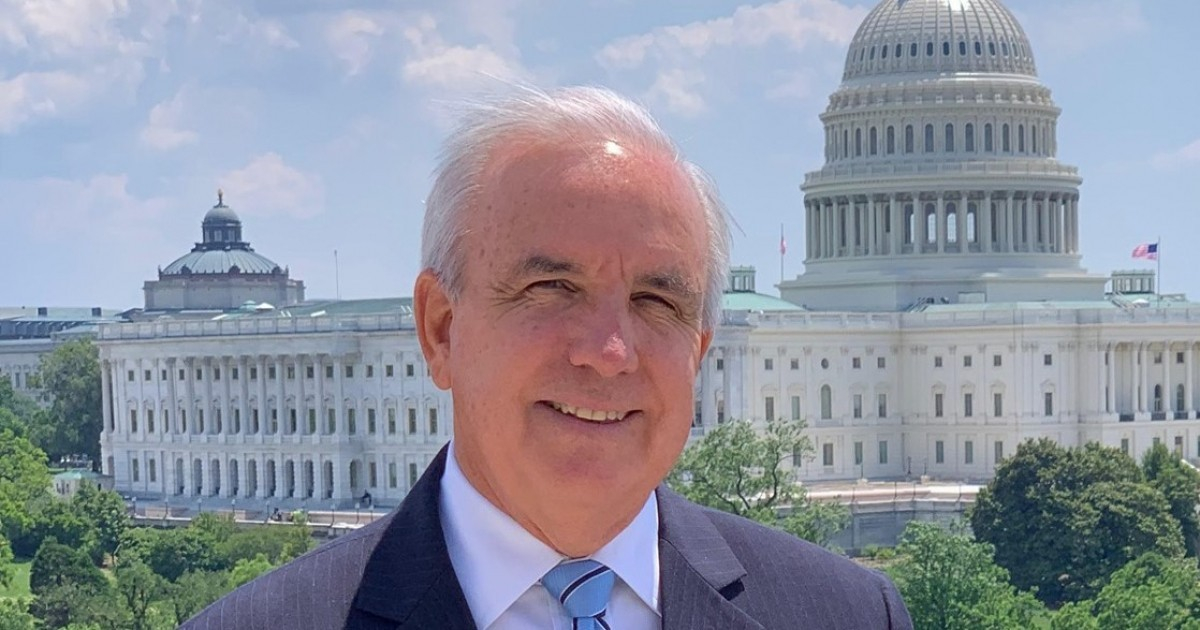
The Cuban-American congressman Carlos Giménez publicly confronted the Secretary of Homeland Security, Markwayne Mullin, during a hearing of the House Homeland Security Committee held on Wednesday, claiming that the Trump administration has gone too far in immigration enforcement.
The Republican legislator was explicit about what he does not object to: "I have no problem closing the border; I have no problem deporting criminals; I have no problem deporting gang members, terrorists, etc., or people with active deportation orders." But he added: "I просто think they have gone a bit too far."
The criticism directly addresses the treatment of individuals with temporary immigration protections, a category that includes thousands of Cubans with form I-220A or revoked parole who face detention and deportation to third countries.
Las tensiones dentro del propio Partido Republicano sobre los límites de las deportaciones reflejan un debate que sigue evolucionando. Sigue de cerca todos los desarrollos en nuestra sección de
Mullin did not back down. He acknowledged that the enforcement has been aggressive, but he rejected any discretionary responsibility: "I urge Congress, if they want to change the laws I am required to enforce, the statutes I abide by, to go ahead, and I will enforce those as well. I am not choosing which law to apply and which one not to."
In the same session, the secretary stated before Democratic Congresswoman LaMonica McIver that he would "never" apologize for the work of his department, and shifted some of the responsibility for previous decisions to his predecessor Kristi Noem, who was ousted by Trump in March 2026.
Giménez's intervention comes after the legislative elections on November 3, which resulted in tight outcomes for Republicans in South Florida: Giménez himself won reelection with just a seven-point lead, compared to the 29-point margin he achieved in 2024. Republicans in South Florida attributed these margins to the discontent among Hispanic voters with immigration policy.
Giménez himself stated bluntly on Fox News a few days ago: "We have a large number of Hispanics here who did not like the enforcement of immigration law."
The backdrop for the Cuban community is particularly serious. A day before the hearing, the Eleventh Circuit Court of Appeals ruled that the I-220A form does not equate to humanitarian parole as required by the Cuban Adjustment Act, leaving thousands of Cubans who entered the country between 2021 and 2023 in a situation of greater vulnerability.
This is compounded by the deportations to third countries: approximately 6,000 Cubans were transferred to Mexico between January 2025 and March 2026, and at least 92 were sent to the Central African Republic on flights conducted between June and August of this year.
In the legislative arena, Giménez joined on November 9 the Dignity Act proposed by Congresswoman María Elvira Salazar, which aims to provide a migration pathway for Cubans with I-220A. The proposal has garnered 56 co-sponsors and has been sent to seven committees in the House, but has not yet been put to a vote in the full chamber.
On his part, Mario Díaz-Balart, who in previous contests won by nearly 40 points, now retained his seat by just 1,704 votes, with a margin of less than one percentage point. The politician, also of Cuban origin, dismissed the White House's immigration offensive. “It was not just a major political error, but more importantly, it was bad policy.”
Trump himself stated in an interview with 60 Minutes on CBS that his deportation policies may have been "too harsh" and that they likely harmed the Republicans at the polls.
Related videos:
Filed under: