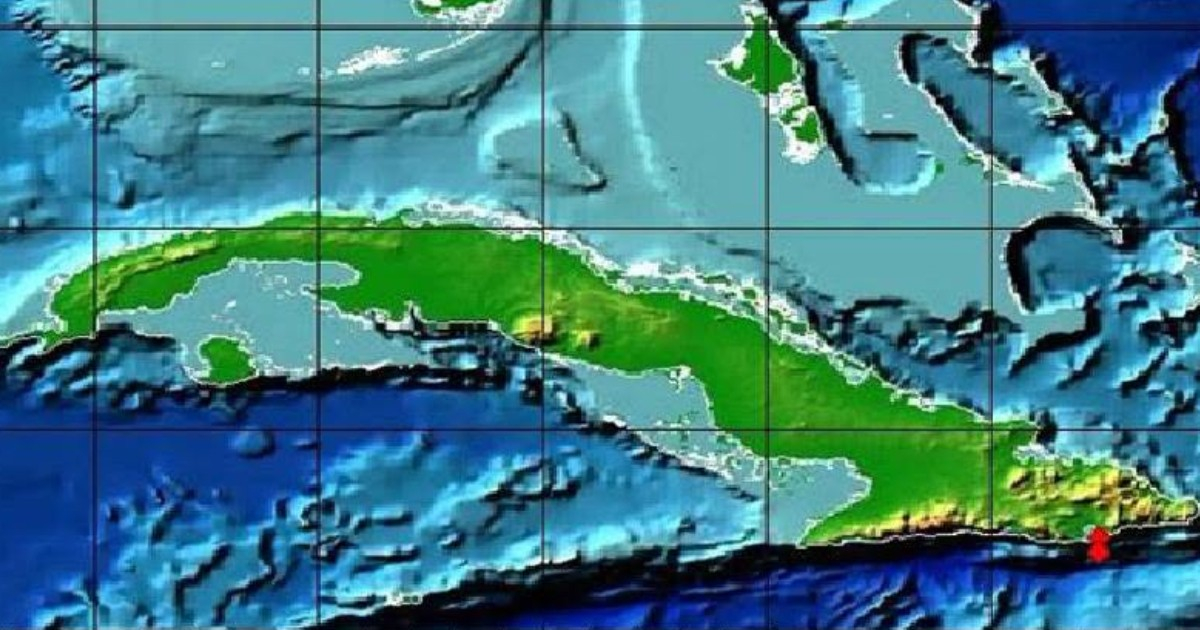
Doctor Enrique Diego Arango Arias, head of the National Seismological Service of Cuba and the country's primary public reference for seismic events, warned this Friday and Saturday on his social media that Cuba is facing a serious crisis in its ability to detect and record earthquakes, caused by persistent power outages and the disruption of satellite communications.
"We continue to face a critical situation regarding seismic monitoring in our country, primarily due to the lack of electrical power in the communication towers and ETECSA centers through which the signal from each station reaches the Central Station located in Santiago de Cuba," wrote the specialist from the National Center for Seismological Research (CENAIS).
The situation has worsened in recent days due to the disconnection and reprogramming of the VSAT antennas—used for satellite transmission—across the entire national territory, a measure whose exact reason the authorities have not publicly explained.
That interruption left four key stations out of service: Río Carpintero in Santiago de Cuba; El Yarey in Granma; Camarioca in Matanzas; and Cascorro in Camagüey.
The result is alarming: the only operational station in the entire eastern region —the area of highest seismic risk in the country— is the one located at the Guantánamo Naval Base.
The network status map published alongside the alerts depicted the situation starkly: the vast majority of markers appeared in black, indicating that those stations had not transmitted data for over 24 hours. Only two or three points showed activity across the entire island.
Arango Arias was explicit about the consequences: "In the event of an abnormal situation occurring in our country, we cannot document it or follow it up," he warned on Saturday while reiterating the message published the day before, emphasizing that the population was not being informed of the seriousness of the problem.
The monitoring crisis coincides with elevated seismic activity. During the first half of 2026, a total of 3,882 earthquakes were recorded in Cuba and surrounding areas. The most intense event of the year was a magnitude 6.0 earthquake registered on March 17 southeast of Imías, Guantánamo, which triggered more than 620 aftershocks in just over 24 hours.
Power outages have been accompanied by a wave of thefts affecting scientific infrastructure. This Saturday, Arango Arias reported that the headquarters of CITMA in Holguín—where the central backup station of the Seismological Service, the provincial CENAIS, the Meteorology Department, and CITMATEL operated—was left without electricity or communications after all its electrical and connectivity cables were stolen, forcing the relocation of equipment to Santiago de Cuba.
This incident adds to the total theft of equipment from the seismological station in Isla de la Juventud —solar panels, batteries, seismometer, and digitizer— which was inaugurated only in March 2024, as well as similar thefts reported at the Moa station.
The Oriente fault, the main active seismic structure in Cuba and part of the Bartlett-Caimán tectonic zone that separates the Caribbean and North American plates, accounts for approximately 85% of the country’s historical strong earthquakes and has the potential to generate quakes with magnitudes exceeding seven.
Arango Arias warned that, without severe penalties, thefts of scientific infrastructure could escalate and impact both families and the national economy.
Related videos:
Filed under: