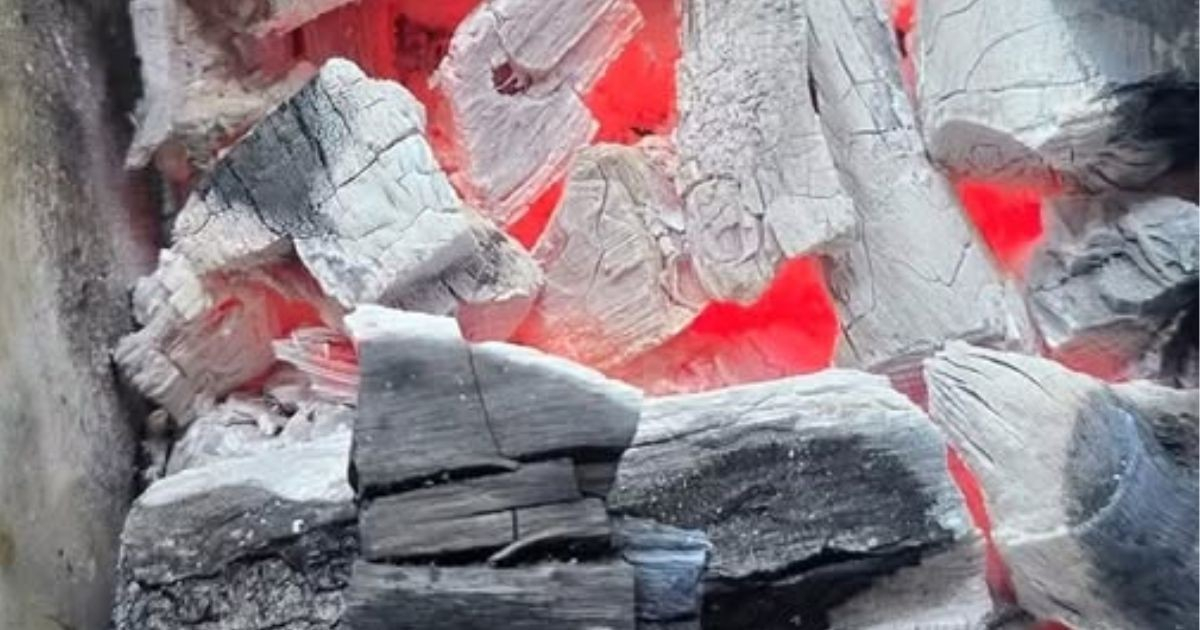
The energy crisis plaguing Cuba in 2026 has turned charcoal into the emergency fuel for thousands of urban households: with no electricity for up to 24 hours a day and no liquefied gas or kerosene available, cooking with a charcoal stove has become the only option for millions of families.
The official newspaper Granma acknowledged this Monday that "it is unlikely that in previous periods the Cuban population has made such extensive use of charcoal for cooking as today."
What was once an almost exclusive practice in rural areas has invaded neighborhoods in cities, especially in the interior of the country. The direct cause is the combination of prolonged blackouts and the suspension of liquefied gas supply: CUPET interrupted distribution in the eastern provinces since January 2026 and suspended it nationwide on September 28 due to inventory exhaustion. In April, 834,000 of the 1.7 million liquefied gas customers were unable to purchase it during state distributions.
The immediate result has been an unstoppable rise in prices. According to the state media, “the same bag that cost one thousand pesos a few weeks ago now costs double or more. You either buy it or leave it; it’s that simple… and that complex.” Data from various provinces confirm the trend: the bag that was sold for between 900 and 1,400 pesos at the end of 2024 rose to a cost of between 3,200 and 5,000 pesos in June and July of 2026. At the higher end, this price is equivalent to 155% of the monthly minimum wage, which has been set at 3,210 pesos since July 2026.
A reader from Pinar del Río who commented on Granma this Monday put it bluntly: "here, the charcoal makers take any tree from the forest, and if that is not controlled, deforestation will follow."
That warning points to a problem that is growing alongside the issue of fuel: the uncontrolled production of charcoal is causing increasing environmental damage. Ernesto Ramón Toledo Medina, technical director of the Agroforestry Company of Sancti Spíritus, warned the official newspaper that "the matter is somewhat out of control," noting that today anyone can decide to produce charcoal anywhere without adhering to current regulations.
The Provincial Headquarters of the Cuerpo de Guardabosques of Sancti Spíritus recorded a significant increase in fines in 2026—already comparable to the total for the previous year—for the improper use of fire in forests and the logging of protected species such as the black mangrove, red mangrove, patabán, and yana. Between January and April, there were 111 wildfires that affected more than 3,174 hectares, with between 90% and 95% attributed to human causes.
Forest authorities clarify that they do not prohibit charcoal production, but rather require prior authorization and the use of permitted species. The primary one is marabou, an invasive plant abundant in Cuba that produces high-quality charcoal: a blue flame with no smoke, high calorific value, and long-lasting. "There is no impediment for anyone wanting to produce charcoal with marabou or aroma, except if they cut it in a hydrological regulation zone," specified Lucrecia Sánchez Díaz, head of the State Forestry Service Department.
The problem is that effective control is noticeably absent. As Granma itself acknowledged, there is no record of how many people are producing charcoal or the volumes they are handling, while resellers set prices at will in a market dominated by scarcity. The energy crisis that the regime attributes to the U.S. embargo is leaving, as a collateral damage, a forest heritage that is increasingly under threat.
Related videos:
Filed under: