
Related videos:
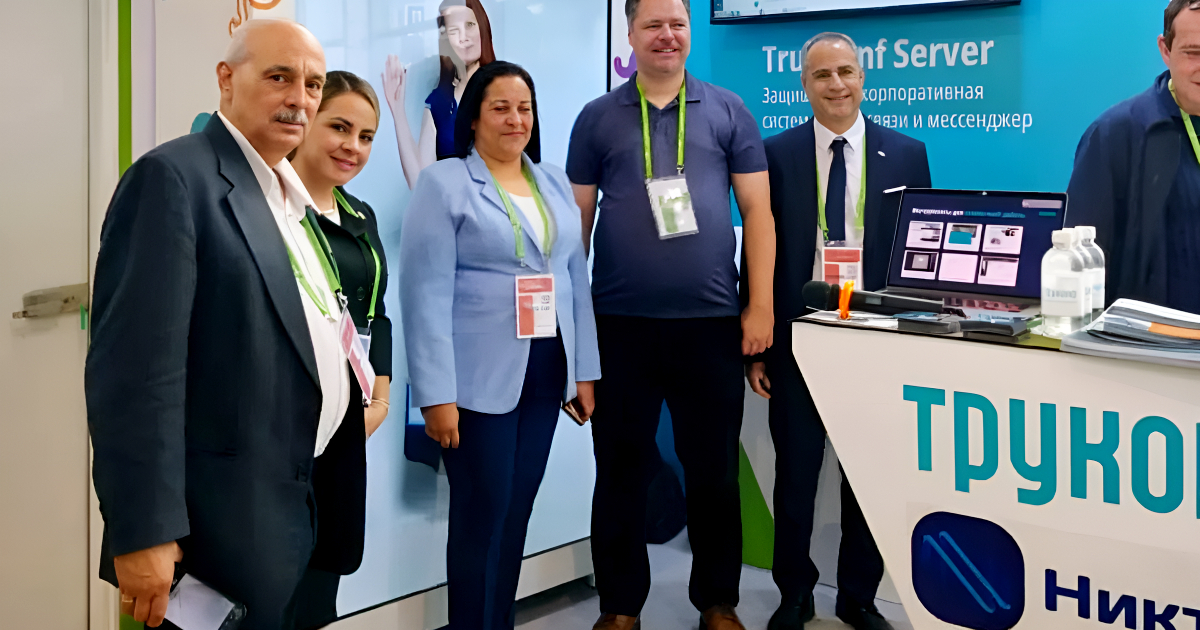
Amid the controversy over the rate increases by the Cuban Telecommunications Company (ETECSA) and the growing public dissent, the Ministry of Communications (MINCOM) announced this Wednesday that the head of the department, Mayra Arevich Marín, is currently in Russia leading an official delegation.
The visit occurs in the context of the Digital Industry Conference of Industrial Russia, which takes place from June 2 to June 8, 2025. The MINCOM did not make public the work agenda of Arevich Marín in the Russian city of Nizhni Novgorod, located 400 kilometers east of Moscow, in a region that has been targeted by several Ukrainian drone attacks on refineries.
The statement also dispelled rumors circulating on social media and digital platforms about an alleged dismissal of the minister.
The absence of Arevich Marín in the recent edition of the Mesa Redonda dedicated to the rate hike had sparked speculation about her continued leadership of the ministry, as the deputy minister Ernesto Rodríguez Hernández appeared in her place, introduced as the acting minister, to defend the state-run company's rate increase with populist arguments. "ETECSA is a company for this people", he said.
Days before, on May 31, the minister herself had publicly defended the new rates through the social network X. In her message, she stated that the measures were “necessary for the sustainability of the telecommunications infrastructure” and that the opinions of the people were being “valued”. Her explanation, however, did not succeed in calming public discontent.
The rates announced on May 30 by ETECSA set a limit of 360 CUP for monthly recharges from the national balance, forcing users to purchase packages in dollars if they want more mobile data.
This change directly affects those who do not receive remittances or do not have access to freely convertible currency (MLC), and it has been described by economists such as Pedro Monreal as a measure that prioritizes foreign currency income over social equity.
The executive president of ETECSA, Tania Velázquez Rodríguez, has justified the measures in multiple public spaces. In recent statements, she explained that the objective is to “close income gaps”, and acknowledged that the new plans cater primarily to Cuban emigrants, once again highlighting the extractive nature of the measure in terms of foreign currency.
He also mentioned that ETECSA has lost 60% of its revenue due to fraud in international top-ups, which forced a rethink of commercial conditions. Velázquez Rodríguez acknowledged failures in communication and committed to improving information channels, but did not take responsibility for the crisis caused, nor did she announce the initiation of a process in that regard.
For this reason, the statements made by Velázquez Rodríguez and -by extension- those of Arevich Marín have been subject to criticism from both citizens and sectors close to the government.
The architect and deputy Abel Tablada publicly questioned the fate of the millions earned in MLC that the company has received, while official media such as the newspaper Girón demanded more transparency regarding the use of those funds and the promised investments.
The social unrest has also been strongly reflected in the university environment. Since May 31, several faculties of the University of Havana and other higher education institutions have issued statements demanding the revocation of the tariff hike.
The Faculty of Psychology, the Faculty of Mathematics and Computer Science, the Faculty of Communication, and the Faculty of Philosophy, History, Sociology, and Social Work, among others, have reported that the new fees restrict the right to study, communication, and access to information.
The most recent statement, published on June 3 by the Humanities FEU, demanded the resignation of the national president of the student organization due to his "inability to represent the student body," and criticized ETECSA's lack of transparency. “Symbolic promises are not enough. We demand real solutions, participation, and respect,” the text concluded.
In this context of discontent and mobilization, the minister's trip to Russia has been interpreted by many as an attempt to evade political responsibilities.
Although the MINCOM insists that this is a planned official visit, their departure from the country amid a surge of protests has raised questions about the management of the crisis and the lack of direct communication with the affected sectors.
The rate hike by ETECSA, far from diminishing, continues to spark a national debate about social justice, internet access, and the role of state institutions amid an economic crisis that is hitting citizens hard.
Filed under: