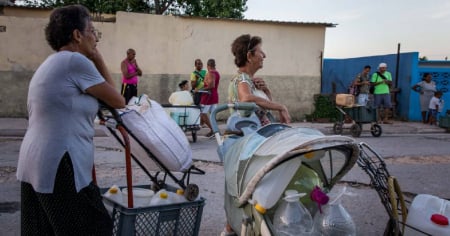
The use of firewood as a source of domestic energy has surged in Cuba due to the prolonged energy crisis that has affected the country for years.
According to the independent organization Food Monitor Program (FPM), it is becoming increasingly common to see Cubans carrying carts filled with dry branches or exploring riverbanks and wooded areas to collect wood.
This practice, which might seem like a scene from the 19th century, is now a daily reality in both rural and urban areas of the country, where power outages can last between 12 and even more than 30 consecutive hours.
Firewood has replaced gas and electricity in thousands of homes that improvise stoves in patios and doorways for cooking, FPM emphasized.
Without access to modern energy sources, many citizens also resort to burning coal, cardboard, plastics, and even discarded furniture to be able to prepare meals.
The organization also warned that this phenomenon is having an alarming environmental impact.
The uncontrolled logging of trees and the plundering of urban green spaces have started to diminish forest coverage in various regions of the country, which exacerbates vulnerability to weather phenomena such as hurricanes, droughts, and floods.
"Accelerated deforestation due to the domestic use of firewood could lead Cuba down the same path as Haiti, where extreme forest loss has caused erosion, natural disasters, and environmental poverty," warned FPM.
In addition to the ecological impact, the energy crisis reflects a deep territorial inequality.
While Havana experiences shorter blackouts, families in the eastern provinces of the country rely almost exclusively on firewood, exacerbated by delays in the distribution of liquefied gas.
The organization concludes that the issue is not only energy-related but also social, health-related, and environmental. It holds the Cuban government responsible for failing to modernize the electrical infrastructure or diversify its energy matrix with renewable sources such as solar or wind energy.
The scarcity of fuel in Cuba has forced millions of people to cook in precarious conditions, relying almost exclusively on rudimentary methods such as using firewood, charcoal, or cardboard.
According to recent alerts, more than nine million Cubans cook without stable access to gas or electricity, exposing themselves daily to health and environmental risks.
This situation has particularly impacted educational institutions, where nursery circles have had to reduce their hours and cook with firewood, improvising stoves under unsanitary conditions.
At the family level, survival strategies include not only the burning of unsuitable materials but also cooking in the middle of the street, without electricity or gas, as the only option to feed their children.
Food insecurity worsens when these factors converge with the economic crisis. FPM has warned that more and more Cubans can only have one meal a day, a phenomenon directly linked to the inability to cook consistently and safely. This social, energy, and environmental emergency shows no signs of improvement in the short term.
Frequently Asked Questions about the Energy Crisis and the Use of Firewood in Cuba
Why has the use of firewood increased in Cuba?
The use of firewood in Cuba has increased due to the prolonged energy crisis affecting the country, forcing many families to resort to outdated cooking methods, such as wood stoves, due to the lack of electricity and liquefied gas. This situation has been worsened by the instability of the electricity supply and the scarcity of gas, leading citizens to seek alternatives such as firewood, charcoal, and even recycled materials.
What impact does the use of firewood have on the Cuban environment?
The increasing use of firewood is causing alarming deforestation in Cuba, which reduces forest cover and increases the country's vulnerability to meteorological phenomena such as hurricanes, droughts, and floods. The uncontrolled felling of trees and the plundering of urban green spaces not only affect the environment but also pose a serious risk to human health due to the inhalation of toxic fumes.
How does the energy crisis affect the daily lives of Cubans?
The energy crisis severely affects the daily lives of Cubans, as they face prolonged blackouts that hinder food preparation, proper food storage, and access to essential services. Many families have resorted to cooking at any time when there is electricity, have been forced to eat less, and have turned to dangerous cooking methods, which has also increased the risk of respiratory illnesses and household accidents.
What is the Cuban government's response to the energy crisis?
The Cuban government has been criticized for its lack of effective actions to modernize the electrical infrastructure and diversify the energy matrix. Despite promises of progressive solutions, the population continues to face energy restrictions and an official discourse that downplays the real situation. The lack of proper maintenance of thermal power plants and the dependence on imported fossil fuels have contributed to prolonging this crisis without a structural solution in sight.
Filed under: