
Related videos:
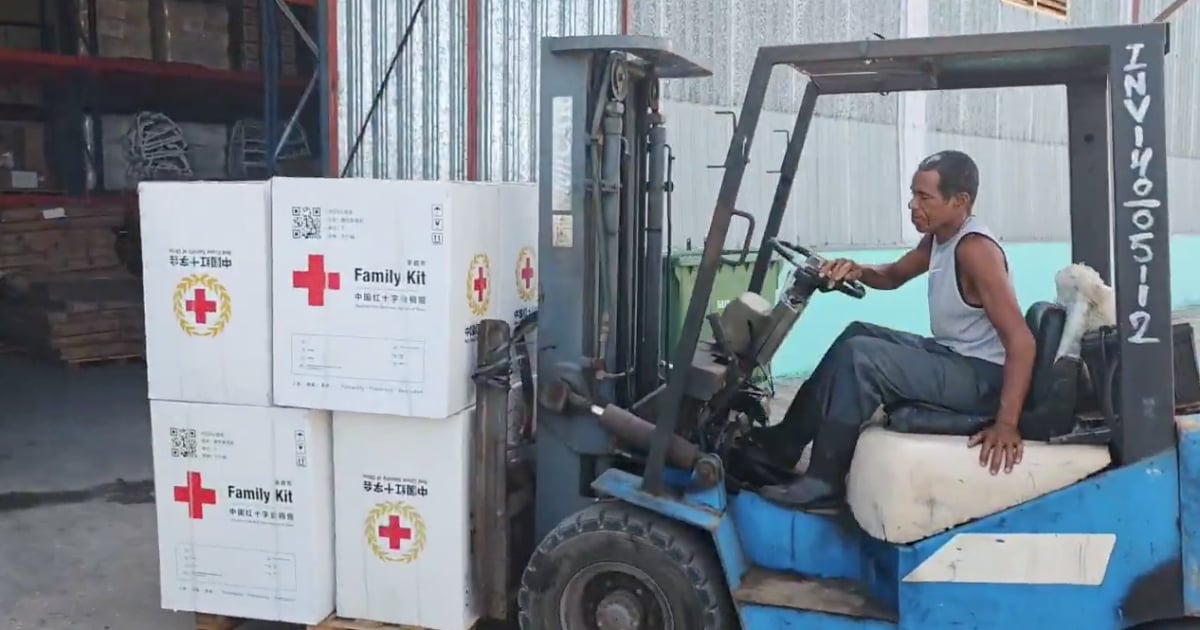
The Chinese Red Cross sent to Cuba one thousand family emergency kits intended for the eastern provinces affected by Hurricane Melissa, in what is regarded as the first international humanitarian aid shipment following the cyclone.
The Chinese ambassador in Havana, Hua Xin, reported on the social media platform X that resources were pre-positioned and dispatched from Havana before the hurricane hit, and are now being distributed in the most affected areas. The diplomat assured that the Chinese people “are always on the side of the Cuban people in difficult times” and reiterated that Beijing will continue to provide support as the situation evolves.
The kits contain basic hygiene items, shelter, and essential utensils sent through the Cuban Red Cross, in coordination with local authorities and military officials of the regime.
The Cuban Foreign Ministry publicly expressed gratitude for the gesture in a message on X: “We thank you for the donated family kits, which are already being sent to the eastern provinces affected by Hurricane Melissa. A gesture of friendship and solidarity that directly reaches those who need it the most.”
The National Television News reported that the Cuban Ministry of Foreign Affairs (MINREX) also acknowledged the contributions of China and the United Nations system, whose agencies began delivering emergency supplies, including 5,000 basic health modules, 42,000 chlorine tablets, and electric generators. Meanwhile, the official newspaper Granma emphasized that Chinese aid was “the first international hand extended to Cuba” and added that Venezuela also sent 26 tons of aid, while the UN activated an emergency fund to support Cuba and Haiti.
While the government promotes cooperation among its political partners, Cubans inside and outside the island have mobilized to directly support affected families. In Miami, the Cuban community is organizing the campaign “Help for Eastern Cuba”, which collects donations from artists, activists, and ordinary citizens to send food, medicine, and clothing to Santiago de Cuba, Holguín, Granma, and Guantánamo. “This is not a political gesture, it is an act of love and humanity,” declared rapper Zurdo MC, one of the proponents of the initiative.
Within the country, the Conference of Catholic Bishops of Cuba announced that Caritas is ready to channel national and international aid, describing the situation in the east as “a disaster of enormous proportions” with over a million people affected.
This Thursday, the U.S. Secretary of State, Marco Rubio, announced Washington's willingness to send humanitarian aid “without the regime's intermediaries”. From Havana, Deputy Minister Carlos Fernández de Cossío confirmed that Cuba was “in contact with the State Department to know the details of the offer,” while the Cuban ambassador in Belgium, Juan Antonio Fernández Palacios, described the proposal as “handouts,” which generated diverse comments on social media.
The chancellor Bruno Rodríguez, for his part, thanked the Venezuelan cooperation following Hurricane Melissa and shared a quote from José Martí on social media: “To do is the best way to say.” Meanwhile, the U.S. State Department released a guide to channel private donations to the Cuban people through humanitarian licenses and legal avenues.
The hurricane Melissa left a desolate scene in eastern Cuba: thousands of homes destroyed, communities without electricity or drinking water, and severe damage to essential infrastructure. Organizations like UNICEF confirmed that they have pre-positioned supplies in the country — hygiene kits, water purification systems, and educational materials — to support the affected families, especially children and adolescents.
However, on social media and independent media, distrust is growing regarding the destination of international donations. Citizens recall that in previous crises, aid was restricted, resold, or never reached those affected, highlighting the public's distrust of state control over international assistance.
While the regime expresses gratitude to its allies and maintains an ideological stance towards the United States, the people in the east continue to hope that aid will actually reach those in need and not get lost in slogans and bureaucracy.
Filed under: