
Related videos:
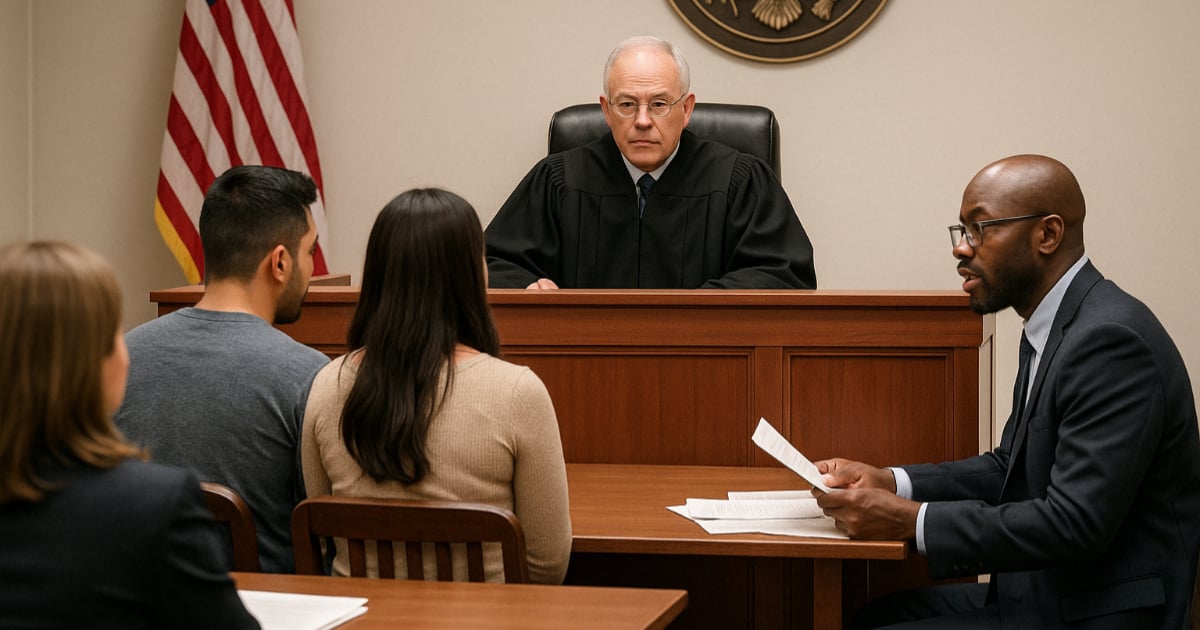
A Cuban father who had been living in the United States for years, married to a legal resident and with a seven-month-old baby, was detained and put on a fast track for deportation after attending a migration hearing he believed was routine.
The incident was reported in an investigation by Associated Press (AP), where it is noted that the courts have become genuine “deportation traps” under the policies of the Donald Trump administration.
The man arrived at the court accompanied by his wife and young son, adhering to the official summons.
Inside the room, the government lawyer awaited, who acted swiftly to ensure that the judge dismissed his asylum request, which automatically rendered him eligible for expedited deportation.
Upon exiting the room, he was surrounded by plainclothes immigration agents who had been watching him from the hallway.
There was a struggle, while the desperate screams of his wife could be heard from outside, and the government lawyer, who had coordinated the operation with ICE, calmly moved on to the next case.
The scene had been meticulously planned. Minutes earlier, the government attorney had sent a text message to an ICE agent stationed in the courthouse hallway.
"I can't handle this. This is a new emotional burden," she wrote while reviewing the day's case list.
According to AP, the agent responded: “I understand. I hope we meet again in a better situation.”
After the judge's decision and the Cuban's arrest, the agent notified via text message just four minutes later: "We've got him."
According to documents and screenshots of internal messages obtained by AP, this type of coordinated operations between attorneys from the Department of Homeland Security (DHS) and ICE agents has become increasingly common in the 75 immigration courts across the country.
Instead of providing a genuine opportunity for defense, many hearings end with the government's dismissal of the case and the immediate arrest of the asylum seeker in the hallway, in what officials describe as a system that operates "almost like an assembly line."
The same pattern
The investigation by AP documents that, for several months, its reporters observed procedures in immigration courts across 21 cities in the United States.
There, they saw the same pattern repeat itself: the government asked the judge to close the case, leaving the migrant—often without a lawyer—in a situation of expedited removal, while ICE agents waited outside to detain him.
The text message screenshots, provided by an official who requested anonymity for fear of reprisals, show government lawyers sending real-time updates to the agents about what was happening in the courtroom.
These practices are part of a profound reform of the immigration courts under Trump's administration, who was re-elected in 2024 with the promise of implementing hardline immigration policies and executing mass deportations.
In the last nine months, the administration has dismissed nearly 90 immigration judges deemed too "lenient" by their allies, mandated the use of masked agents to handcuff migrants during closed-door hearings, and issued internal memoranda requiring judges to strictly adhere to the guidelines set by the attorney general.
Nine active officials consulted by AP, who spoke on the condition of anonymity, expressed concern about how the system is being used to punish individuals who have followed the law.
"The 'worst'?"
The White House and its spokespersons maintain that the deportation campaign targets the “worst offenders,” but data analyzed by the Cato Institute based on information from ICE—cited by AP—indicates that the majority of those detained have no criminal record.
In many cases, these are individuals who arrived in the country alone, without legal representation, compelled to appear physically before the court and turned into prime targets for arrest operations.
The tightening of immigration policies in the U.S. is resulting in the detention of Cubans with I-220A and I-220B status during their check-in appointments with ICE, despite many having no criminal records and complying with all regulations.
This phenomenon has generated alarm and concern within the Cuban community, as the detentions appear to be part of a broader strategy of surveillance and intimidation.
Relatives and lawyers of the detainees are seeking legal advice and appealing to the community for support. However, the situation remains uncertain and distressing for many affected families.
Filed under: