
Related videos:
The Cuban government published the draft law that aims to exceptionally shorten the mandate of municipal delegates and adjust the electoral calendar of the country. The proposal comes at a time of significant social and economic tension, when citizens are demanding greater transparency and participation, and when the legitimacy of the local structures of the People's Power is going through one of its most fragile moments.
The project, published by the National Assembly of People’s Power and signed by its president, Juan Esteban Lazo Hernández, establishes that the current term of municipal delegates will not be five years, as determined by the Constitution, but rather four, concluding in November 2026, whose approval by the National Assembly is practically a given, given the formal nature of such legislative processes in Cuba.
The Assembly argues that this cut is necessary to "restore the electoral sequence" between the election of municipal delegates and that of national deputies, which became out of sync following the COVID-19 pandemic.
On its website, Parliament insists that the publication of the document aims to promote citizen participation, inviting Cubans to send their opinions via email. This is an uncommon gesture in the official legislative dynamics, where processes often reach the full assembly with minimal real public engagement. Nevertheless, for many Cubans, the key question is not technical but political: why the urgent need to move the electoral calendar now?
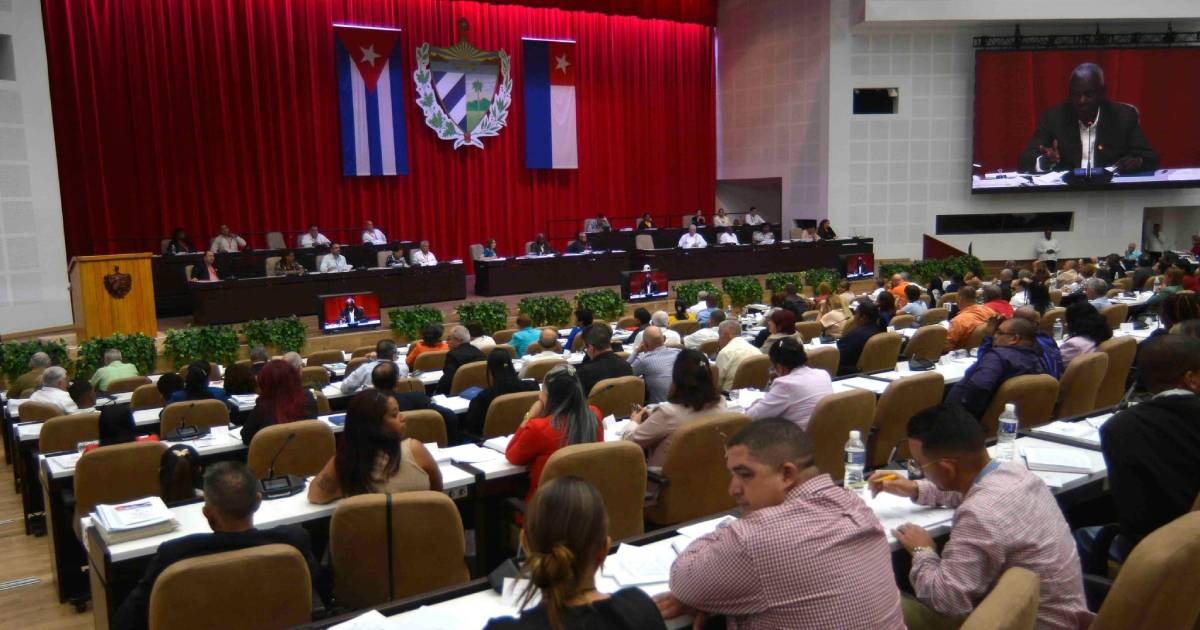
The announcement of the project comes just days after, on November 26, the Assembly called for its Sixth Ordinary Period of Sessions, scheduled for December 18.
In that session, the government's economic measures will be evaluated, the state budget for 2026 will be discussed, and several accountability reports will be considered, including one from the Provincial Government of Ciego de Ávila. Various bills will also be analyzed, including the one that alters the mandate of the delegates.
The timing of events does not go unnoticed. While large sectors of the country are facing blackouts, food shortages, inflation, and a growing deterioration of services, the Government is focusing part of its attention on reorganizing the political calendar, a process many view as detached from the urgent everyday issues.
For those living on the island, the announcement not only raises concerns but also skepticism. The municipal structures of the People's Power, including district delegates, carry a deep discredit after years of demonstrating an almost complete inability to address the daily problems of the people.
In many neighborhoods, these delegates are no longer seen as effective representatives and are perceived more as symbolic figures without real tools, unable to respond to complaints about potholes, landslides, unsanitary conditions, collapsed transportation, or endless power outages.
In this context, changing the duration of their mandates without transforming a dysfunctional system only reinforces the feeling of distance between the authorities and a citizenry weary of the lack of change, no matter how much the political calendar shifts.
The Parliament asserts that the proposal has already been debated in prior consultations and will be discussed again in December.
Filed under: