
Related videos:
The Cuban Yunisley Suárez Rodríguez, a resident of Villa Clara, exploded on social media against the regime due to the critical electrical situation the country is facing, following several days of blackouts that —as she reported— prevent her children from sleeping or eating properly. In a post that went viral on Facebook, : “As long as there is no electricity, my children are not going to school. Anyone is welcome to come here and create chaos. I’m fed up with everything.”.
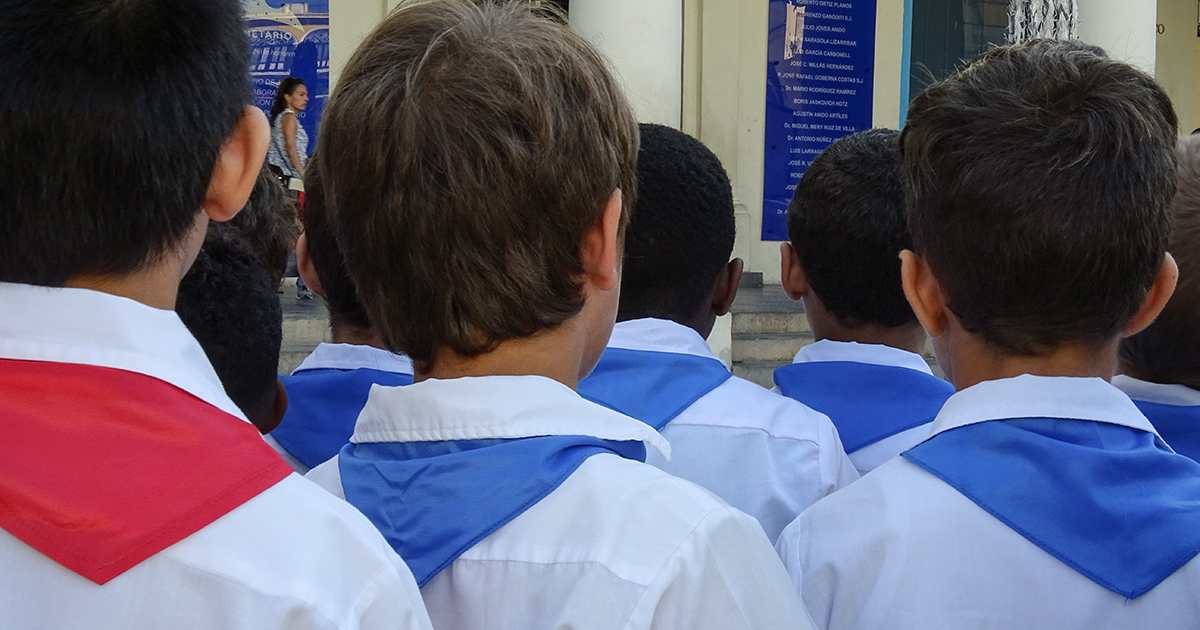
The mother also expressed her rejection of school indoctrination and the corruption of the regime by stating that “that's why my children neither wear kerchiefs nor shout slogans. Bastards, they are murderers, corrupt, incompetent, thieves. Children need to eat and sleep. Cuba needs freedom, damn it!”. Her message, accompanied by a photo of her two children dressed in school uniforms, has become a symbol of the exhaustion and indignation felt by many Cuban mothers enduring the same conditions.
Yunisley's post generated hundreds of reactions and comments on her profile, where many mothers expressed feeling identified. One user told her, “you’re doing great, I support you; my granddaughter isn’t going either,” while another commented, “if only all mothers were like this, damn.” The messages shared the idea that “with 200 mothers like you, these communists would be exposed,” or that “I didn’t send my nephew to military service; I turned Guanabacoa upside down.”
Among the harshest comments, one user wrote that "if all the mothers in Cuba shared your same thoughts, everything would be better," while another added: "I also don’t send my daughters when there is no electricity; they study when conditions are right, not when there is hunger and fatigue." There were also those who warned that "in Cuba, children wake up without sleeping and without breakfast, and still they expect them to learn."
Other messages openly defended Suárez's attitude as an act of civic rebellion. “That's what all mothers should do, a school strike until they respect the children,” wrote one woman. Another user stated: “Women in Cuba are braver than men; they are the ones demanding freedom.”
Among the most emotional responses, one could read: "You have a lot of courage, may God bless you. Children need care and respect. Without food and sleep, no brain can function." There were also isolated criticisms reminding her that "the harm is done to your children, not to the government," although the majority supported her decision.
The words of Yunisley, shared on the page of CiberCuba Noticias, also triggered an avalanche of comments. One user stated that “all mothers should do the same; it is inhumane for a child to attend school without having been able to sleep all night,” while another recounted: “I haven't had power since Saturday, my daughter didn't go to school, she won't go tomorrow either, and it will continue like this.”
Another reader commented, “I don’t have small children, but I wouldn’t send them off for entire nights without electricity or bread the next day for breakfast. This is not living,” and several agreed that “what we are experiencing is inhumane; there’s not even electricity to drink cold water, it’s a lack of everything.”
Some comments pointed to a general sense of exhaustion: “Cuba hurts in every sense; there is no hope anywhere; mothers don't even have a glass of milk for their children.” Another added, “Enough is enough; they want to exterminate us. There are no medicines, no food, no electricity; may God place His hand on this country.” There was also someone who summarized the collective sentiment by saying, “There is no bread, no water, no gas; what do those children have for breakfast?”
Although some voices disagreed—such as those who pointed out that “the harm is being done to the children, not to the government” or that “children need to learn even if the conditions are harsh”—the vast majority supported the mother from Villa Clara. Several messages emphasized that “this is not politics, it is humanity; children need to sleep and eat, not slogans,” and that “Cuban women have more courage than many men; they are asking for freedom for their children.”
Cuba: a country in the dark
The message from this mother arrives amid the worst energy crisis of the year in Cuba. According to data from the Unión Eléctrica (UNE) and reports from the EFE agency, 62% of the national territory was without electrical service on Monday, December 8, the largest outage of the year. The technical report indicated that “service was disrupted for 24 hours yesterday” and that the maximum impact due to capacity shortfall reached 2,084 MW at 6:10 PM.
The national electrical system remains in a critical state, with a deficit of more than 2,000 MW during peak hours and several thermal plants out of service due to breakdowns, lack of fuel, and lubricants. Prolonged blackouts have led to food spoilage, the suspension of basic services, and increased social unrest. In many provinces, outages exceed 20 hours per day, directly impacting the rest and nutrition of thousands of families.
Marianao and other protests: indignation takes to the streets
While mothers like Yunisley express their desperation on social media, the streets have also become a stage for demands. On the night of December 8 to 9, residents of Marianao, Regla, Alamar, Santos Suárez, San Miguel del Padrón, La Lisa, and Camagüey took to the streets to protest amidst widespread blackouts.
According to videos shared by the rapper El Funky, dozens of residents banged pots, lit bonfires, and blocked streets to demand electricity, food, and basic rights. "The people of Marianao know what to do when the power goes out," wrote the artist while sharing the images, and added in another post: "Marianao has spoken out. Let's go, Cubans."
The Cuban Observatory of Conflicts (OCC) reported in November 1,326 protests across the country, marked by demands for electricity, food, and civil liberties. Despite the official silence, videos shared on social media reveal a growing public discontent against the energy collapse and the lack of responses from the regime. “People can’t take it anymore. We went out to protest because there is no electricity, no food, no future,” wrote a user from Havana.
A cry from the darkness
The message from Yunisley Suárez encapsulates the feeling of exhaustion and frustration of a people living amidst blackouts, scarcity, and despair. While the regime tries to justify the crisis by citing a lack of resources and external sanctions, Cubans continue to denounce the precariousness and neglect in which they live. “Children need to eat and sleep. Cuba needs freedom.,” wrote the mother, in a phrase that has been echoed hundreds of times and reflects a shared cry from millions of Cubans who are only asking for something as basic as light, rest, and dignity.
Filed under: