
Related videos:
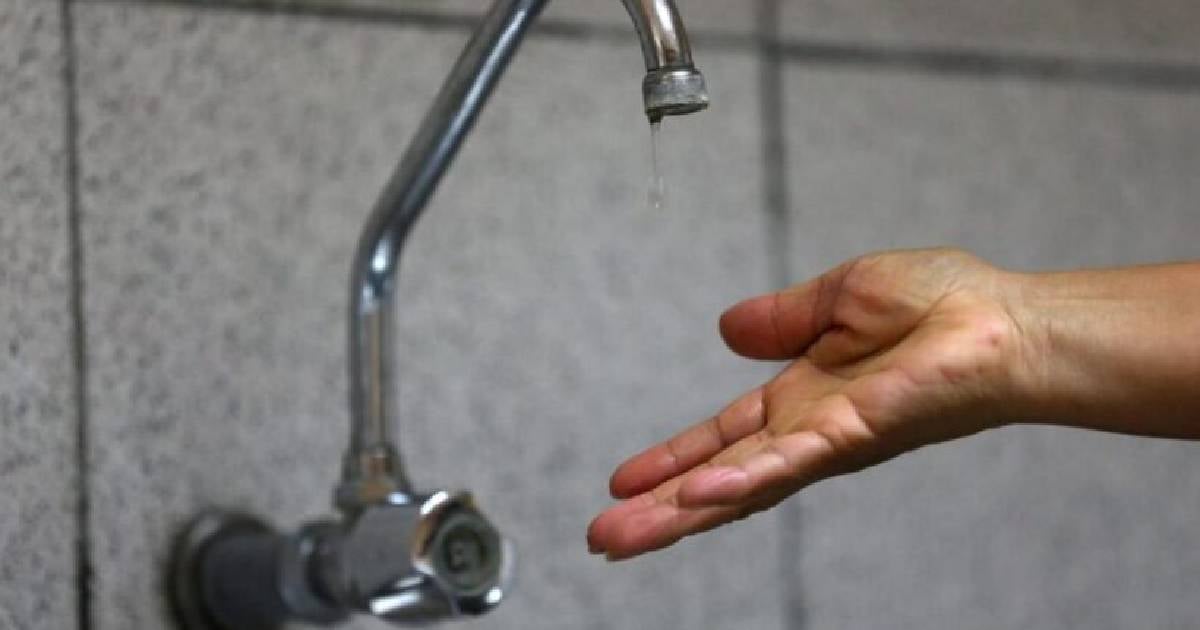
The province of Matanzas is facing one of its worst water supply crises in years, with pumping equipment out of service, collapsed hydraulic networks, constant blackouts, and infrastructure at its breaking point, despite being, ironically, a territory with abundant groundwater reserves.
In this regard, the provincial director of the Water and Sewerage Company, Guillermo Cué Lugo, explained that multiple key pumping equipment has gone out of service this week. Due to a breakdown in Guanábana 110 that occurred on Wednesday morning, since 7:00 am that day, "all the wells in Matanzas are currently halted."
The province has 225 pumping units, but a good number of them are inactive or affected: from San Carlos in Jovellanos, passing through Canímar 3 (Matanzas), San José de los Ramos (Colón), Fructuoso Rodríguez (Limonar), Manuelito (Pedro Betancourt), to the Ciénaga de Zapata, Cué reported to the official newspaper Girón.
Additionally, places like Pedro Betancourt, Unión de Reyes, Bolondrón, Jovellanos, Colón, or la Ciénaga face the complexity of pumping very little, he noted.
The technical problem is compounded by a deeper issue: the energy crisis, which prevents systems from operating for more than four or five hours a day, whereas they should be functioning for at least 16 hours. Furthermore, when the electrical service is restored, the equipment takes up to an additional 4 hours to stabilize.
"With the departure of a single unit, the electrical system in an area is disrupted, leading to a water shortage. In such cases, we need to implement a startup plan to prevent the phenomenon of water hammer; that is, to avoid a water shock that could cause damage to the pipeline,” explained the official.
Cué referred to the alternative of distributing water by truck in all municipalities, although he acknowledged the "issues" present on some routes, "especially in areas like Playa, in Matanzas, although efforts are being made to distribute it on time, with the best possible organization."
The pumping will improve... when it is possible
But in the neighborhoods, the official version does not convince. The outrage is palpable. In a letter sent to the section Apartado 1433 of the newspaper Girón, published on May 12, Juana Ordóñez Medina, a resident of Ayuntamiento Street in the provincial capital, reported that they have gone more than 10 days without receiving a single drop of water.
“However, sometimes we see how it runs down the street and doesn't reach the homes. In my block, most of the people are elderly or disabled individuals living alone. The local delegate is aware of it, who has arranged for water delivery by truck, but so far none have arrived here. This also does not solve the problem, what we need is service through the aqueduct,” wrote Ordóñez.
The situation was confirmed by Cué and Isis Flores Morales, a specialist in Population Care at the Water and Sewer Company, who corroborated the described problem and explained that the main cause lies “in the electricity deficit, which affects pumping for more than eight hours, combined with the deterioration of the hydraulic networks in the area,” the media outlet emphasized.
The neighbors on Velarde Street, between Manzaneda and Zaragoza, in the Simpson neighborhood, heard the same, also severely affected, as the temporary crisis, now nearly permanent, has lasted for over 25 years.
“The occasional solution we have taken is to connect hoses from other blocks where there is always water. We need an analysis or study of the causes to reach a definitive solution, possibly by connecting the networks to unaffected branches,” Cué and Flores responded in a letter to section Apartado 1433.
Both pointed out that "the solution, in this case, does not involve investments in networks, but rather in improving the pumping system, which has significantly deteriorated over years of operation. The problem is now exacerbated by power outages, which prevent maintaining stability in water pumping."
Despite the arrival of the rainy season, several Cuban provinces are being hit by drought, with key water sources in critical condition, making the supply of this vital resource more challenging. Furthermore, power outages worsen the pumping situation.
For example, in Holguín, more than 370,000 people are affected by a combination of a prolonged absence of rainfall, frequent power outages, and technical failures in the pumping systems.
In the municipality of Palma Soriano, in Santiago de Cuba, the delivery cycle exceeds 30 days, while in Songo-La Maya people have waited up to 85 days to receive the service.
Meanwhile, in the province of Sancti Spíritus, the number of people receiving water through tank trucks has doubled in just one year, from about 40,000 in May 2024 to nearly 82,000 at present.
In Ciego de Ávila, due to the reduction of flow in the main supply sources and the decline in the performance of pumping equipment, local authorities have imposed a water distribution cycle of 24 hours every nine days in all the popular councils of the municipal capital, with very negative impacts on economic, social, and agricultural entities.
Frequently Asked Questions about the Water Crisis in Matanzas and the Energy Situation in Cuba
What is the main cause of the water crisis in Matanzas?
The water crisis in Matanzas is primarily due to a combination of failures in the pumping equipment and the energy crisis facing the province. The constant blackouts prevent the pumping systems from operating for the necessary amount of time, which further exacerbates the situation due to the deterioration of the hydraulic networks. This situation reflects the Cuban regime's inability to maintain adequate infrastructure and ensure basic services for the population.
How does the energy crisis affect the water supply in Cuba?
The energy crisis in Cuba, characterized by prolonged blackouts, severely impacts the water supply. The blackouts hinder the proper functioning of pumping equipment, significantly reducing operating time and complicating the distribution of water. This situation is critical in provinces like Matanzas, where the lack of electricity limits the ability to provide a stable and sufficient supply to the population.
What alternatives are available for water supply in Matanzas in light of the current crisis?
One of the alternatives for water supply in Matanzas is distribution through trucks. However, this measure faces limitations due to "impacts" on the distribution routes, and it is not sufficient to resolve the structural problem. Residents express that what they truly need is a stable service through the aqueduct, which requires significant improvements in the pumping infrastructure and hydraulic networks.
What is the social impact of the water and energy crisis in Cuba?
The social impact of the water and energy crisis in Cuba is devastating, affecting the quality of life for millions of people. The scarcity of water limits basic daily activities, impacts hygiene and public health, while prolonged blackouts hinder access to other essential services such as healthcare and education. This situation generates frustration and outrage among citizens, who are demanding effective and sustainable solutions from the Cuban government.
Filed under: