
Related videos:
The Cuban regime has once again blamed alleged "subversive campaigns" promoted from abroad for the recent university protests that have shaken various faculties across the country in response to the new fees imposed by ETECSA.
While students from various universities are calling for academic strikes and denouncing exclusionary measures, the official narrative continues to delegitimize their actions and portray an image of normality and institutional dialogue.
In an article published on June 4 by the ultra-official newspaper Granma titled “An Invincible Response: Unity,” the regime argues that “an aggressive imperial policy” seeks to subjugate Cuba “through lies and economic pressures”.
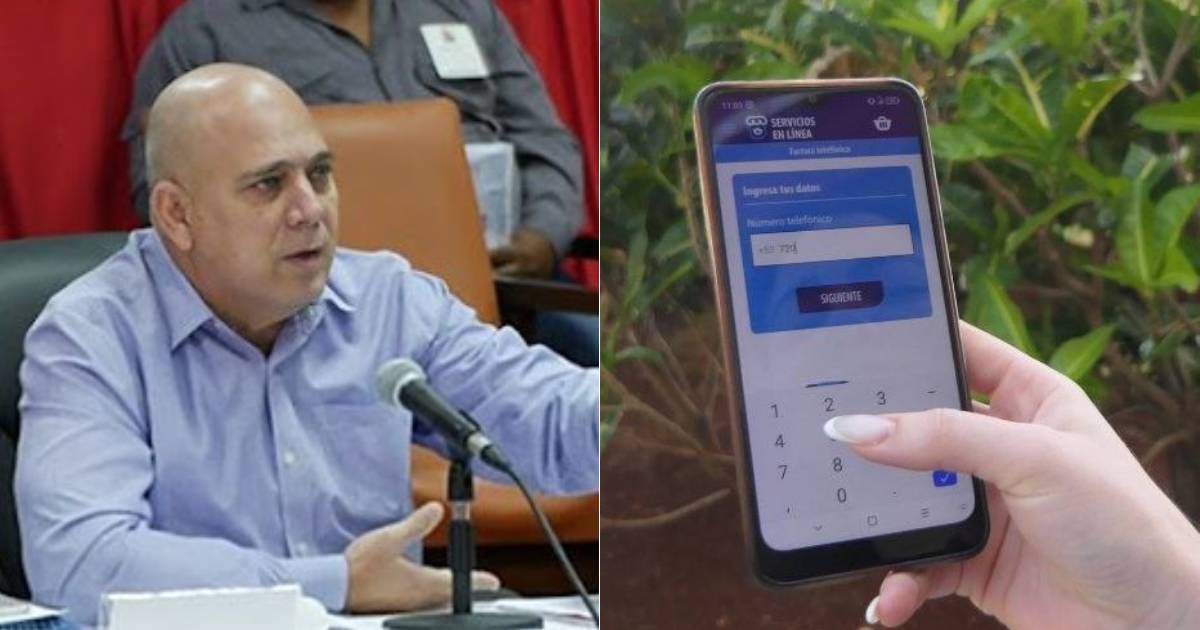
The Secretary of Organization of the Central Committee of the Communist Party, Roberto Morales Ojeda, warned about a "media war" that, according to him, aims to "instigate chaos, promote violence, and fracture the peace of our Homeland."
"There is no room for naivety," asserted Morales Ojeda. "The media war is not a game; it is a weapon of destabilization aimed not only at our political system but also at the real concerns of our people."
In that regard, Granma suggests that the recent demonstrations are the result of external incitements aimed at “diminishing the value of dialogue spaces” and fracturing the connection between young people and institutions.
The article emphasizes that it will be precisely the "conscious, critical, and revolutionary unity" that will prevent these expressions of discontent from leading to violence or institutional rupture.
The same speech was reiterated in a recent broadcast of the National Television News (NTV), which denied the existence of a student strike and portrayed the protests as external manipulations. “The educational process continues to develop,” declared journalist Talía González, emphasizing the supposed normalcy in university classrooms.
Spokespeople from the National Student Federation (FEU) stated on camera that “the organizations do support us” and defended the path of dialogue with ETECSA. However, this stance strongly contrasts with the reality experienced in several faculties.
Student rejection and internal fractures
Despite the official narrative, student statements denouncing the rising costs of internet access are multiplying as a direct assault on the rights of the people. The Faculty of Communication at the University of Havana rejected the 6 GB package offered by ETECSA, and defended a “critical and strategic” dialogue without accepting fragmented privileges.
Even more forceful was the statement from the Faculty of Communication and Letters of the University of Holguín, which called for an indefinite academic strike starting June 7 until the new measures are repealed. “We are not a privileged minority; we are the voice of a people tired of paying for inefficiency,” they asserted.
In other universities, such as the University of Exact and Natural Sciences, students of Mathematics and Computing announced that they will continue the faculty strike. "We mobilize for social justice, not for scraps", they wrote.
The rebellion has not been confined to the academic realm: the Faculty of Biology rejected the authority of the national president of the FEU, Ricardo Rodríguez González, while the Faculty of Philosophy, History, Sociology, and Social Work demanded his immediate resignation for being deemed “uncritical and conformist.”
Filed under: