
Related videos:
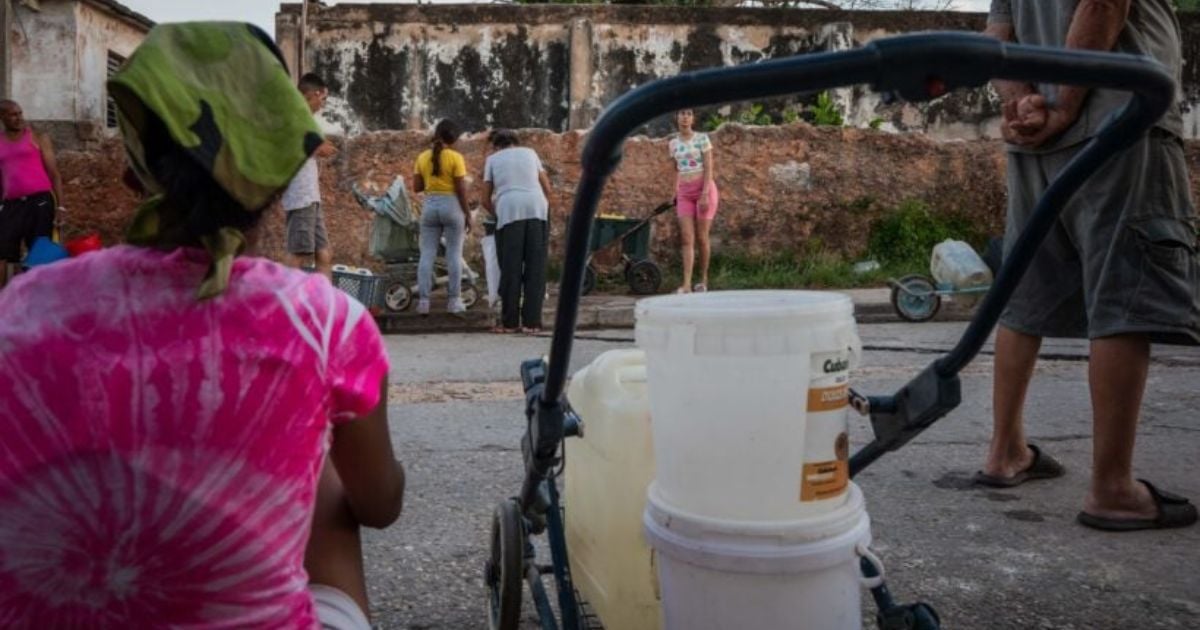
The water supply crisis in Santiago de Cuba continues to worsen, with cycles lasting up to 21 days without service in various communities, forcing thousands of residents to face severe difficulties in meeting basic needs such as hygiene, food, and sanitation.
According to a statement released by the government-affiliated Tele Turquino through its page on Facebook, the Water and Sewage Company "Aguas Santiago" reported that the issues affecting the water intake at the Quintero Water Treatment Plant have completely disrupted the planned schedule.
While the scheduled flow was 2,100 liters per second, we are currently receiving only 1,509 liters, which represents a significant decrease in supply and has caused a collapse in the normal hydrometric cycles.
The Quintero System, which supplies a large part of the northwest area of the city, can only establish distribution cycles of between 18 and 21 days, and in areas like Maestra 1 and Maestra 2, outages are even more frequent.
Although 20 tank trucks have been deployed —13 owned and 7 from other organizations— to assist the most affected communities, resources remain insufficient to meet the widespread demand. This indicates that the population will face serious limitations in access to water in the coming days, further exacerbating their daily lives.
The company claims to be working, alongside the province's Hydraulic Resources system, on remedial measures to alleviate the crisis, although it did not specify which options the government is considering.
Meanwhile, areas such as Flores Alto, Siboney, Vista Alegre, El Cobre, and specific zones of the Antonio Maceo and Van Van neighborhoods receive limited water supply through pumping or gravity, with reduced hours and frequent interruptions.
Social unrest is increasing, especially among vulnerable sectors, and authorities have urged the population to conserve water while sustainable solutions are sought.
Currently, more than half a million people in Cuba are facing severe disruptions in their drinking water supply, as acknowledged by National Television in a report.
The main causes, according to the National Institute of Hydraulic Resources (INRH), are the intense drought, the breakdowns of pumping equipment, and the energy deficit affecting the supply stations.
The engineer Antonio Rodríguez, president of the INRH, admitted that “38% of those affected is due to drought. In May, there was little rainfall, not exceeding 50%. So far in June, only 24% of rainfall has occurred in the eastern part of the country. This week, more than 300,000 people in Santiago de Cuba are affected without a water supply. The drought in Cuba is severe.”
Frequently Asked Questions about the Water Crisis in Santiago de Cuba
What is the current situation of the water supply in Santiago de Cuba?
The water supply situation in Santiago de Cuba is critical, with cycles of up to 21 days without service in several communities. This has forced thousands of residents to face severe difficulties in meeting basic needs such as hygiene, food, and sanitation.
What are the main causes of the water crisis in Santiago de Cuba?
The main causes of the water crisis in Santiago de Cuba include intense drought, equipment breakdowns in pumping systems, and the energy deficit affecting supply stations. The drought has been particularly severe, with rainfall significantly below normal levels.
What measures are the authorities taking to address the water crisis?
The authorities have activated 20 water tankers to assist the most affected communities, but resources remain insufficient compared to the widespread demand. Additionally, temporary solutions are being sought in collaboration with the province's Hydraulic Resources system.
How is the water crisis affecting the population of Santiago de Cuba?
The water crisis is severely affecting more than half a million people in Santiago de Cuba, who are facing serious limitations in accessing drinking water. This impacts not only domestic needs but also hygiene and public health in these communities.
Filed under: