
Related videos:
Santiago de Cuba is facing one of the worst water crises in recent years, with nearly 400,000 people affected by the lack of drinking water due to the ongoing drought that is impacting the eastern region of the country.
In light of this situation, the authorities have urged the population to achieve a "more efficient use" of resources, while they implement emergency measures to try to alleviate the shortages, as confirmed by the official press.
According to Beatriz Johnson Urrutia, the first secretary of the Provincial Committee of the Communist Party of Cuba in Santiago de Cuba, new pumping equipment is being supplied, some powered by solar energy, and there is "progress" being made in the repair of systems and the elimination of leaks, prioritizing those that cause the most significant losses.
It was also noted that they have adjusted the distribution cycles and have taken measures to reduce consumption in high-cost facilities, such as educational centers with scholarship students, taking advantage of the end of the school year.
However, official actions have failed to alleviate the desperation of the people of Santiago. On social media and local media, citizens are denouncing the severity of the problem and the lack of effective solutions.
“The figure is below, this situation is unbearable, heat, no electricity and no water, and no alternatives are being sought,” commented a resident of Santiago, noting that in high-rise buildings the situation is even more critical, as carrying water up the stairs is nearly impossible without an elevator or electricity.
Other voices are calling for priority attention for hospitals and healthcare centers. “I have my daughter hospitalized, and the situation with the water is depressing, even in services like intensive care,” a mother reported, highlighting the risks for patients and healthcare staff.
The president of the National Institute of Hydraulic Resources, Antonio Rodríguez Rodríguez, visited the province this weekend along with other executives to supervise ongoing actions and "listen" to the concerns of the population.
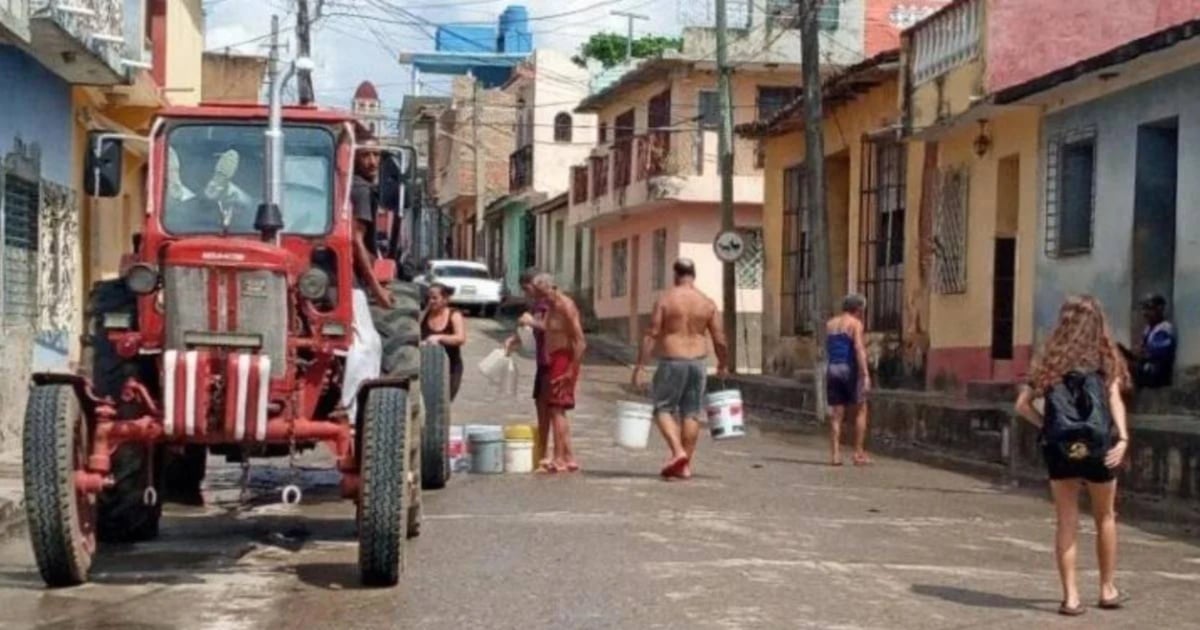
Meanwhile, complaints about clandestine connections, irregular distribution, and the urgent need to find alternatives such as supply through tanker trucks continue to persist.
The water crisis in Santiago de Cuba is exacerbated by high temperatures and frequent blackouts, deepening social unrest and increasing the demand for quick and sustainable solutions from the authorities.
Distribution cycles extend up to 21 days without service in various communities, forcing thousands of residents to face severe difficulties in meeting basic needs such as hygiene, food, and sanitation.
Although 20 water trucks have been deployed—13 from our own resources and 7 from other organizations—to assist the most affected communities, the resources remain insufficient to meet the widespread demand. This reveals that the population will face serious limitations in accessing water in the coming days, further exacerbating their daily lives.
Frequently Asked Questions about the Water Crisis in Santiago de Cuba
How many people are affected by the water crisis in Santiago de Cuba?
About 400,000 people are affected in Santiago de Cuba due to the lack of drinking water, mainly caused by the severe drought and issues in the supply infrastructure.
What measures are the authorities taking to address the water crisis?
Authorities have implemented emergency measures such as supplying new pumping equipment, some of which is powered by solar energy, and repairing existing systems. The elimination of leaks and the reduction of consumption in high-use facilities, such as schools, are being prioritized following the end of the school year.
What is the situation in the most affected areas of Santiago de Cuba?
Some areas have gone more than four months without regular water supply, such as Punta Gorda Alta and Aguadores. This lack of service has forced families to seek alternative sources, increasing the challenges for hygiene and public health.
Why is the water crisis in Santiago de Cuba so severe?
The water crisis is exacerbated by several factors: an intense drought, constant failures in pumping equipment, and an energy deficit that affects the supply stations. Furthermore, breaks in the infrastructure and a lack of parts complicate the stable distribution of the resource.
How does the water crisis affect the population of Santiago de Cuba?
The lack of potable water compromises personal and household hygiene, affecting the daily lives of residents. Moreover, the water shortage severely impacts agricultural production, which is the foundation of many families' livelihoods. The combination of power outages and high temperatures creates an environment of social unrest and demands urgent solutions.
Filed under: