
Related videos:
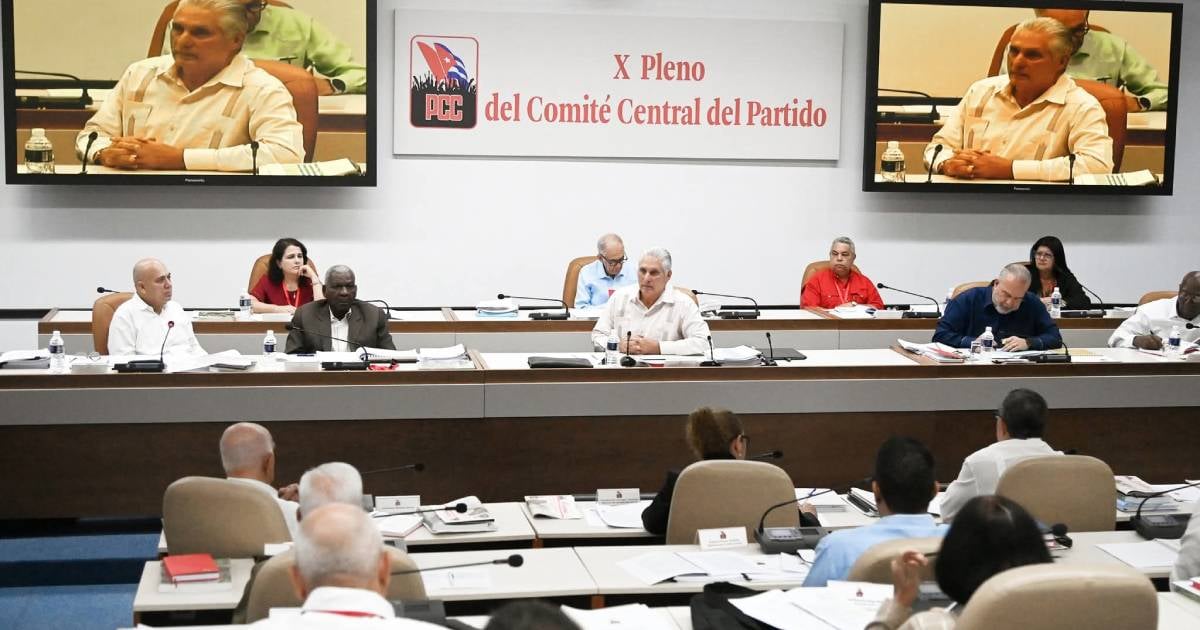
The Communist Party of Cuba (PCC) has announced the official call for its 9th Congress in April 2026, in a national context marked by a profound economic crisis, increasing social inequality, and an unprecedented migratory exodus.
The Party leadership once again relies on the rhetoric of sacrifice, while millions of Cubans face basic shortages, prolonged blackouts and an increasingly uncertain future.
The announcement, released this Saturday by the Central Committee of the PCC, presents the event as a “congress of the whole people,” although in practice the mechanisms for real citizen participation in strategic decisions remain limited.
In the document, the PCC emphasizes the need to maintain unity, strengthen revolutionary ideology, and combat “social indiscipline”, at a time when public discontent is growing due to the lack of concrete solutions to everyday problems.
Among the central objectives of the Congress, the Party mentions the recovery of the electricity system, the increase in food production, macroeconomic stabilization, and inflation control. However, these priorities have been reiterated in previous events without tangible results for the population.
"We set ourselves a development project that we have not given up on. Even though it has not been fully realized, the mere fact of persevering is a victory for the Cuban people," states the announcement, in a phrase that many interpret as an implicit acknowledgment of the country's economic and political stagnation.
The call comes on the eve of the centenary of Fidel Castro's birth, a central figure in the official narrative, and just a few weeks before the anniversary of the assaults on Moncada and the Carlos Manuel de Céspedes barracks, milestones that the Government uses as symbols of historical continuity.
The call for the 9th Congress places special emphasis on ideological and media combat, referring to the "information war" allegedly waged by foreign media and social networks, according to the regime.
This insistence on the ideological front contrasts sharply with the absolute silence regarding the wave of migration caused by the exodus of over half a million Cubans in recent years, a topic that is completely absent from the text.
It also does not mention the growing social discontent that has been expressed in spontaneous protests, such as those in July 2021 or March 2024, nor the repression that has followed these demonstrations. Instead of genuine self-criticism or proposals for political opening, the document maintains the discourse of resistance and blames U.S. imperialism as the main cause of national difficulties.
Although the PCC claims that the Congress will be preceded by a "broad consultation process," the lack of political pluralism and the absence of an independent press on the island raise doubts about the scope and authenticity of these debates. The single-party structure stifles the competition of ideas and consolidates a political elite that remains in power without being held accountable to the people.
From Raúl Castro's departure to the current stagnation
The VIII Congress, held in April 2021, marked the official departure of Raúl Castro as First Secretary of the Party, thus concluding more than six decades of formal leadership by the Castro family over Cuba's political structure. “My task is concluding… with the satisfaction of having fulfilled it,” said the retired general, leaving the direction of the party and the country in the hands of Miguel Díaz-Canel.
That transfer of power was presented as a generational renewal, but with few signs of transformation in political practice. Raúl warned in his final speech that “there are limits we cannot surpass,” referring to market reforms or political openness, and asserted that “that path would destroy the health and education systems.”
Since then, the country has undergone an even deeper deterioration of its economy, marked by unstoppable inflation, a collapse of the electrical grid, a plummeting real wage, and record numbers of emigration, particularly among young people. The promises of a “development strategy” have dissolved in the reality of a nation where, as even government leaders acknowledge, many families struggle to meet basic needs.
Filed under: