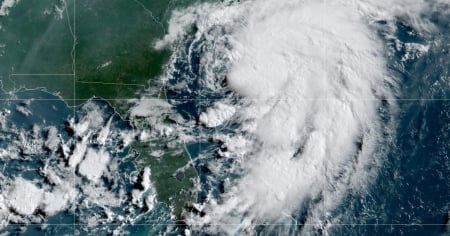
Colorado State University (CSU) released an update on its hurricane season forecast for 2025 in the Atlantic this Wednesday, showing a slight reduction in the figures but maintaining the alert for above-average activity.
The new report, shared on the social network X by meteorologist Philip Klotzbach, estimates a total of 16 named storms, 8 hurricanes, and 3 major hurricanes (Category 3 or higher).
This represents a slight adjustment from the June forecast, which predicted 17 storms, 9 hurricanes, and 4 major hurricanes.
“CSU slightly lowered its seasonal forecast, but still expects a season that is slightly above average,” noted Klotzbach, who is one of the leaders of the forecasting team at the university's Tropical Climate Research Center.
Despite the reduction, the values still exceed the averages for the period 1991–2020, which are 14.4 storms, 7.2 hurricanes, and 3.2 major hurricanes.
The report also anticipates 145 net tropical cyclone activity points (NTC) and 140 accumulated cyclone energy points (ACE), key indicators that measure the intensity and duration of tropical systems.
The July review takes place in a context where sea surface temperatures in the Atlantic Ocean remain far above average, which favors the formation of cyclones, and the absence of the El Niño phenomenon is expected, which typically helps to weaken or disrupt these formations.
In its previous analysis from June, CSU had warned that up to 56% of cyclonic activity could impact the Caribbean and southern Florida.
Although the new update does not change that information, it does reaffirm the need for vigilance in the region, including Cuba, where vulnerable infrastructure and the energy crisis exacerbate human risks.
Researchers insist that a single high-impact storm is enough to deem the season critical.
The next update of the forecast is scheduled for August 6.
In April, the CSU had indicated that 17 named storms were expected, of which nine could reach hurricane strength and four could become major category storms (Category three or higher on the Saffir-Simpson scale).
These figures exceed the historical averages of 14.4, 7.2, and 3.2, respectively, calculated for the period from 1991 to 2020, he emphasized at that time.
A month later, the Institute of Meteorology of Cuba announced its official forecast for the 2025 Atlantic Hurricane Season, warning of an active period in terms of tropical weather formation, with a moderate risk of direct impact on the country.
Frequently Asked Questions About the 2025 Atlantic Hurricane Season
What is the updated forecast for the 2025 Atlantic hurricane season?
The Colorado State University (CSU) has adjusted its forecast for 2025, predicting 16 named storms, 8 hurricanes, and 3 major hurricanes. Despite the slight reduction in numbers, activity remains above the historical average, with elevated ocean temperatures and the likely absence of El Niño as key factors.
How does the absence of the El Niño phenomenon affect the hurricane season?
The absence of the El Niño phenomenon generally favors the development of hurricanes in the Atlantic, as it reduces the winds that typically cut off or weaken these formations. This, combined with above-average ocean temperatures, creates a more conducive environment for an active hurricane season.
What impact is anticipated for the Caribbean, especially Cuba, during this hurricane season?
It is expected that 56% of cyclonic activity could impact the Caribbean, which poses a significant risk to Cuba. The country's vulnerable infrastructure and energy crisis exacerbate human risks in the event of a direct hurricane impact.
What measures should be taken in anticipation of an active hurricane season?
Preparation and monitoring are essential to mitigate the effects of an active hurricane season. Coastal communities must review and update their emergency plans, stay informed about forecasts, and be ready to respond quickly to any storm threat.
Filed under: