Less than three months before the Democratic Memory Law (LMD) expires, the Consulate General of Spain in Havana has issued a statement clarifying the current status of credentials and the appointment system for applying for Spanish nationality.
The announcement published on their website reiterates that credentials issued by the previous system are being progressively eliminated, and those who received them after April 2025 and have not yet scheduled their appointment can still do so.
At the same time, it is confirmed that the new digital system is in the coordination phase from Spain and will begin operating soon, although no specific date has been provided.
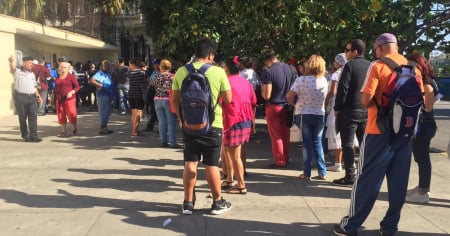
For many descendants of Spaniards in Cuba, obtaining an appointment to submit their documents has become a race against time, marked by misinformation, silent waiting, and the fear of being left out.
This situation is compounded by the lack of automated responses in the old system, which leaves applicants without confirmation or proof of having initiated the process, although the Consulate assures that “once the new platform is active, the corresponding receipt will be issued.”
Uncertainty has opened the door to the black market for credentials, where illegal sales of system access have been reported for as much as 800 euros. There have also been detected counterfeits of ecclesiastical documents, particularly baptism certificates, which can reach 3,000 euros in clandestine networks.
This reality reflects the desperation of those who see Spanish nationality not merely as a bureaucratic process, but as a legitimate way to improve their living conditions or to emigrate legally.
The clock is ticking towards October
The Law of Democratic Memory expires on October 22, 2025, although there is a legal provision that allows for the physical submission of documentation after that date, as long as the digital process was initiated before the deadline. The problem is that hundreds of Cubans have not even been able to take that first step due to not having access credentials.
Despite the fact that the Consulate has increased its weekly capacity by 27%, many fear that the new system will come too late. Groups on social media have begun to organize in order to demand greater transparency, create lists of those affected, and send collective letters to the Spanish authorities.
For thousands of Cuban families, obtaining Spanish nationality represents more than just a document: it is hope, it is dignity, it is future. However, the current administrative limbo threatens to exclude many, even those who have followed every instruction to the letter.
The Consulate has asked applicants to stay tuned to its official website and social media, where the definitive cessation of the old system and the launch of the new one will be announced. In the meantime, Cubans are waiting, with anxiety and a mix of faith and skepticism, for the digital transition not to become an insurmountable barrier to their right to citizenship.
Frequently Asked Questions about Spanish Nationality and the Law of Democratic Memory
What changes has the Consulate of Spain in Havana announced regarding the appointment system for nationality?
The Spanish Consulate in Havana has announced that all credentials issued by the previous system will be gradually eliminated, and a new digital appointment system will be implemented soon. Those who have credentials and have not booked an appointment must do so before their current access expires.
When does the Law of Democratic Memory expire and what does this mean for applicants in Cuba?
The Law of Democratic Memory expires on October 22, 2025. However, applicants who have started their process online before this date will be able to submit their documentation in person after the deadline, as long as they initiated it within the stipulated time.
What problems do Cubans face when applying for Spanish nationality under this law?
Applicants face delays, a lack of transparency, and the absence of automatic responses in the previous system, leading to misinformation and anxiety. Furthermore, the black market for credentials and forged documents adds a layer of complication to the process.
What measures has the Consulate taken to improve service for applicants?
The Consulate has increased its weekly service capacity by 27% and has announced a new digital system to streamline the appointment management process. The opening of a new consulate in Cuba is also planned to enhance consular assistance.
How does access to the Internet in Cuba affect the process of applying for Spanish nationality?
Limited and expensive access to the Internet in Cuba poses a significant obstacle for applicants, as the new digital system requires a stable connection to upload documents and successfully complete the process.
Filed under: