
Related videos:
More than 1.8 million individual and institutional contributions have been channeled by the Red Cross of Vietnam towards a campaign of solidarity with Cuba, which has exceeded 14 million dollars in just a few days, amidst the multidimensional crisis facing the island.
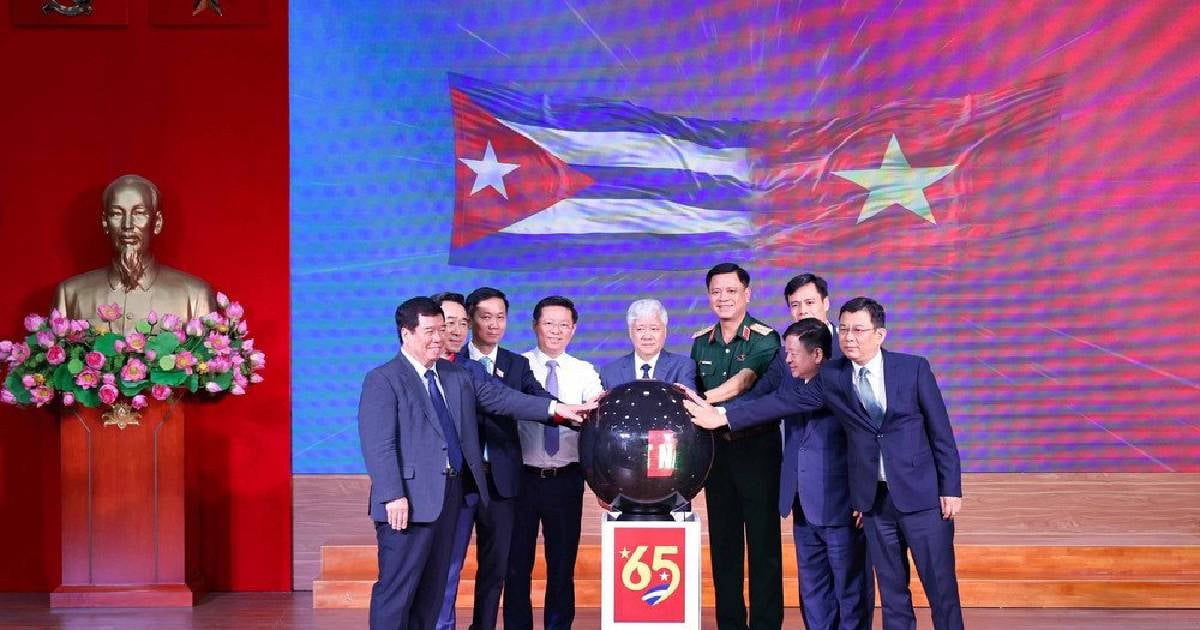
The entity confirmed that over 3.601 trillion dongs—equivalent to just over 14,060,000 dollars—were collected as a result of the campaign launched on August 13, the 99th anniversary of the birth of dictator Fidel Castro (1926-2016) and within the framework of the so-called Year of Vietnam-Cuba Friendship, coinciding with the 65th anniversary of the establishment of diplomatic relations between the two countries.
The organization itself presented the initiative as “a vivid symbol of the special friendship that exists between Vietnam and Cuba,” as well as the close political and diplomatic ties, reported the state agency Prensa Latina.
In the opening ceremony, the Vietnamese leader Do Van Chien, member of the Political Bureau of the Communist Party and president of the Vietnamese Fatherland Front, affirmed that the campaign aims not only to provide material resources but also to spread a message of international unity alongside Cuba.
Vietnamese authorities emphasized that the collection reflects a "fraternal affection" that has transcended economic limitations and geographical distances.
The president of the Red Cross of the Asian country, Nguyen Hai Anh, emphasized that the initial goal of 65 billion dongs was reached in just 30 hours, which in his view demonstrates the “firmness and loyalty” of the Vietnamese people towards the Cuban cause, the source highlighted.
The campaign, which will run until October 16, reflects the strength of diplomatic ties between both countries, but also highlights how the Cuban regime clings to the narrative of international solidarity, even as millions of people on the island face extreme poverty, collapsed hospitals and a quality of life in constant decline.
On August 15th, it was reported that citizens, companies, and public institutions in Vietnam had donated more than 4.8 million dollars in just 48 hours, at the start of the official campaign to support the Cuban regime, according to the state newspaper Vietnam News.
The Agroforestry Business Group (GEAF) of Artemisa and the Vietnamese company Viet Royal recently signed a memorandum in which they commit to utilizing idle land in Alquízar, San Antonio de los Baños, and San Cristóbal to cultivate soy, green beans, peanuts, malanga, potatoes, and cashews, with a significant portion of these products intended for the international market.
The project Cultivation of Industrial Plants for Consumption, Processing, and Export in the province of Artemisa includes several phases of development, among them the initiation of production on approximately 2,000 hectares of idle land in the three mentioned municipalities.
Additionally, a joint agricultural project between Cuba and Vietnam is progressing in the municipality of Los Palacios, in the province of Pinar del Río, with the goal of planting 1,000 hectares of rice.
According to the official newspaper Guerrillero, the initiative, led by the Vietnamese company Agri VMA, aims to turn the region into a high-tech rice zone, in yet another attempt by the regime to produce food.
All of this comes at a time when the Caribbean country is experiencing one of the worst food crises in decades, characterized by chronic shortages, a decline in national agricultural production, and an almost complete dependence on imports that the country can no longer afford.
Nonetheless, the Vietnamese company Agri VMA allegedly sent a letter in May to three Cuban ministers to “explain the urgent need to access their funds frozen in an account at the International Financial Bank.”
According to the independent newspaper 14ymedio, which had access to the document, the Vietnamese company was attempting to transfer 300,000 dollars to its parent company in Vietnam.
Likewise, the foreign minister of the Asian country, Bui Thanh Son "requested that Cuba continue coordinating efforts to eliminate difficulties and obstacles, creating favorable conditions for investment and business for Vietnamese companies” on the island.
In May, the Cuban government announced the creation of a new biopharmaceutical joint venture with Vietnam, between BCF S.A., from the state group BioCubaFarma, and the Vietnamese firm Genfarma Holdings.
"The alliance will allow us to export products manufactured in our country, with the aim of generating revenue that will be used for the development and production of medications for the Cuban population," stated at that time Mayda Mauri Pérez, president of BioCubaFarma.
Frequently Asked Questions about the donation campaign from Vietnam to Cuba
How much has Vietnam raised in the donation campaign for Cuba?
Vietnam has raised over 14 million dollars in the donation campaign to support the Cuban regime, a figure that significantly exceeds the initial goal of 2.5 million dollars.
What is the purpose of Vietnam's donation campaign to Cuba?
The purpose of the campaign is to provide material resources and spread a message of international unity alongside Cuba, amidst the economic and social crisis facing the island. Furthermore, it aims to strengthen diplomatic ties between both countries within the framework of the 65th anniversary of their diplomatic relations.
How does this campaign fit into the historical relationship between Vietnam and Cuba?
The campaign is presented as a symbol of the "special friendship" between Vietnam and Cuba, recalling Fidel Castro's historic phrase: "For Vietnam, Cuba is willing to give even its own blood!". This relationship has been characterized by acts of mutual solidarity, although it is also used as political propaganda, especially during times of internal crisis in both countries.
What economic projects are being developed between Cuba and Vietnam?
Joint agricultural projects are being developed between Cuba and Vietnam, such as rice planting in Pinar del Río and the utilization of idle lands in Artemisa for crops intended for the international market. These projects aim to boost food production in Cuba, although they face logistical and structural challenges.
What is the current situation of the crisis in Cuba?
Cuba is facing one of the worst economic crises in decades, characterized by shortages of food, medicine, and fuel, high inflation, and prolonged blackouts. The crisis is due to the structural inefficiency of the state system, the dependence on imports, and the lack of effective economic reforms, while the Cuban regime clings to the narrative of international solidarity to gain support from its allies.
Filed under: