
Related videos:
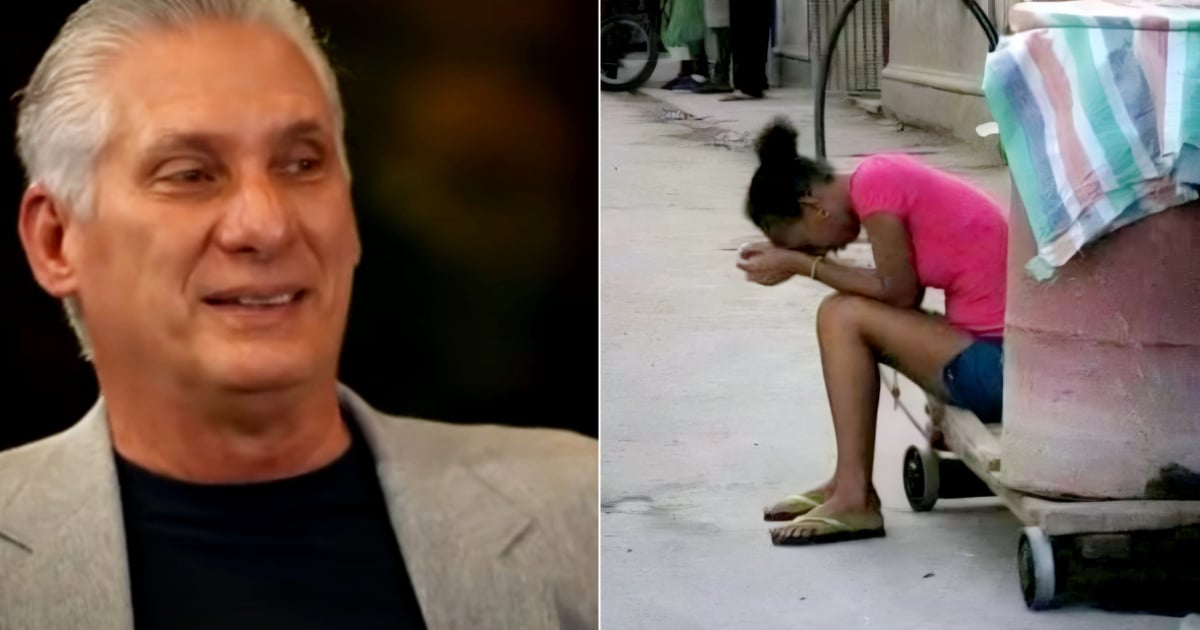
In the midst of an energy crisis, with daily blackouts, shortages of food and medicine, and inflation that suffocates the wallets of Cubans, the ruler Miguel Díaz-Canel sparked a wave of outrage on social media after posting a message praising Cuban women for their “creative resistance.”
“When I speak of creative resistance, I think of the Cuban woman. Due to her generous commitment to the common work, smiling in difficulty and singing in triumph. Congratulations, dear companions, for this revolution within the Revolution that you lead,” wrote Díaz-Canel on his X account (formerly Twitter).
The post, far from garnering approval, was met with a deluge of criticism from users who highlighted the stark contrast between the official narrative and the harsh reality faced by most women on the island.
“What’s so ‘creative resistance’ about washing menstrual cloths? That’s misery”, wrote an internet user. Another user pointed out that “the Cuban woman not only doesn’t smile, but also suffers the harshness of everyday life, while your shameless woman enjoys a sweet life”.
Several comments highlighted the extreme living conditions that women in Cuba face, especially mothers, retirees, and professionals who must survive on meager salaries amid a lack of basic goods, crumbling housing, and hospitals lacking supplies.
“Cooking with charcoal in 2025, over 24 hours without power, without food, without a decent salary. Creative resistance, if anything”, denounced another user. Several users also pointed out that many women have turned to prostitution as the only means of survival in a country where economic opportunities are minimal and the exodus continues to tear families apart.
Even harsher criticisms recalled the situation of women political prisoners, such as the Ladies in White, and the repression against those who have raised their voices demanding freedom.
The phrase “creative resistance,” turned into the official slogan of the regime, was widely ridiculed and denounced as a cynical way to mask the poverty and desperation faced by the Cuban people.
The responses to the tweet made it clear that, far from feeling represented by the official message, many Cuban women feel ignored, exploited, and used by a system that, they claim, has condemned entire generations to precariousness.
The Propagandistic Use of "Creative Resistance"
The term "creative resistance" has become overused in Díaz-Canel's rhetoric. Since at least 2022, the leader has reiterated it on multiple occasions as a formula to face the structural crisis that Cuba is undergoing.
He has used it to urge citizens to “resist through creation” amidst scarcity, congratulating both workers, nurses, teachers, and parents, always in a tone that seeks to present sacrifice as a virtue.
In several public interventions and official messages, Díaz-Canel has emphasized that this "resistance" is the key to overcoming difficulties, although he has never proposed concrete solutions that address the root causes of the issues.
In practice, the term has become a propaganda tool intended to justify daily hardship and shift the burden of the crisis onto the shoulders of the citizens, calling upon a supposed "heroism" that is nothing more than the resignation and patience of the Cubans.
Filed under: