
Related videos:
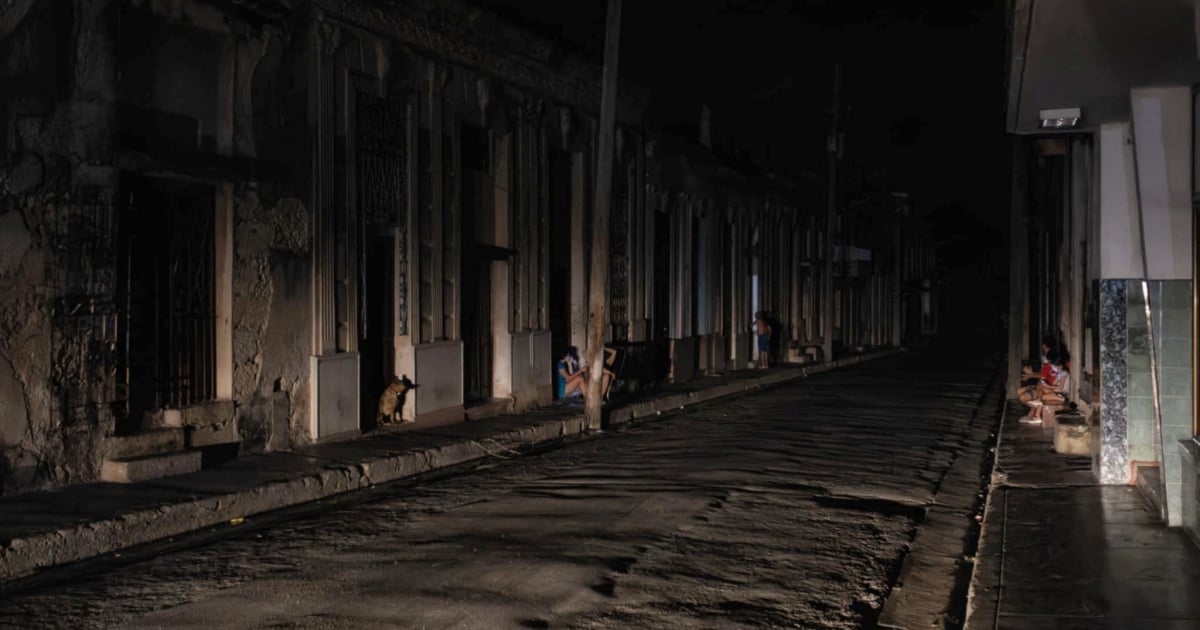
The energy crisis in Cuba continues unabated, and this Friday, August 29, it was once again confirmed what has become routine for millions of families: the country is essentially experiencing a permanent blackout.
The Electric Union (UNE) reported that on Thursday, the service was affected for 24 hours, and that early this morning there were also outages throughout the entire country.
According to the note published by the state company on its website, the highest impact due to generation capacity deficit on the previous day reached 1,719 MW (slightly lower than the expected figure) at 8:40 PM, without coinciding with the peak demand hour.
Current status of the SEN
At 6:00 am this Friday, the availability of the National Electric System (SEN) was only 2,120 MW, compared to a demand of 3,006 MW, resulting in an immediate deficit of 927 MW.
For midday hours, the UNE estimates that the impact will be around 900 MW, confirming that the situation will not ease throughout the day.
The main reported incidents include breakdowns in two units of the Renté and Felton thermoelectric plants, as well as maintenance work on two other blocks in Santa Cruz and Carlos Manuel de Céspedes, in Cienfuegos.
In addition, due to thermal limitations, 518 MW are out of service.
Fuel shortages worsen the situation
The fuel supply crisis is also impacting the system: 39 distributed generation plants are currently offline due to this issue, resulting in a reduction of 196 MW in availability.
This adds up to 225 MW out of service due to a lack of lubricants, bringing the total to 421 MW unavailable due to logistical and supply issues.
Peak hour forecast
The forecasts for the night are even more discouraging.
The UNE estimates that during peak hours, only 50 MW can be added due to distributed generation motors that are currently inactive due to fuel shortages.
Still, the availability would be around 2,215 MW, while the maximum demand could reach 3,750 MW.
As a result, the deficit at that time will exceed 1,565 MW and the impacts will reach 1,635 MW, which means that a large part of the country will be left in darkness for several consecutive hours.
Havana is not immune to blackouts either
The Electric Company of Havana also confirmed on that there were service interruptions in the capital starting at 9:22 PM on Thursday, with a maximum impact of 57 MW by 10:00 PM.
The full restoration was completed at 11:14 PM, although the scheduled outages for specific blocks during the night were not fully implemented.
The entity reminded that the blackouts in the city will always depend on the demands of the SEN, which means that any variation in the national deficit directly impacts the residents of Havana.
Renewable energies: insufficient relief
In the midst of the critical landscape, the UNE highlighted the contribution of the 26 new photovoltaic solar parks, which delivered 2,366 MWh during the day, with a maximum power of 557 MW at noon.
However, the contribution from this source is insufficient to offset the collapse of the thermal power plants and the lack of fossil fuels.
An "eternal blackout"
The combination of constant breakdowns, extended maintenance, thermal limitations, and chronic fuel shortages paints a picture where electrical disruptions have become a part of everyday life.
While the UNE insists that efforts are being made to restore units and optimize resources, Cubans face another day of stifling heat, disconnected refrigerators, and dark nights, trapped in what many are already calling an "eternal blackout."
Frequently Asked Questions about the Energy Crisis in Cuba
What is the main cause of blackouts in Cuba?
The main cause of blackouts in Cuba is the deficit in electricity generation due to multiple factors, including breakdowns in thermal power plants, prolonged maintenance of several units, thermal limitations, and the chronic scarcity of fuel. This has resulted in insufficient generation capacity to meet the national demand.
How does the lack of fuel affect the electricity crisis in Cuba?
The lack of fuel exacerbates the electrical crisis in Cuba by keeping many distributed generation plants out of service. Currently, dozens of these plants are paralized, significantly contributing to the capacity generation deficit and prolonged blackouts across the country.
What role do renewable energies play in Cuba's energy situation?
Despite the installation of new photovoltaic solar parks, renewable energies are still insufficient to offset the energy deficit in Cuba. Although these parks provide a significant amount of energy to the system, their contribution is marginal compared to the high demand and the limitations of conventional sources.
What measures has the Cuban government taken to address the energy crisis?
So far, the measures taken by the Cuban government have mainly focused on emergency maintenance and repairs, without providing long-term structural solutions. The lack of investment in energy infrastructure and dependence on fossil fuels are ongoing issues, while energy authorities emphasize the need to rationalize consumption and support the transition to renewable sources.
Filed under: