
Related videos:
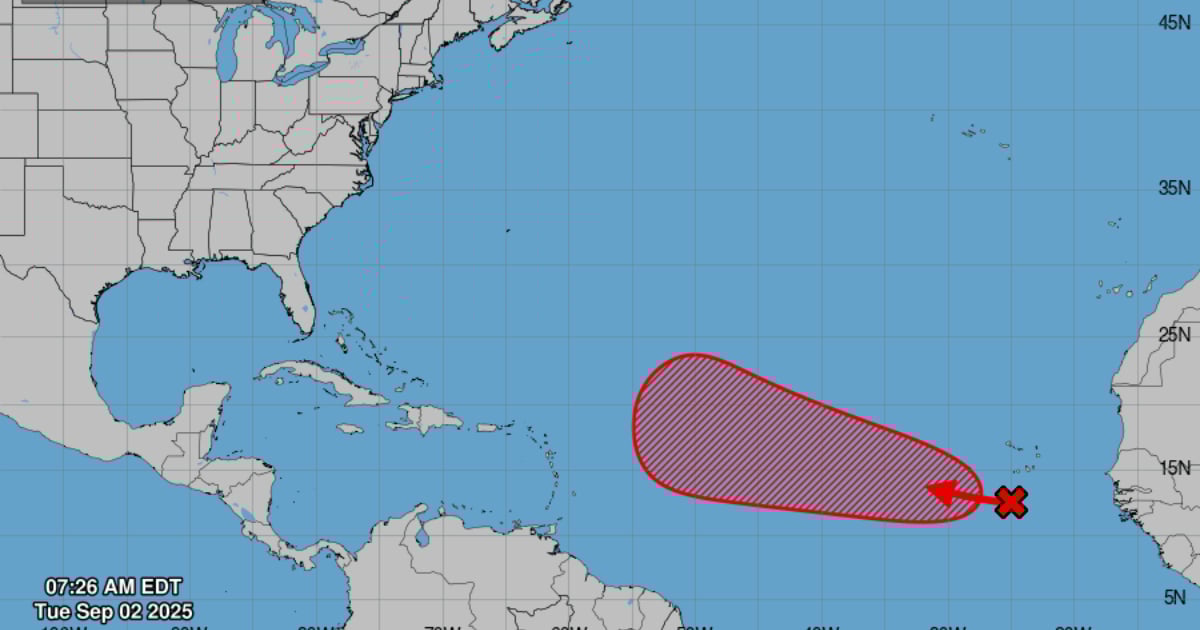
The National Hurricane Center of the United States (NHC) raised the probability of cyclonic formation in seven days to 70% for a tropical wave located south of the Cape Verde Islands in the eastern Atlantic, as it moves west-northwestward generally toward the Caribbean.
According to the latest report issued at 8:00 a.m. EDT, “a tropical wave located over the extreme eastern tropical Atlantic south of the Cape Verde Islands is producing showers and disorganized storms.”
The report adds that "the environmental conditions appear favorable for a gradual development of this system over the next few days," so "it is likely that a tropical depression will form by late this week or this weekend."
"It is expected that this system will move west to west-northwest at around 15 mph [24 km/h] across the eastern and central tropical Atlantic until the weekend," specified the Miami-based agency.
The probability of development in the next 48 hours is 30%, while over a seven-day period it has increased to 70%, a figure that represents an increase from the 50% estimated on Monday, when the system was already showing favorable conditions for its evolution according to previous reports.
Although the system is still far from the Caribbean, its projected trajectory according to numerical models generally aligns with that of a previous cyclone that ended up shifting north without directly affecting either Cuba or the United States. However, experts advise to maintain close monitoring.
The current hurricane season in the Atlantic is at its most active stage. In fact, September has historically been a critical month for the impact of hurricanes in Cuba.
The Cuban meteorologist Christian Jesús Muñiz Carrillo reminded us that between 1950 and 2023, nine hurricanes made landfall on the island during September, including the intense Ike (2008), Irma (2017), and Ian (2022). Irma holds the record as the only Category 5 hurricane to have struck Cuba with that intensity.
Authorities and specialized media recommend that the Cuban population stay informed through official channels and follow updates from the NHC over the next few days, as the development and path of these systems can change rapidly.
Frequently Asked Questions about the Threat of Hurricanes in the Atlantic and Their Impact on Cuba
What is the current probability of cyclonic formation in the Atlantic?
The probability of cyclonic formation in seven days is 70% for a tropical wave located south of the Cape Verde Islands. The National Hurricane Center (NHC) has emphasized that the environmental conditions are favorable for its gradual development, with a tropical depression likely to form by the end of the week or during the weekend.
Why is September a critical month for the hurricane season in Cuba?
September is historically the most active month for hurricanes in Cuba, with a record of nine hurricanes making landfall on the island between 1950 and 2023. Warmer ocean temperatures and favorable atmospheric conditions during this month increase the formation of cyclones in the region.
What precautionary measures should Cubans take during the current hurricane season?
Authorities and specialized media recommend that the Cuban population stay informed through official channels and follow updates from the NHC. Given the possibility of rapid changes in the development and trajectory of cyclonic systems, it is crucial to be prepared and make informed decisions.
How does climate change affect the hurricane season in the Atlantic?
Global climate change intensifies the conditions conducive to cyclone formation, with warmer ocean temperatures and atmospheric patterns that favor storm intensification. This increases the risk of extreme weather events in vulnerable regions such as the Caribbean and Cuba.
Filed under: