
Related videos:
The Cuban meteorologist Christian Jesús Muñiz Carrillo warned this Sunday that the hurricane season is entering its most active phase, as September is historically the month when the peak of hurricane formation occurs in the Atlantic.
According to a post on Facebook, between 1950 and 2023, nine hurricanes have made landfall in Cuba during the month of September.
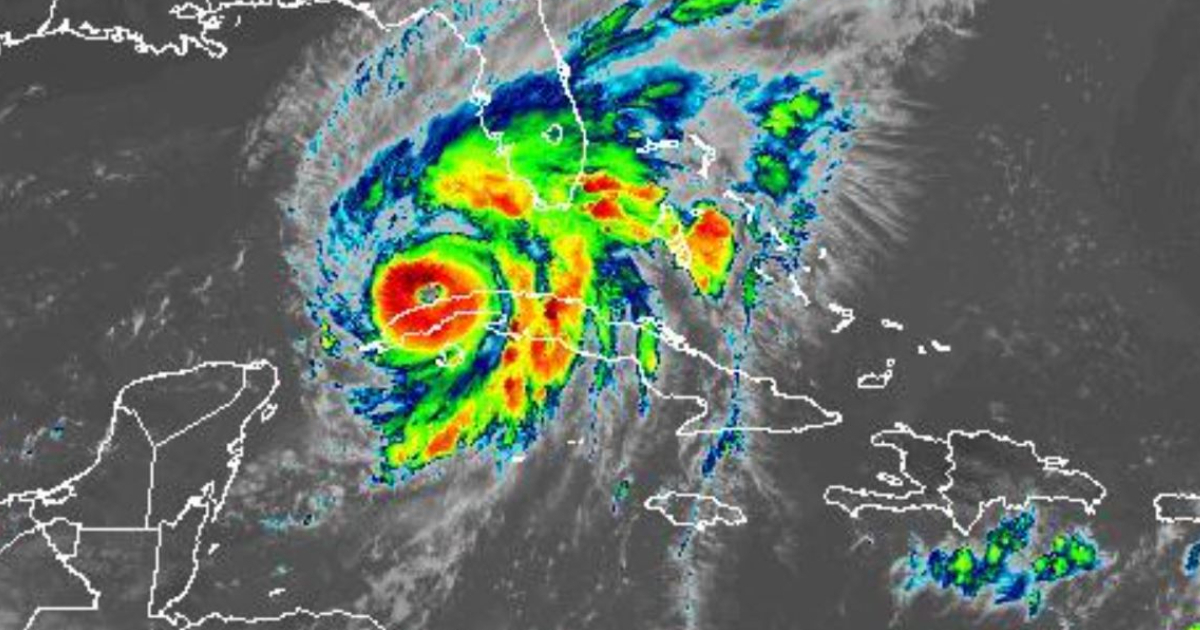
These were: Easy (1950), Hilda (1955), Ella (1958), Inez (1966), Georges (1998), Isidore (2002), Ike (2008), Irma (2017), and Ian (2022). Irma holds the record for being the only Category 5 hurricane to impact the island with such intensity.
Hurricane Ella has been the earliest, arriving on September 1, while the latest was Inez, on the 30th of the same month.
Ike and Irma made landfall on September 7 at nearly identical times, around 9:00 and 10:00 p.m., respectively, the specialist recalled.
Also on Facebook, the meteorologist Frank Fernández Castañeda reminded that during the first 20 days of September, the maximum climatic conditions of the season occur.
Based on records from 1851 to 2024, it was noted that 264 tropical cyclones have formed in the North Atlantic basin during the first 10 days of September.
Fernández also pointed out that cyclone formation this month tends to be concentrated in the western tropical Atlantic, the Caribbean Sea, the Gulf of Mexico, and the central and western Atlantic.
For his part, the meteorologist Henry Delgado Manzor recalled on Facebook the passage of the so-called "Cyclone of '33" through the city of Cárdenas, which occurred on September 1.
That event, regarded as the deadliest in local history, left a profound mark on the population, which still maintains a maritime buoy dragged by the sea to the founding square as a symbol of that tragedy.
Recently, the coast of Gibara, in the province of Holguín, recorded waves over 1.5 meters associated with wind-driven sea caused by the hurricane Erin as it moved through the Atlantic.
Frequently Asked Questions about the Hurricane Season in Cuba
Why is September considered the most dangerous month during the hurricane season in Cuba?
September is historically the month with the highest cyclonic activity in the Atlantic, leading to a significant increase in the formation of hurricanes. From 1950 to 2023, nine hurricanes have made landfall in Cuba during this month, with Irma being the most intense, reaching category 5.
What is the probability that Cuba will be impacted by a hurricane in the 2025 hurricane season?
For the 2025 hurricane season, there is a 50% chance that Cuba will be impacted by a hurricane. This figure is higher than the country's historical average, which is 35%. Additionally, there is a 70% chance that at least one tropical storm will affect the island.
What measures should Cubans take to prepare for the hurricane season?
It is essential for Cubans to stay informed through official sources such as the Institute of Meteorology of Cuba, and to update their family emergency plans. They should also prepare basic supplies, secure their homes, and follow the instructions of the Civil Defense if necessary.
How does climate change affect the hurricane season in Cuba?
Climate change contributes to an increase in the intensity and frequency of tropical cyclones due to warmer sea temperatures. This can result in more powerful and destructive hurricanes, severely impacting the islands of the Caribbean, including Cuba.
What are the differences between a hurricane and a tropical storm?
The main difference between a hurricane and a tropical storm is the speed of their winds. A tropical storm has sustained winds of 39 to 73 mph, while a hurricane has winds exceeding 74 mph. Hurricanes can cause more severe damage due to their greater intensity.
Filed under: