
Related videos:
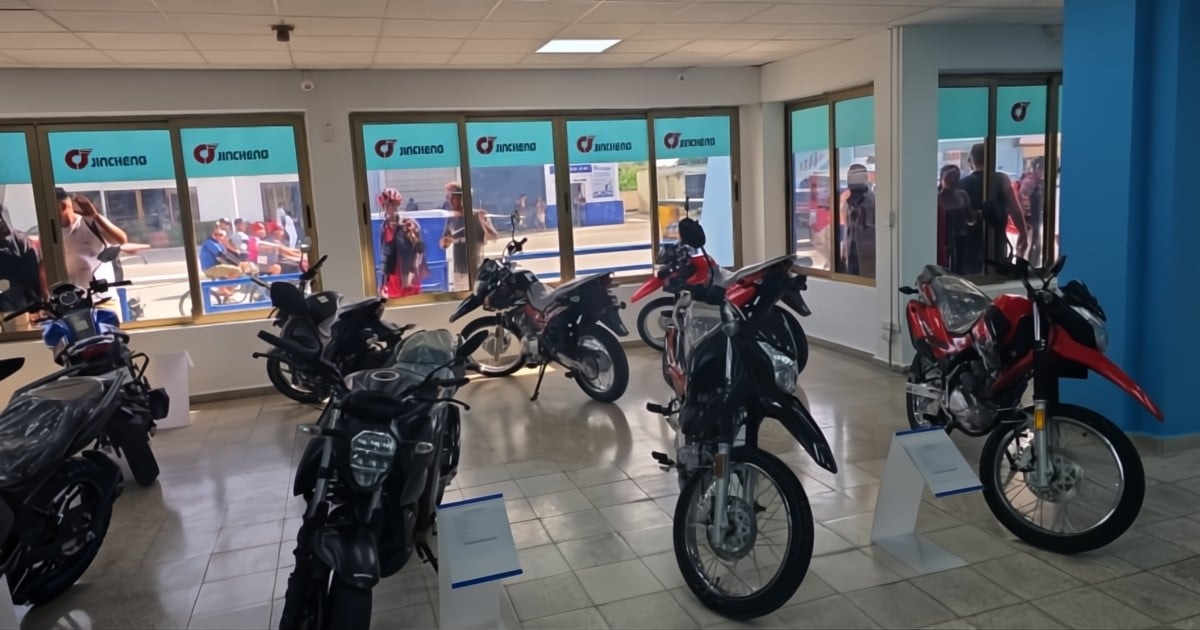
A network dedicated to profiting from the lines for purchasing motorcycles at the Obourke store in Cienfuegos was dismantled by Cuban authorities following several citizen complaints.
The individuals involved charged between 200 and 500 dollars for a shift, as revealed this Tuesday by the official profile Las Cosas de Fernanda on Facebook.
The report described the scheme as a "foolproof business" that turned queues into a spectacle "worthy of Las Vegas, but not of Cuba," where the so-called "coleros" acted as true clandestine intermediaries for access to sought-after goods.
Specialized forces arrested 12 individuals, who had turned the queues into their “office,” and are now recorded and registered in an automated surveillance system, emphasized the regime's spokesperson.
According to the publication, the detainees have an official warning against them and could face charges for disobedience and illegal economic activity, with penalties of up to 10 years in prison if they reoffend.
The situation was reported by citizens through social media, which prompted an official intervention, according to the source affiliated with MININT.
They also warned that there will be no truce for those who exploit the people, and that the queues should be a space for patience, not for abuse.
The message concludes with a didactic tone: “The queues belong to the people, and the people do not tolerate audacity,” referring to what they label as “white-collar criminals.”
However, what the spokesperson neglects to mention is that the scarcity, inflation, and economic crisis in general, which originated from and have not been resolved by the regime, is the root of all these ills.
Amid the rise of the motorcycle market in foreign currency, the Cuban government has authorized new entities for the sale of these vehicles, in an effort to reorganize the sector and meet the growing demand.
The measure formalized several distribution companies, including Tiendas Caribe, TRD, CIMEX, and Copextel, which can now sell electric and combustion motorcycles, with payment made in freely convertible currency (MLC).
However, the prices have generated controversy. In Holguín, a GLE motorcycle cost almost 7,000 dollars, an amount that is unaffordable for most citizens.
These rates, combined with the scarcity of units, have fostered speculative practices and the rise of illegal networks for the sale of appointments.
Meanwhile, the General Customs of the Republic began months ago the official dispatch of imported combustion motorcycles, which is seen as a relaxation of import policies.
This change responds to the increasing demand for individual transport in a country with a collapsed public system and limited access to fuel.
However, the increase in imported motorcycles has caused new logistical bottlenecks. Correos de Cuba directly blamed these imports for the collapse of its warehouse network, stating that the volume of unanticipated motorcycles exceeded its operational capacity.
Frequently Asked Questions about the dismantling of the "coleros" network in Cienfuegos
What happened with the "coleros" network in Cienfuegos?
Cuban authorities dismantled a network of "coleros" that charged between 200 and 500 dollars for an appointment to purchase motorcycles at the Obourke store in Cienfuegos. Twelve individuals operating as clandestine intermediaries were arrested, and they could face charges of disobedience and illicit economic activity.
What is the origin of the problems related to "coleros" in Cuba?
The problem of "coleros" is a symptom of the scarcity, inflation, and economic crisis that Cuba is experiencing. The Cuban regime has not addressed the structural causes that give rise to these issues, such as the lack of access to basic goods and services, which has led to the proliferation of informal networks that profit from the population's needs.
What measures are being taken to control the sale of motorcycles in Cuba?
The Cuban government has expanded the network of authorized entities to sell motorcycles for foreign currency, which includes sales points throughout the country through state importers and distributors. This measure is part of the increasing dollarization of the market, and while it aims to facilitate mobility, in practice it widens the economic divide between those who have access to foreign currency and those who do not.
Why is access to motorcycles problematic in Cuba?
The access to motorcycles in Cuba is problematic due to the dollarization of the market and the high prices that exceed the average income of Cubans. Furthermore, the scarcity of options and inflation have led to queues for purchasing them becoming a breeding ground for illicit practices such as the resale of appointments.
Filed under: