
Related videos:
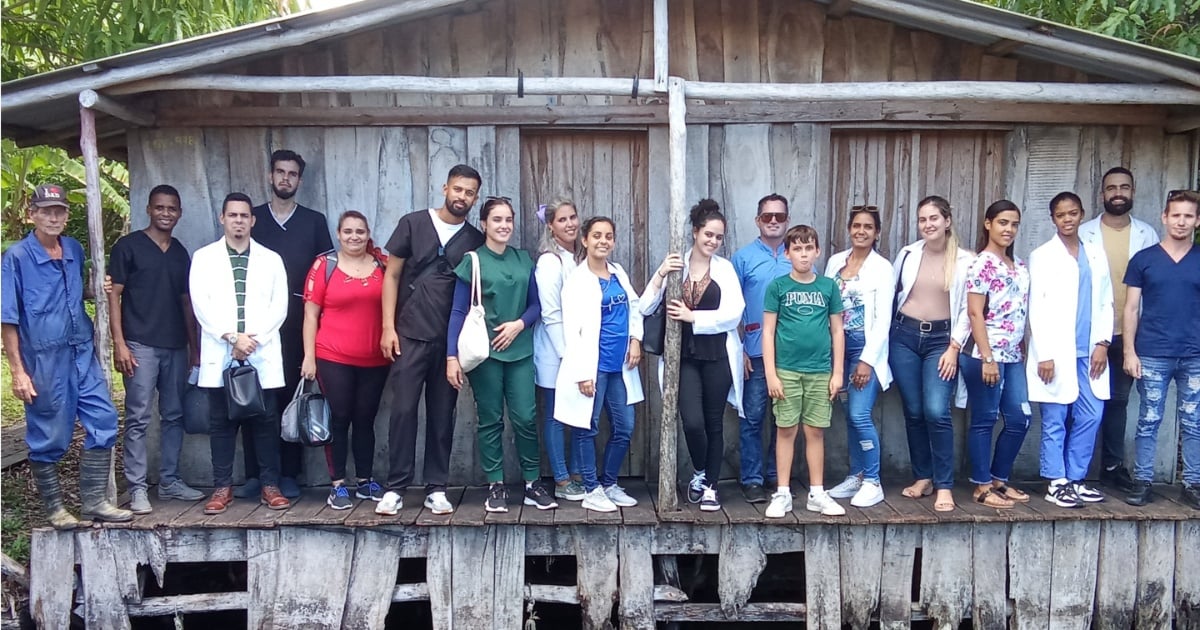
A medical brigade was sent to the municipality of Unión de Reyes, in Matanzas, following the increase in febrile syndromes affecting rural communities, although official reports preferred to emphasize the festive nature of the visit rather than the severity of the health issue.
According to the municipal director of Public Health, Raydel Alejandro Sotés, dozens of febrile cases were concentrated in the towns of Alacranes and Unión de Reyes. The situation necessitated the deployment of a command post to the most affected areas to accelerate vector control actions and epidemiological surveillance.
However, a state-sponsored report from Girón chose to frame the visit of doctors from Faustino Pérez hospital to the community of La Lanza as a “Festival for Health,” highlighting the care provided to 190 patients and even featuring closing music from a local pianist, while barely mentioning the rise in febrile illnesses that prompted the mobilization.
The chronicle even emphasized the “shared joy” and presented the activity as a symbol of the fact that “medical care knows no distances”, in contrast to Sotés’ own admission that the health response has been improvised and reliant on the hiring of former sprayers due to a lack of staff.
According to the state-run press, residents also celebrated the arrival of the doctors: “I have a hernia that hurts a lot. They treated me here with patience and care, and they prepared the paperwork for my tests. It is a blessing for doctors to come from Matanzas to the countryside.”
The contradiction between official rhetoric and the epidemiological reality reinforces the perception that, rather than acknowledging the seriousness of the outbreak, the authorities seek to cloak it in propaganda to mask a situation that reveals instability and chaos in the local health system.
Two weeks ago, the authorities reported that 496 homes had to be fumigated, 237 targeted treatments were carried out, because four mosquito breeding sites were detected, 28 PCR tests were processed, and 592 people were surveyed, of which 21 presented febrile syndromes without seeking medical institutions.
The authorities are also considering temporarily relocating a clinical laboratory to the most affected areas to conduct diagnostic tests, including IGM tests on the sixth day of symptoms, which help identify the serotype of dengue.
The regime acknowledged that there is a significant problem in these areas and named the disease that is devastating the population: dengue.
The official call includes reinforcing family self-protection, covering water storage containers, and eliminating open containers where liquid can accumulate, the main breeding ground for the Aedes aegypti mosquito.
In the province, a chikungunya outbreak was also confirmed weeks ago, which worsens the epidemiological situation and heightens concerns about the simultaneous circulation of several diseases transmitted by the Aedes aegypti mosquito.
Frequently Asked Questions about the dengue and chikungunya outbreak in Matanzas, Cuba
What is the current situation of the dengue outbreak in Matanzas?
The province of Matanzas is facing a dengue outbreak with active transmission in several localities, such as Unión de Reyes and Alacranes. Authorities have confirmed the presence of the virus, and control measures such as fumigation and epidemiological surveillance are being implemented to mitigate the spread of the Aedes aegypti mosquito.
What measures are the authorities taking to control the chikungunya outbreak?
Health authorities have implemented intensive fumigation actions, the application of larvicides in water storage, and active house-to-house searches to detect fever cases. Additionally, environmental sanitation and epidemiological surveillance have been strengthened to contain the chikungunya outbreak in Matanzas.
What impact does the lack of medical resources have on the management of these outbreaks?
The lack of medical resources hampers effective response to the outbreaks of dengue and chikungunya in Matanzas. The shortage of healthcare personnel and essential medical supplies has forced authorities to resort to improvised methods and hire former fumigators, highlighting the precariousness of the Cuban health system.
How is the outbreak affecting the local population in Matanzas?
The local population in Matanzas is experiencing an increase in fever cases and symptoms associated with dengue and chikungunya. In some areas, up to 70% of residents are showing symptoms without adequate access to diagnosis or treatment, resulting in concern and alarm among the inhabitants.
Filed under: