
Related videos:
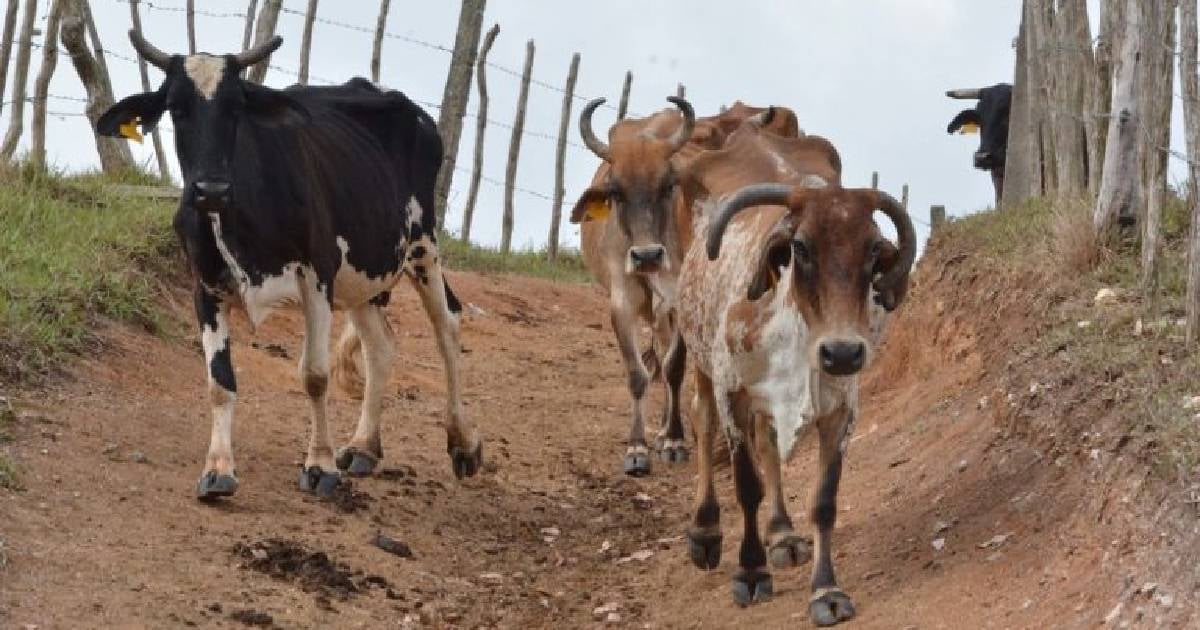
The province of Villa Clara lost over 15,000 cattle in August, a decline that impacts the production of milk and meat and confirms the ongoing deterioration of Cuban livestock amid shortages of water, feed, genetics, and medications.
The decline is not new. A decade ago, the province had more than half a million head of cattle, making it the second largest in the country, behind Camagüey; but today the herds are decreasing due to deaths, thefts, and illegal slaughter.
In just the first eight months of the year, 8,887 calves died, almost 29% of the 31,000 recorded births, which jeopardizes future replenishment, acknowledged the official newspaper Vanguardia.
Among the causes are the lack of pastures and forage, the depletion of water sources, drought, and the shortage of veterinary supplies. Additionally, there is inadequate management of herds, a lack of genetic improvement programs, and almost no implementation of artificial insemination in both the private and state sectors.
The crisis is dragging down farmers and cooperatives, which hold 86% of the livestock and are the hardest hit by deaths and criminal activities.
The low incentives, the lack of basic supplies —such as mineral salts, honey, or bagasse— and the neglect of forage practices exacerbate the precarious situation, the source pointed out.
Far from reversing, the livestock collapse deepens and confirms a decline that threatens to erase the memory of meat and milk as a regular part of the diet for Cubans.
It is noteworthy that the livestock system in Camagüey also suffers losses of thousands of animals due to deaths, illegal slaughter, and mismanagement. Only in 2024, nearly 58,963 deaths and 7,143 clandestine slaughters were recorded.
“Last year, due to theft, sacrifice, and deaths for other reasons, the equivalent of an entire municipality's cattle was lost. If this trend continues, in approximately 15 years there will be no livestock in Camagüey, let alone milk,” warned the official newspaper Granma in June.
Also, milk production in Camagüey continues to decline and all indications suggest that 2025 will end with a deficit of more than one million liters compared to the annual plan and also in relation to 2024, a year that had already recorded figures far below expectations, authorities in the sector confirmed.
On its part, livestock in Las Tunas presents a bleak outlook characterized by a failure to meet production targets, the diversion of resources, and poor management of animal feeding.
The Cuban livestock sector is facing a severe crisis, with a cumulative loss of more than 900,000 head of since 2019, according to official data presented in July by the Ministry of Agriculture (MINAG) during the committee sessions prior to the Fifth Ordinary Period of Sessions of the National Assembly of People's Power.
During the presentation by the General Director of Livestock, Arián Gutiérrez Velázquez, it was reported that by the end of 2024, the livestock population in the country stood at just three million animals, which represents a decrease of nearly 400,000 heads compared to the previous year.
The downward trend is due not only to natural factors such as mortality but also to serious structural problems, such as theft and illegal slaughter, which in the last year alone affected more than 27,000 animals, including cattle and horses.
In 1956, the population of Cuba was 6,676,000 people. The zebu was the predominant breed in Cuban pastures, with six million head of cattle, which equated to approximately 0.90 cattle per inhabitant.
This does not include the smaller livestock, which totaled 4,280,000 head, including 500,000 equines, 3.4 million pigs, and 200,000 sheep, among others.
Frequently Asked Questions about the Livestock Crisis in Cuba
How many cattle did Villa Clara lose in August 2025?
Villa Clara lost more than 15,000 cattle in August 2025, significantly impacting milk and meat production in the region.
What are the main causes of the livestock crisis in Cuba?
The livestock crisis in Cuba is due to the lack of pasture and forage, depletion of water sources, drought, and shortage of veterinary supplies. Additionally, there are deficiencies in herd management, a lack of genetic improvement programs, and almost no use of artificial insemination.
What impact does illegal slaughter and cattle theft have on Cuban livestock farming?
The illegal sacrifice and cattle theft are serious structural problems that have impacted more than 27,000 animals in the past year, exacerbating the livestock crisis and affecting the production of meat and milk in Cuba.
What measures are being taken to address the livestock crisis in Cuba?
The Ministry of Agriculture has proposed actions such as prioritizing owners with more than 10 cows, expanding land allocations to producers with good results, developing the market for inputs, and promoting the export of charcoal. However, these measures have yet to show a significant impact.
How has the livestock crisis affected milk production in Camagüey?
Milk production in Camagüey has drastically decreased, with an expected deficit of over one million liters by 2025. This is due to livestock loss, deficiencies in management, and the theft and illegal slaughter of cattle.
Filed under: