
Related videos:
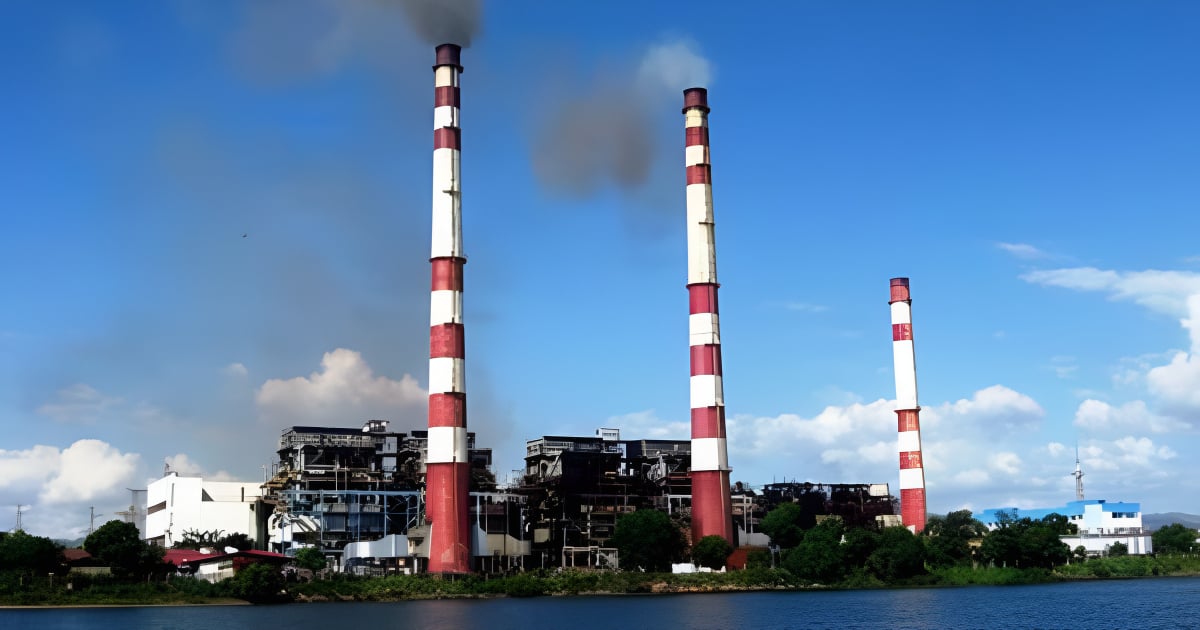
The Antonio Maceo Thermoelectric Power Plant, commonly known as Renté, in Santiago de Cuba, suffered another breakdown this Saturday, exacerbating the energy crisis that is affecting the country with endless blackouts.
According to a brief statement released by the Unión Eléctrica de Cuba (UNE) on , unit 5 of the plant went out of service at 6:50 AM due to a leak in the furnace.
The state-owned company did not provide details on the extent of the damage or the estimated recovery time, stating only that efforts are being made to resolve the issue.
The release of Renté 5 occurs at a particularly critical moment for the National Electric System (SEN), which is experiencing failures in almost all of its thermal plants.
Just hours before, unit 3 of the same power plant had also gone offline, less than 11 hours after its synchronization. With this new failure, Renté returns to reduced capacity, highlighting the fragility of the system.
Growing deficit and prolonged blackouts
The official report from the UNE acknowledged this Friday a deficit of over 1,700 megawatts during peak hours, a figure that represents nearly half of the national demand. This results in widespread blackouts exceeding 20 hours a day in several provinces, including Santiago de Cuba, where the population is facing almost constant power outages.
The causes of the crisis are numerous: obsolescence of the plants, incomplete maintenance, nonexistent spare parts, and lack of fuel. The UNE itself recently admitted that 53 distributed generation plants remain idle due to a lack of diesel, while several others are halted due to a shortage of lubricants.
Official promises without results
Despite the regime's announcements about repairs and new investments in solar energy, the reality is that the situation is worsening.
The ruler Miguel Díaz-Canel recently toured the thermoelectric plants in Mariel and Santa Cruz del Norte, assuring that with "everyone's effort," the SEN would recover. However, official data shows that the measures have not succeeded in stopping the ongoing decline in units.
On his part, the Minister of Energy and Mines, Vicente de la O Levy, promised that new blocks would be integrated into the system in October, but he acknowledged the lack of financing and the withdrawal of six out of the eight floating barges due to unpaid debts.
Growing citizen discontent
The popular reaction was swift, and among the hundreds of messages of rejection, one that resonated the most was the ironic "We Are Continuity!", the official slogan of Díaz-Canel's government that Cubans have recontextualized as a form of protest.
With her, users refer to the continuity of a political project that, instead of providing solutions, perpetuates poverty, blackouts, and the loss of basic rights.
The phrase, used with anger and sarcasm on social media, has become a symbol of collective frustration towards a system that only offers unfulfilled promises and more sacrifices for an increasingly desperate population.
While the authorities repeat their promises, the Cuban population continues to be trapped in endless blackouts that paralyze everyday life. On social media, the disbelief and exhaustion are summed up in phrases like: “Better not to turn it on anymore, because every time it starts, afterwards they cut it off for all of us.”
The departure of Renté 5 confirms that the energy crisis in Cuba shows no signs of relief, and that blackouts will continue to impact the daily lives of millions of families without any short-term structural solution in sight.
Filed under: