
Related videos:
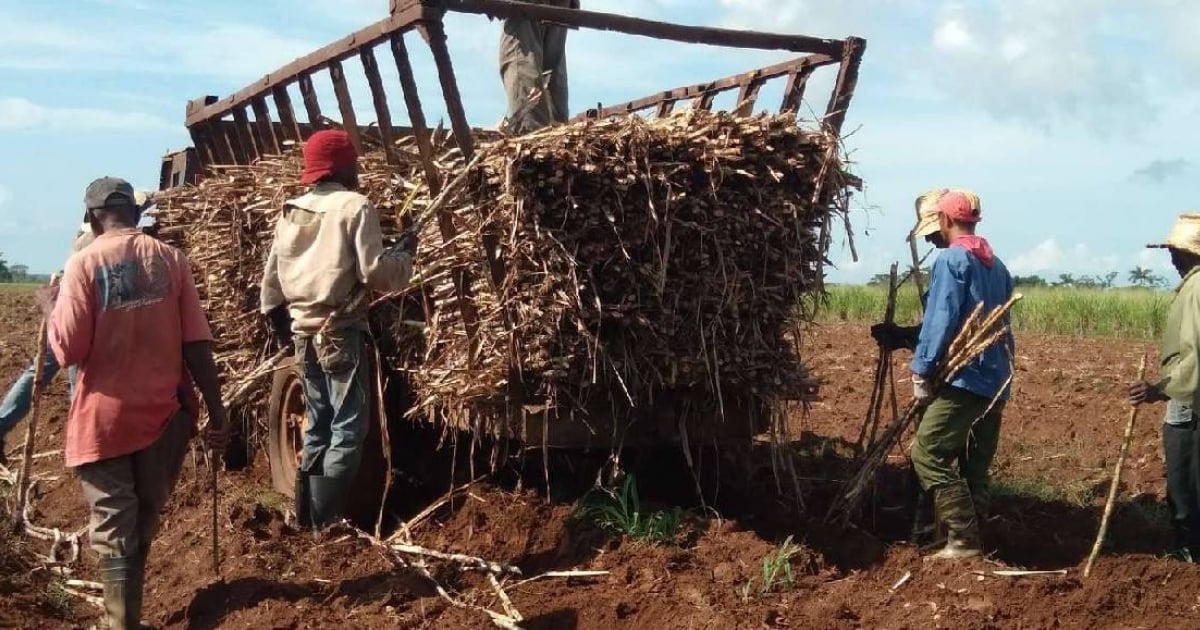
The province of Artemisa, one of the regions with the most cane-growing tradition in Cuba, is facing a new setback in sugarcane planting with only 814 hectares planted out of a plan of over 1,700 for this stage, which amounts to 47% of the target.
The delay in planting, combined with the shortage of fuel, lack of supplies, and unpaid debts to producers, signals another deficit harvest in western Cuba, while the price of sugar continues to rise for consumers.
In Mipymes and informal markets, the price of imported sugar currently ranges between 500 and 600 pesos per kilogram, depending on the exchange rate of the dollar in the informal market, a currency that dictates the daily economic rhythm of millions of Cubans.
The farmer Joel Collazo Apaceiro, from the Marcos Martí cooperative in San Cristóbal, explained to the official Artemisa Diario that he took on the cultivation of 39 hectares, of which only 26 are in production.
Although he managed to deliver 2,080 tons of sugarcane to the 30 de Noviembre industry, he has not yet received the corresponding payment, which exceeds four million pesos.
"Every harvest is the same: the contract is violated and no payment is made. And we continue in the furrow," lamented the producer. He also reported that they haven't even received gloves, boots, or work clothing, and that all supplies must be funded by the farmers themselves.
In similar conditions works the support brigade of the Victoria de Girón cooperative. Alfredo Gutiérrez Oceguera, one of its members, criticized the lack of motivation and the neglect of the sector: “This sector has lost its sense of belonging. There is no continuity; only wrinkles remain. Just one young person in the furrow,” he said.
That young man, Luis Alberto Gutiérrez Valdés, 33 years old, acknowledges that he persists out of family commitment, but he denounces the precariousness of the working conditions. Each day of work is compensated at 500 pesos, without any guarantees for food or transportation.
Regarding industrial results, the mill 30 de Noviembre produced only 3,018 tons of sugar in the 2024-2025 harvest, falling short of its initial target of 7,946 tons.
The average yield was only 6 tons per hectare, and the industrial utilization did not exceed 21%.
The other active mill, Harlem, in Bahía Honda, is scheduled to only produce syrup starting in November. The sector's union in the province confirmed that a significant number of its members have been reassigned to other agricultural tasks or have left the sector.
“Workers receive a symbolic salary and must apply for loans from AzCuba that they need to repay by the end of the year, if there are earnings,” explained Willian Cabrera Gandoy, secretary of the Sugar Workers' Union in Artemisa.
The director of the Agroindustrial Sugar Company 30 de Noviembre, Roberto Meléndez Aguiar, acknowledged that the sugar harvest began with a 34-day delay due to a lack of fuel. By April, the mill had only produced 1,762 tons, and the plan was readjusted to 2,666, which also was not met.
Artemisa is once again among the non-compliant provinces, both in terms of production and planting, and the forecasts for the 2026 harvest are not promising.
Without structural changes, the Cuban sugar industry continues to drift away from the levels that once defined the national economy.
Filed under: