
Related videos:
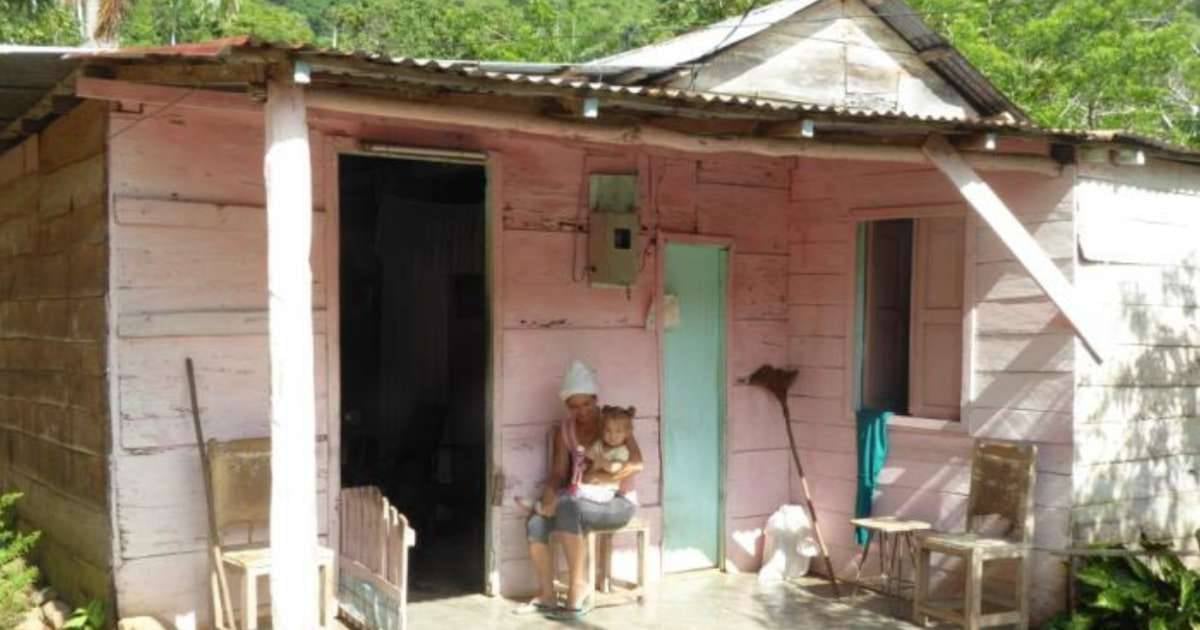
The Prime Minister Manuel Marrero acknowledged that more than 110,000 homes are in poor or fair condition and about 30,000 have dirt floors in the province of Granma, while urging the search for local solutions to the construction crisis.
During the summary meeting of the government visit to the province of Granma, held this Thursday, the head of government acknowledged the magnitude of the housing crisis and urged the promotion of local alternatives to address it.
He also emphasized that municipalities should produce their own materials, such as lime, bricks, and tiles, and use kilns in areas with suitable clay, reported the official newspaper La Demajagua.
Marrero also referred to the transformation of containers into homes, an initiative developed by Empresa Mecánica Bayamo.
"We cannot view this as something derogatory; there are high-end hotels in the world made from containers,” he stated.
At the same time, he proposed that municipalities be responsible for manufacturing and assembling these homes, using local materials and collaborating with various productive forms, including private initiative, the newspaper highlighted.
The visit included an analysis of the situation of the electrical system, where provincial leaders called for better planning of power outages.
Additionally, the status of the hydraulic system and the construction of an oxygen plant in Bayamo were reviewed, considered a strategic national security investment.
Marrero mentioned the need to decentralize powers to local governments, even allowing them to negotiate foreign investments.
In Cauto Cristo, he observed the operation of a Senior Center, although he acknowledged the need to extend care to more elderly people.
The leader attributed the U.S. embargo as the main cause of the crisis, but acknowledged that there are also internal flaws that he referred to as “subjective problems”.
He called for a "change of mindset," to strengthen the bond with the population, and to maintain optimism in the face of "difficult times."
The visit was attended by the First Vice Minister Inés María Chapman, six ministers, deputy ministers, and national officials, alongside Party and Government authorities in Granma, the source noted.
In May of last year, the official newspaper 26 acknowledged that in the 21st century, more than 10,659 families in Las Tunas live in homes with dirt floors, a phenomenon that reflects the deep housing inequalities that persist in this province of eastern Cuba.
In 2024, the Municipal Housing Directorate in Las Tunas was only able to eliminate 14 dirt floors out of the 621 planned. For 2025, the goal is to remove 500 from legalized homes, although the availability of resources remains uncertain, the media outlet noted.
Two years ago, in July 2023, there were 60,000 Cuban families living with dirt floors.
The latest data confirms that the housing deficit in Cuba amounts to 805,583 homes, of which 398,364 need to be renovated and 407,219 must be built from scratch.
For this year, the completion of 10,795 homes was planned, but by July only 2,382 have been built, which represents a compliance rate of 22% of the state plan, and less than 0.3% of the total national deficit, figures that reflect the paralysis of the sector.
Additionally, the conditions of the housing stock continue to deteriorate. According to the report from the Ministry of Construction presented in July to the parliament, 35% of the homes in the country (1,445,222) are in fair or poor technical condition, an increase of 6,520 units compared to 2024.
In recent months, the Cuban government has consistently defended the conversion of shipping containers into homes as a "creative solution" to the housing shortage.
Although it is presented as a "sustainable" model, the strategy actually responds to the collapse of the national materials industry and the state's inability to fulfill its own housing construction plans.
In Holguín province, several projects have been promoted that include container houses, prefabricated modules, and buildings that do without the use of cement and steel, inspired by traditional techniques.
In the Buena Vista community in Guantánamo, a plan is underway to install 60 housing units made from recycled containers from a photovoltaic park.
The construction has progressed slowly, and concerns remain regarding thermal insulation and living conditions in these metal structures, especially for vulnerable individuals such as children and the elderly.
Meanwhile, the population has responded with skepticism and criticism to the design of these homes. Many believe that these are makeshift solutions that do not address the root of the problem.
Frequently Asked Questions about the Housing and Social Crisis in Cuba
How many homes in the province of Granma have dirt floors?
In the province of Granma, about 30,000 homes have dirt floors. This situation reflects a significant housing crisis that the Cuban government is attempting to address through local solutions, such as the production of building materials in the municipalities.
What solutions does the Cuban government propose for the housing crisis?
The Cuban government has proposed several solutions, including local production of materials such as lime, bricks, and tiles, the use of kilns in areas with suitable clay, and the conversion of containers into housing. However, these measures have been criticized for not effectively addressing the root of the problem.
What are the main causes of the housing crisis in Cuba?
The Cuban government blames the U.S. embargo as the main cause of the crisis, but also acknowledges internal errors and deficiencies. The state's inability to meet construction plans and the lack of resources have worsened the situation, leaving a significant housing deficit in the country.
How has the economic crisis impacted social infrastructure in Cuba?
The economic crisis has severely impacted social infrastructure in Cuba, leading to a lack of maintenance and rehabilitation of housing, in addition to a significant housing deficit. Despite promises of investment in sectors such as energy and construction, progress has been slow, and living conditions continue to deteriorate.
What measures are being taken to improve the electrical system in Cuba?
The government has announced investments in solar parks and the maintenance of thermoelectric plants, such as the Antonio Guiteras, to improve the electrical system and reduce blackouts. However, the lack of resources and the outdated state of the energy infrastructure have limited significant progress in this sector.
Filed under: