
Related videos:
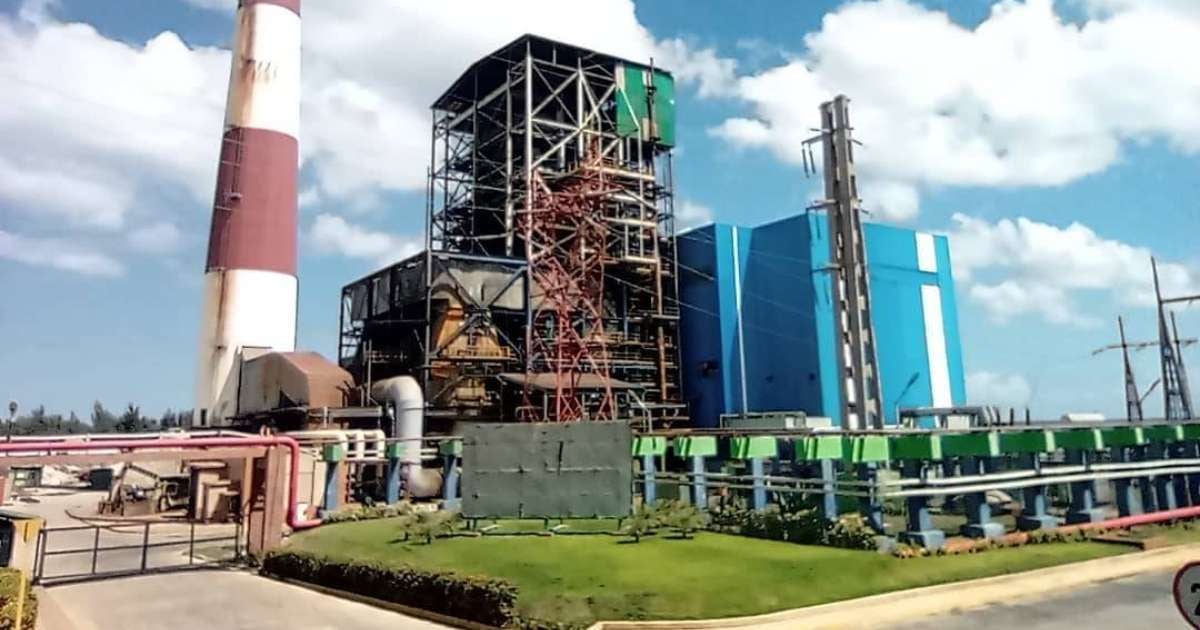
The Antonio Guiteras thermoelectric power plant, the most important in Cuba, successfully reconnected with the National Electric System (SEN) on Tuesday afternoon, after going offline earlier in the morning due to a boiler malfunction.
The Electric Union (UNE) confirmed on Facebook at 2:45 PM (local time) that the unit has returned online, without providing further details about the technical conditions of the restoration.
The departure of the Guiteras occurred at 9:28 a.m., just a few hours after the disconnection of Unit 6 from Energás Jaruco.
In social media, the news was met with skepticism, frustration, and sarcasm from users, many of whom were still without electricity at the time of the announcement.
“Come here, and why has Santiago been without power since 6 in the morning? Where is that electricity going?”, asked a user.
Another commented: “How curious, the power went out at that very hour,” highlighting the contradiction between the official information and the reality in Cuban homes.
The complaints multiplied: “Wordless, this is an unbearable torture”, “Without power since 4 a.m. and still nothing”, “Two AAA batteries provide more power than the Guiteras”, other users sarcastically remarked.
A resident from Pinar del Río requested the UNE and the Ministry of Energy and Mines to review the power distribution in the province: “We are without electricity for over 20 hours daily while Artemisa and Mayabeque have a 5x5 rotation.”
The crisis of the Cuban electrical system has worsened in recent weeks. Before the departure of the Guiteras and Energás Jaruco, units in Felton, Santa Cruz, Mariel, and Renté were already out of the SEN due to breakdowns or maintenance.
Additionally, there are thermal limitations of 307 MW and a deficit due to a lack of fuel that affects more than 270 MW in distributed generation.
The forecast for the peak hours this Tuesday exceeds 1,740 MW, indicating prolonged blackouts across most of the country.
For months, the Cuban government has been trying to justify the power outages by attributing them to the U.S. embargo. In a video published in September, Díaz-Canel shared statements from the director of the Guiteras power plant, Rubén Campos, who asserted that the plant is “the industry in Cuba most affected by the intensification of the blockade.”
According to Campos, paid parts have not been delivered due to containing components of U.S. origin, and specialists have canceled technical visits for fear of sanctions.
The speech was reinforced by other officials. In May, the Deputy Minister of Energy and Mines, Argelio Abad Vigoa, assured during the Round Table that “the blackouts are a result of the criminal American blockade, it’s not just talk.”
Despite the partial restoration of some generating units, the situation in Cuban households does not improve. Prolonged outages, unbearable heat, lack of equitable planning, and the instability of the SEN contribute to widespread discontent.
The synchronization of the Guiteras can temporarily relieve the burden, but it does not solve a structural problem exacerbated by years of lack of investment, maintenance, and energy diversification.
Filed under: