
Related videos:
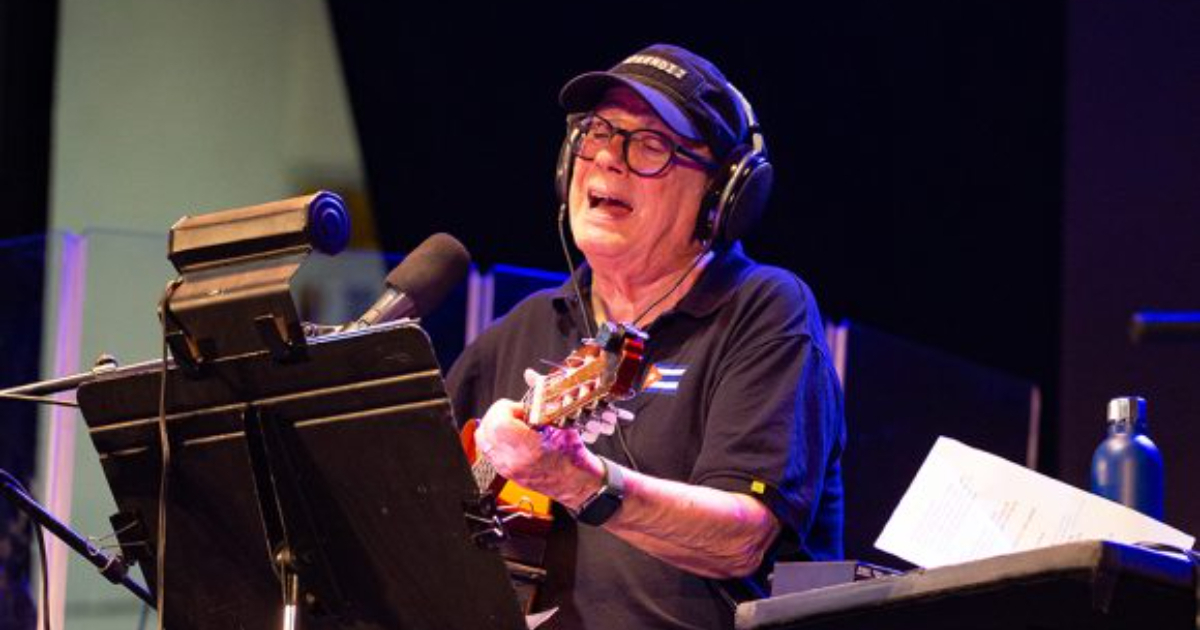
Silvio Rodríguez's statements asserting that he has never been disillusioned with the Revolution have sparked a wave of criticism among Cubans both on and off the island, who reproach him for having lived with privileges under the regime while the people suffer from blackouts, hunger, and repression.
In an interview with the Spanish edition of Rolling Stone, the 79-year-old Cuban troubadour reaffirmed his loyalty to the revolutionary process: “I have never felt disillusioned with the revolution, never. Disillusioned with some people, yes, of course.” He also had kind words for Fidel Castro, whom he described as “a brilliant guy,” and defended the very concept of Revolution as something “necessary,” although not perfect.
But for many Cubans, those words felt insulting in the midst of a Cuba that is enduring a deep crisis, with daily blackouts, a lack of medications, uncontrolled inflation, and a historic exodus. The reaction was almost immediate. In the Facebook post that CiberCuba published about the interview, dozens of people agreed on the same diagnosis: Silvio does not live in the reality of the Cuban people.
The activist Amelia Calzadilla was among the first to respond, writing: “The answer is very simple. This old man does not live with the system like all of us; he lives off the system like the freeloaders we know. End of quote.”
Other users directly questioned the artist's disconnect from real life. “He doesn’t suffer the way an ordinary Cuban suffers,” noted one comment. “Of course, if you live in the best fish tanks of the clarias,” quipped another. One was more specific: “The day Silvio goes to the Clínico de 26, he will feel that there are more important 'lost' things than the Unicorn,” referring to one of his most famous songs.
The most common criticism was that Silvio, for decades, has been part of the official cultural elite and has enjoyed privileges unattainable for the majority. “With a guitar, singing and living well, anyone could do that,” summarized one user. “He lives in a comfort zone,” said another. The phrase “lives in Cuba, but not in Cuba” appeared several times.
Some recalled that, although the troubadour has been critical in the past of certain government decisions, he has always been functional to the system. "Always by the side of dictators," wrote one person. "This is like the caimito leaf, depending on which way the wind blows," stated another, alluding to his apparent ability to change his tone according to the political moment.
There were also questions raised about his moral stance. “There’s nothing more pathetic than a slave defending his chains,” declared an internet user. “He walks over the people; he has always been an opportunist—neither a revolutionary nor of the people,” read another message. One of the harshest comments stated: “You haven’t been disappointed because you have always been a kneeler and submissive to the Revolution. You don’t care about the suffering of others.”
It was even mentioned in reference to his political history: “He was well reeducated in the UMAP. I wonder what they did to him that it still affects him,” said a user, referring to the Military Units for Production Assistance where thousands of young people were interned in the 1960s because of their sexual orientation or religious beliefs. While some remember him as a victim, others accuse him of later siding with the regime: “This person was in the UMAP along with my father and then turned in favor of the revolution.”
The contradiction between his political rhetoric and his comfortable life was one of the main sources of irritation. "Of course, he became a millionaire at the expense of the Revolution," commented one individual. "What a shameless man. He has lived well amidst the misery," wrote another. One went further: "That two-faced gentleman even has servants and has always stood with the exploiters, not the exploited."
His role within the cultural apparatus of the regime was also questioned. "He made the perfect deal. He got involved in the corruption network of the PCC. There are people who can smell where the money comes from. A businessman," someone commented. Another recalled, "What could he have received? Recently, he made interesting statements calling for reflection and change… now he says this. Incomprehensible."
Among the many references to his songs, the most frequently quoted was a line from his song “Te doy una canción”: “The city collapses while I sing.” For many, the phrase has become literal. “Your revolution is falling apart, Silvio, and you continue to sing as if nothing is happening,” stated a user.
Although there were some isolated voices defending him, the overwhelming reaction was one of repudiation. Many admitted to feeling disappointed in someone they had admired. “I had so much admiration for him… it’s just pure disappointment,” said one user. Others were more scathing: “I don’t judge him; he was an icon, but the government surrounded him with privileges… now he won’t swim against the current.” And another concluded: “Silvio never got disillusioned because he never had to live like us.”
In a country where many feel they no longer have a voice or hope, the words of the troubadour fell like a provocation. And so did his silence in response to the comments.
Filed under: