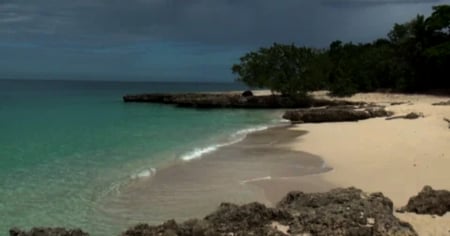
While thousands of families in eastern Cuba remain without electricity, food, or housing following Hurricane Melissa, the Cuban government stated that the tourist area of Holguín "did not suffer significant damage" and is already prepared to welcome foreign tourists.
The information was released by the official Cuban Television Information System, in a report where the delegate of the Ministry of Tourism (MINTUR) in the province, Yuset Vargas, stated that “the territory is ready to start welcoming our clients with the same joy, with the same strength, with the same beauty that defines us.”
In the same report, the deputy director of the Hotel Club Amigo Atlántico Guardalavaca, Rosalía Pupo, stated that the facilities "did not suffer significant damage" and that the days following the cyclone were used to "improve the outdoor areas, gardens, pools, and the beach."
According to the report, workers in the sector dedicated a week to cleaning the coastal areas and removing debris left by the winds and the surge at Playa Guardalavaca.
Some hotels, such as Gran Muthu Almirante Beach and Brisas Guardalavaca, even provided services for tourists who chose to stay during the hurricane.
Local authorities welcomed the fact that the "forced pause" allowed for maintenance work to be carried out, and that "the winter season" will begin in November with visitors from Canada and Russia as the main markets.
But the contrast with the reality outside the tourist resorts is striking.
While the government promotes "normalcy" in the hotels of Guardalavaca, in municipalities like Río Cauto, Cauto Cristo, and Urbano Noris thousands of families remain displaced, the fields are flooded, blackouts continue to extend, and basic services are only just starting to be restored ten days after the cyclone's passage.
The official narrative once again prioritizes the tourism image over the humanitarian catastrophe, as the regime somehow needs to fill its coffers.
Filed under: