
Related videos:
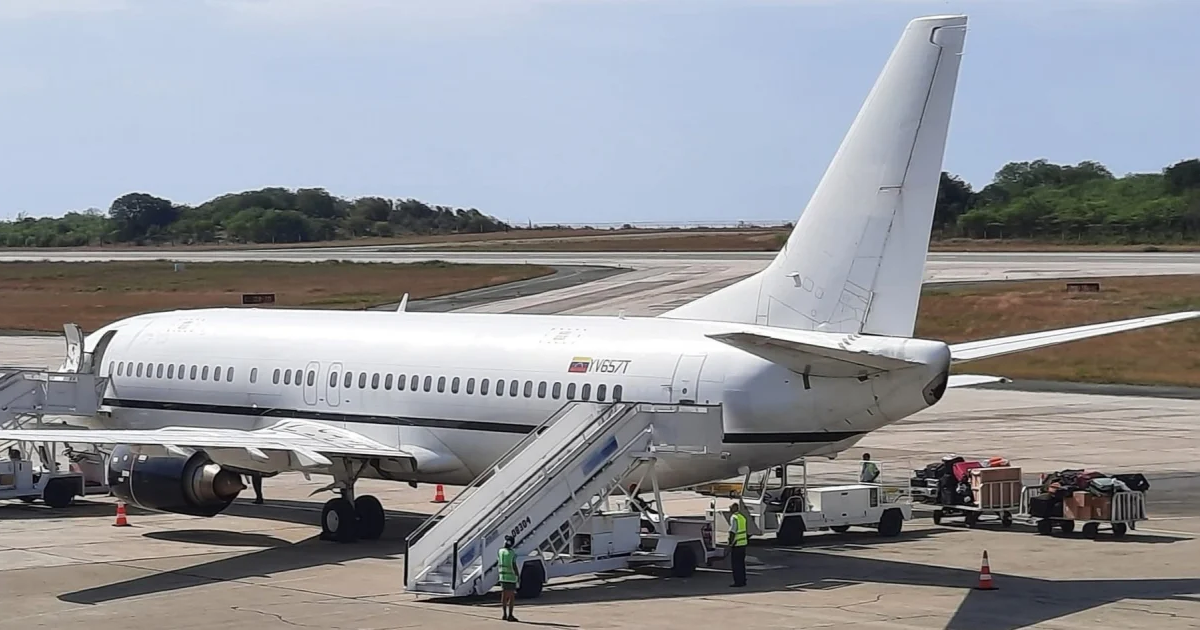
The travel agency Cubamax Travel, based in Miami, announced the launch of two new free humanitarian flights to Santiago de Cuba, aiming to facilitate the transportation of individuals wishing to assist relatives affected by the hurricane Melissa, which left a trail of destruction in eastern Cuba.
The flights scheduled for Tuesday, November 18, are part of an extension of the solidarity initiative that the company had already implemented days earlier with destinations to Holguín, in collaboration with Eastern Air Express and Aerocuba Chárter.
In this new call, the tickets will be completely free, with 90 pounds of free luggage and the possibility of transporting aid without limit.
"Because when families are in need, Cubamax responds," the company stated on , inviting those interested to visit any of their offices in South Florida to book their tickets or contact (305) 512-0303.
This week, Cubamax Travel announced two humanitarian flights to Holguín on November 13 and 16, to deliver aid to those affected by Melissa.
Each passenger may bring as much aid as they wish and include a 70-pound suitcase for free, courtesy of the agency.
A devastated region and thousands of families without answers
These gestures of solidarity come amid a critical situation in the east of the country, where thousands of families continue to live among the ruins following the torrential rains, hurricane-force winds, and rising rivers caused by the passage of Melissa.
Entire neighborhoods were flooded or cut off, and many of the survivors lost everything: from their homes to the few belongings they had.
Although the authorities insist that "work is underway for recovery," testimonies coming from Holguín, Granma, and Santiago de Cuba paint a very different reality.
The population is facing widespread devastation, lacking building materials, food, stable electricity, and with a collapsed healthcare system. In rural communities, entire families sleep under tarps or makeshift roofs while they await government aid that never arrives.
Exile as a support in the face of the state's abandonment
In that context, support actions from the exile community have become the only real relief for many people.
Through Cubamax and other private initiatives, Cubans living abroad have organized collections, fundraising efforts, and shipments of essential supplies.
They are efforts that, although modest in the face of the magnitude of the disaster, represent a tangible hope against official indifference.
In Cuba, reconstruction seems like an impossible dream: the average salary barely covers a week's worth of food, construction material prices have skyrocketed, and families lack savings or insurance to protect against their losses.
Thus, while the government promises solutions, it is private aid—often organized from outside the country—that supports the little that remains standing.
Cubamax: Between Solidarity and Controversy
Cubamax, founded in 2001 and with over a dozen branches in Florida, has at times been the subject of controversy within the exile community, which accuses it of maintaining ties with the Havana regime.
In July of last year, a group of protesters gathered in front of its headquarters in Hialeah to denounce alleged resource shipments to the regime and demand the release of political prisoners.
Although there are no official sanctions from the U.S. government against the agency, and the accusations have not been substantiated, the debate surrounding its role remains ongoing.
In April, Cubamax temporarily suspended the sending of remittances to Cuba, citing a "restructuring" related to the companies that process money on the Island, after the State Department included Orbit S.A., its main intermediary, on the list of entities linked to the military conglomerate GAESA.
Beyond the controversy, the current decision to provide free flights for humanitarian aid once again places Cubamax at the center of the conversation about the role of the exile community in the everyday survival of Cubans on the Island.
While the State continues to provide no effective solutions, it is private solidarity that once again supports, even if temporarily, a country mired in neglect.
Filed under: