
Related videos:
A post by the broadcaster Laritza Camacho on her Facebook profile reignited the public discussion this Friday about one of the most emblematic and least fulfilled promises of the Cuban government: to build 50,000 homes annually in Cuba, which translates to at least one home per day for each municipality.
Camacho recalled that the exhortation made by President Miguel Díaz-Canel in 2018 was made “with the same blockade” that the Government is currently using as the reason for all the difficulties.
In his message, he questioned whether the economic, material, and planning conditions necessary to sustain a commitment of such magnitude were present at that time.
"Where did they get the idea to build those homes? Were the conditions in place? Was the budget properly planned? Did they have the end of the blockade in mind? Were they playing games with us, buying time, or simply lying for the sheer pleasure of lying?" he wrote.
"Have they made all the plans like this? Do they set all the prices this way? Do they want us to continue believing like this?" he questioned.
His reflection sparked an intense debate with dozens of comments expressing frustration and weariness.
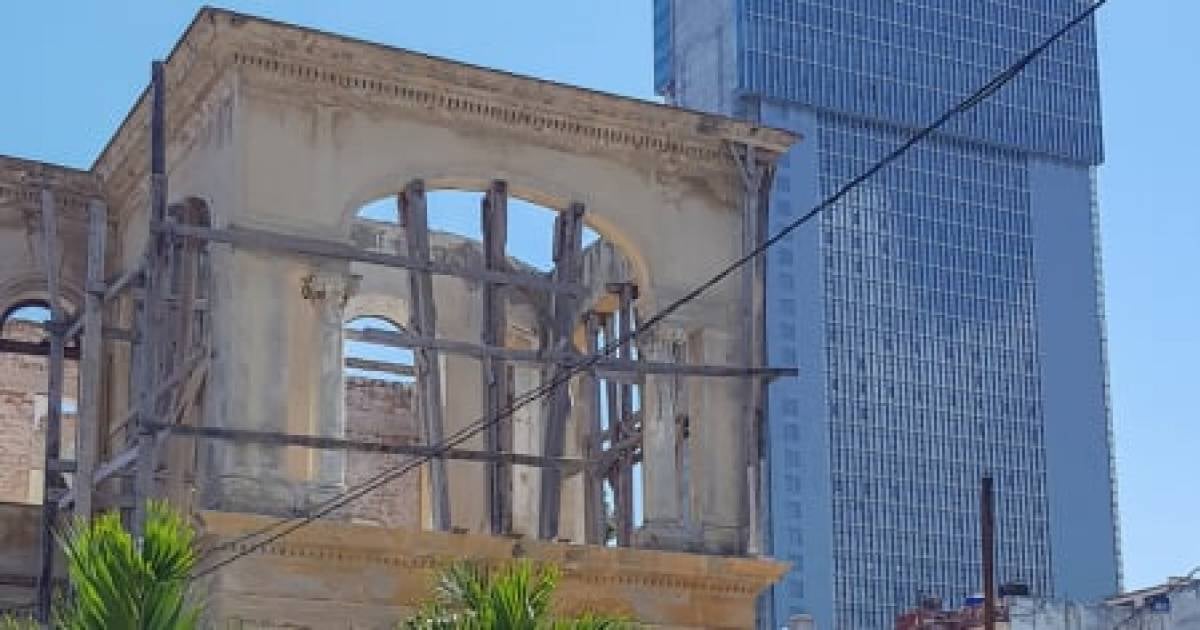
Some users recalled that, six years later, the housing crisis is more severe: thousands of families remain in shelters, living in crumbling or makeshift homes, and the solutions offered, such as container homes, are seen as undignified band-aids.
"I have always thought that it isn't logical to build so many luxury hotels while the issue of housing is becoming increasingly chaotic," commented Martha Mejías, referring to the policy of prioritizing tourist investments despite the shortage of materials for the residential sector.
Mery Muller, 68 years old, added that the problem lies in the lack of structural planning. “If they had come together from the beginning to plan thoughtfully, the extermination of everything wouldn’t have been so complete.”
The tone of the comments is almost unanimous, exhibiting total distrust towards official promises. "No one will respond to you because there isn't a single argument that addresses that," stated Nelson Soto.
"So much legislation, so much planning, but where are the results?" asked Herminia Delgado.
Others were harsher. “They lie knowing that their lies have no consequences. They know that their stay in power does not depend on the people,” wrote Ariel Pruna.
Meanwhile, Denia Riera summarized the general sentiment: "I will never understand what the souls of those people are made of who never tire of lying to us and humiliating us."
The publication also highlighted a painful comparison: the speed at which hotels are built versus the slowness or absence of housing projects.
The relationship between hotel rooms and constructed housing must yield very interesting data,” Staly Pérez quipped.
Camacho posed another question that many shared: “How many homes can be built in the East with the 70 million dollars that will be donated to the victims?”.
For many, that figure symbolizes the disconnection between the government's rhetoric and the country's real needs.
"Do not underestimate the people and explain that, as it interests us greatly. If we can understand the little tables from the UNE (National Electric Union), something similar from the Ministry of Construction, it will be a trifle for us," emphasized the announcer.
The comments thread turned into a kind of collective catharsis. Beyond the criticism of a broken promise, what emerges is the demand of a people who are calling for transparency, accountability, and respect.
According to preliminary official figures, at least 45,282 homes were affected by Hurricane Melissa, most notably in the roofs.
Cuba has a housing deficit that exceeds 800,000 homes, of which 398,364 need to be rehabilitated and 407,219 need to be built from scratch, according to official data.
For this year, the completion of 10,795 housing units was planned, but by July only 2,382 had been built, fulfilling 22% of the state plan and less than 0.3% of the total national deficit, figures that reflect the paralysis of the sector, burdened by the lack of materials, the collapse of the local industry, and poor state management.
Only in the province of Granma, more than 110,000 homes are in poor or fair condition, and about 30,000 have dirt floors, acknowledged Prime Minister Manuel Marrero at the end of September.
Weeks ago, Cuban economist Pedro Monreal analyzed that investment in “hotels, business services, and real estate” accounted for half of the total in Havana during 2023, according to official data, an excessive bet on the tourism sector despite the multisystemic crisis the country is experiencing.
The specialist emphasized that this figure is 10 times greater than that allocated for the supply of electricity, gas, and water, and more than 70 times higher than that dedicated to community services, responsible for urban maintenance and the cleaning of the city.
The project to convert shipping containers into housing for those affected by weather events is presented by the government as an “agile and comfortable alternative,” as well as a demonstration of creativity and efficiency in the midst of the crisis.
Filed under: