
Related videos:
The Secretary of Organization of the Central Committee of the Communist Party of Cuba (PCC), Roberto Morales Ojeda, celebrated on his social media the “revolutionary medicine” promoted by Fidel Castro while commemorating the 60th anniversary of the first graduation of doctors and dentists from the Revolution in the Sierra Maestra, even as the government itself acknowledges that the country is experiencing a out-of-control epidemic with thousands of cases of dengue and chikungunya and overwhelmed hospitals.
In a message on X, Morales Ojeda recalled that “60 years ago, more than 400 doctors and dentists celebrated their graduation in the Sierra Maestra alongside Fidel. Revolutionary medicine was yielding new fruits. #CubaPorLaVida”, highlighting that event as a foundational milestone of the Cuban healthcare model established after 1959.
A report from the government-aligned Canal Caribe highlighted that many students had been unable to graduate earlier because the School of Medicine was closed due to Batista's dictatorship and that, following the triumph in January, a large number of healthcare professionals left the country, which necessitated the expedited training of new doctors and dentists.
In his account, broadcast on national television, the regime historian Ventura Carballido recalls that the first graduation took place in the Sierra Maestra, "on a day like today, exactly sixty years ago," and that Fidel climbed with the graduates to the heights of the mountain.
The researcher from Holguín compiled the memories of those days in a book titled “Cuesta Arriba con Fidel,” described as a "collective memory of an unforgettable moment in the history of the homeland", in which the first health professionals trained by the Revolution symbolically ascended “to the heavens of Cuba” to receive their diplomas.
Carballido described the climb as a five-day journey "with tremendous cold," in difficult conditions: wet terrain, slippery slopes, people falling, and the need for the mountain militias to assist many doctors in reaching the top.
Some of the future doctors could not reach Pico Turquino due to injuries or being "too overweight", and Fidel himself ordered them to be picked up by helicopter to take them to the camp, ensuring that everyone could attend the graduation, which was ultimately held at Pico Cuba.
The ascent had, according to the account, a strong symbolic component. Many doctors had left the country in the early years of the Revolution, creating a void that "had to be filled quickly."
Fidel, according to Ventura, then drew a contrast between those who were "going downhill," those doctors who "left at the beginning of the revolution in search of the American paradise," and those who were "going uphill," those who stayed.
Everyone, he says, renounced the private practice of the profession and vowed to "extend rural medical services and promote preventive medicine" and dentistry throughout the country.
However, the official glorification of that epic contrasts with the current health reality that the regime itself has had to acknowledge.
In a context described as a “viral epidemic out of control,” the government acknowledges 38 municipalities with active transmission of dengue, over 21,000 cases of chikungunya, and fever outbreaks in 68 municipalities, figures that reflect a national expansion of mosquito-borne diseases.
Instead of taking responsibility for the lack of prevention and resources, the leader Miguel Díaz-Canel resorted once again to a triumphant tone.
"We are going to tackle this epidemic just as we handled COVID-19," declared during a meeting at the Palace of the Revolution, a statement that, according to a critical analysis of the text itself, "instead of inspiring confidence, produces chills" in a population that recalls the chaos, censorship, and secrecy with which the coronavirus pandemic was managed on the island.
The official report acknowledges the gravity of the problem but insists that the situation "has improved" in recent weeks, a narrative that contrasts with what they describe as overwhelmed hospitals, neighborhoods infested with mosquitoes, and families improvising treatments without medication or adequate medical care.
Instead of acknowledging the lack of systematic fumigation, the shortage of reagents, and the absence of healthcare personnel caused by the massive exodus of doctors and nurses, the government shifts the burden of the crisis onto the citizens, invoking "public indiscipline" and "community participation."
The promise to "confront the pandemic like COVID-19" is described in that analysis as almost sarcastic, recalling that that management resulted in unacknowledged deaths, collapsed hospitals, a lack of oxygen, and repression against doctors and citizens who reported the truth.
Now, it is warned, history is repeating itself "with new diseases and the same lies."
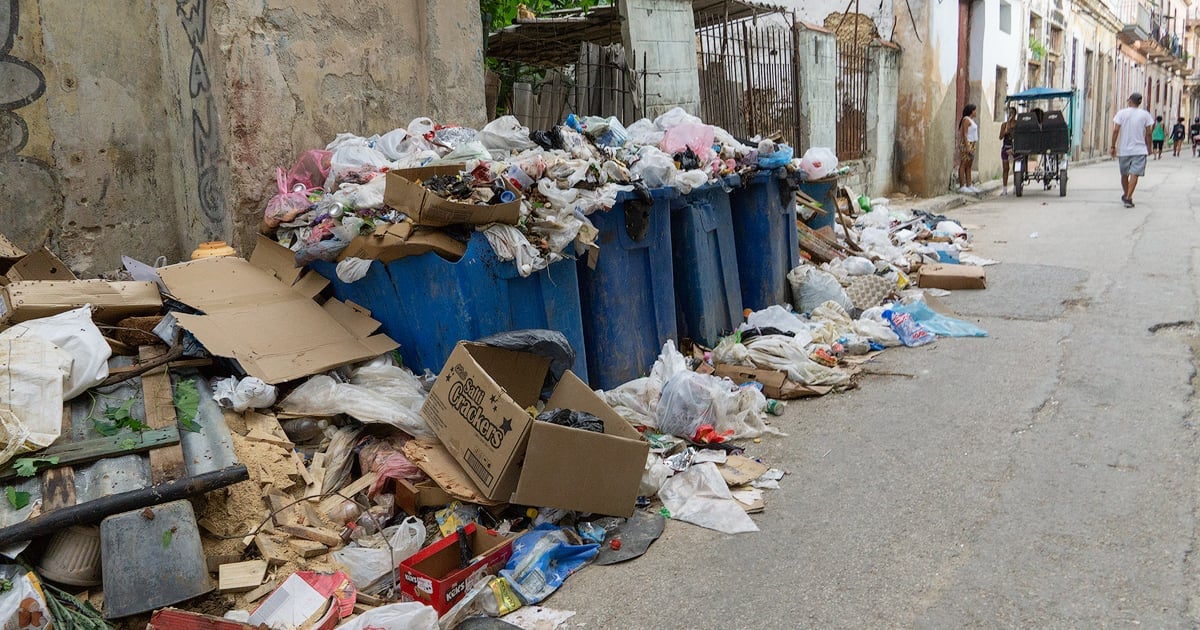
In this context, Morales Ojeda's praise for Fidel's "revolutionary medicine" and the symbolic feat of Turquino is seen as part of a narrative of self-sufficiency and historical epic, at a time when the population is experiencing firsthand the effects of a deep health crisis, marked by a lack of resources, the deterioration of the system, the overload of services, and the ever-widening gap between official propaganda and the everyday reality of health in Cuba.
Filed under: