
Related videos:
The first secretary of the Communist Party in Villa Clara, Susely Morfa, joined the official offensive against El Toque this Saturday by accusing it of being a "harmful actor" for the economy, but her post sparked a wave of mockery and comments that pointed to the PCC as the true culprit behind the economic decline.
In a post published on her account on X, Morfa shared a message titled “The Touch: From Economic Terrorism to Currency Trafficking,” in which she accuses the independent media of manipulating the economy under the “pretense” of providing informational services.
The official presented the press outlet as a threat to the stability of Cuban families.
The citizens' reaction was immediate and predominantly critical. Osvaldo commented that “the problem is not El Toque, it’s the PCC,” while he recalled that the dollar stores, salaries in pesos, and the failed Tarea Ordenamiento were government decisions.
"The touch is the mirror where the dictatorship does not want to be reflected," he wrote.
Esperanza described it as “insane” to accuse a platform of economic terrorism for publishing unofficial rates, and pointed out that true control originates from a system that “confiscates the truth” and turns scarcity into a tool of power.
Other users were more direct. "Economic terrorism was the Ordenamiento and the reordenamiento," said pim-pam-pum.
"Blaming the immediate disaster of the socialist economy is like blaming the thermometer for the patient's fever," added Arte y paz.
There were also messages in defense of the government discourse, such as that of Carlos Ismael Álvarez, who accused the media of “trafficking in currency” and acting as a “clandestine bank.”
But most of the responses were mockery or outrage: “The propaganda has driven you crazy,” wrote Gisèlle A, while another user questioned, “You still haven't answered who paid for your ticket?”
The responses to the publication highlight the increasing public rejection and the inability of the official narrative to shift the responsibility of the government of Miguel Díaz-Canel for the deepening economic crisis.
The day before, it was Díaz-Canel who directed his attacks against the media outlet, accusing it of receiving external funding to undermine the Cuban currency and acting as part of an alleged "economic war" against the country.
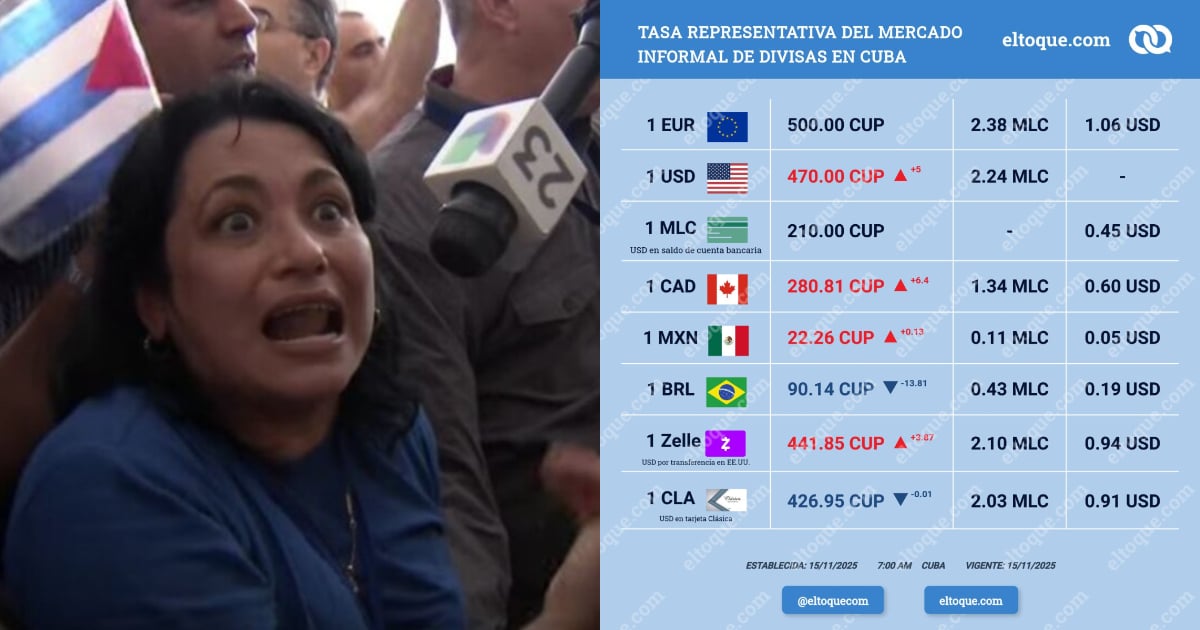
The Central Bank of Cuba (BCC) also supported these accusations in a statement where it questioned the legitimacy of the Informal Market Representative Rate (TRMi).
The escalation began on October 29, when Chancellor Bruno Rodríguez spoke about "evidence" of a supposed manipulation of the exchange rate.
Then, the official spokesperson Humberto López accused the media of being part of a "comprehensive economic warfare program" and of operating a scheme of "financial terrorism," even suggesting possible criminal proceedings and the inclusion of the project on lists of entities "linked to terrorism."
The government's accusations and its network of spokespersons stand in stark contrast to the absence of a functional currency exchange market, a gap that has caused both citizens and businesses to rely on the reference value of the informal market.
The official discourse tries to present the information from El Toque as the cause of the currency crisis, but it avoids self-criticism regarding the government's own decisions, which sell food, essential items, and appliances in stores that only accept foreign currency, while people earn salaries and pensions in a heavily devalued Cuban peso.
Filed under: