
Related videos:
Cuban health authorities will begin a clinical study with the Cuban drug Jusvinza in patients suffering from chronic sequelae of arbovirosis, primarily from chikungunya, at the Comandante Faustino Pérez Hernández University Clinical Surgical Hospital in Matanzas.
The study will alleviate the symptoms of patients, in a context marked by a national epidemic of this disease with more than 31,000 suspected cases, according to the government-aligned Canal Caribe.
According to the television report, every week hundreds of people visit the multidisciplinary consultation at the Matanzas hospital with arthritis, muscle pain, and severe limitations in movement after suffering from chikungunya.
In the material from Canal Caribe, the case of Antonio Gasmuri was mentioned, who sought help because he could no longer bear the muscle pain. At the center, he was diagnosed with bursitis in the post-acute phase of the disease.
After more than 70 days of treatment, the patient states that on the seventh day, he began to feel a significant improvement in pain and inflammation, and that he has largely regained the mobility of his arm, which he had previously been unable to lift.
The doctors at Faustino Pérez describe a clinical landscape of individuals who struggle to walk down the streets, suffering from swellings in their hands, ankles, and arthritis in their knees, seeking relief for pains that do not diminish over time.
To address this volume of patients, a tiered care system has been established, originating from the family doctor as the foundation of the Cuban healthcare model.
In the rehabilitation rooms, multidisciplinary consultations were organized, led by a physiatrist, a clinician, a family doctor trained in these cases, and a specialist in natural and traditional medicine.
These teams diagnose, recommend treatment, and re-evaluate the patient one month after the initial consultation.
In the Popular Council of España Republicana, in the municipality of Perico, the first cases of chikungunya were detected just over three months ago in the province of Matanzas.
Since then, the infection has spread to all 13 municipalities of the territory.
Specialists highlight that it is a disease with a “great polymorphism” of clinical manifestations, ranging from skin lesions and joint issues to general and neurological symptoms, which has necessitated the expansion of the study field and the proposal of collateral research based on the accumulated experience in these consultations.
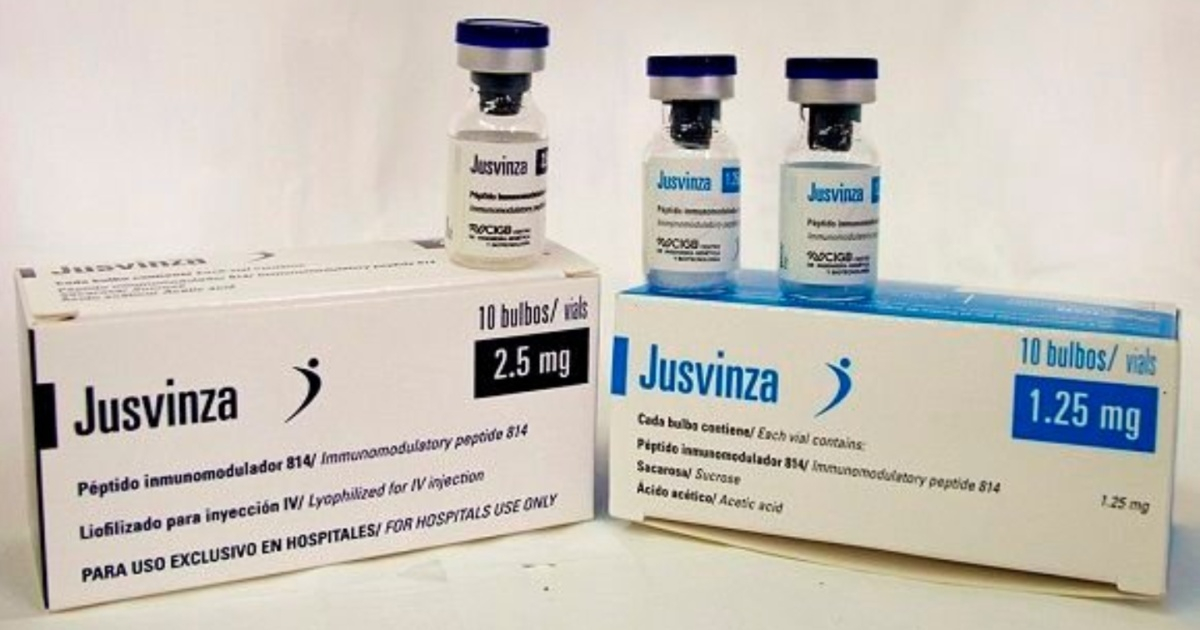
In this context, the hospital in Matanzas is preparing to begin “in the near future” aclinical study with Jusvinza involving more than 100 individuals experiencing at least three months of chronic pain and persistent arthritis following chikungunya infection.
It will not be a large-scale study: the main objective is to demonstrate the efficacy and safety of the drug for the treatment of these consequences.
Jusvinza is developed by the Center for Genetic Engineering and Biotechnology (CIGB) and is indicated for the treatment of severe and critical patients positive for COVID-19 in whom a state of hyperinflammation is suspected or identified.
It is used as part of the foundational treatment for the life support that patients in serious or critical condition receive, generally involving antivirals, antibiotics, treatments for comorbidities, thromboprophylaxis, or other specific interventions as needed.
It is composed of Immunomodulatory Peptide, Sucrose, and Glacial Acetic Acid. Jusvinza has not been used in children, so its use in pediatrics is not recommended.
The doctors at Faustino Pérez are also preparing six additional studies —seven in total— aimed at improving care for patients affected by the virus and enhancing their quality of life in the province.
Epidemiological crisis in Cuba
The essay will take place as the Ministry of Public Health acknowledges that the country is experiencing an epidemic of chikungunya, with 31,513 individuals diagnosed as suspected cases, as confirmed by the national director of Epidemiology, Dr. Francisco Durán García, on the television program Buenos Días.
The virus, transmitted by the Aedes aegypti mosquito, is currently circulating in 14 provinces, 99 municipalities, and 164 health areas, which constitutes a "sustained epidemic behavior," according to the official.
On the last day alone, 753 new suspected cases of chikungunya and 847 confirmed cases of dengue were reported, highlighting the simultaneous circulation of both viruses.
Durán specified that 5,713 patients remain hospitalized due to suspected chikungunya, of which 5,607 are at home under home surveillance and the rest are in health institutions.
In addition, 95 people are in intensive care units, of which 77 are in serious condition and 18 in critical condition. Among the seriously ill, 63 are under 18 years old, and among the critically ill, 16 are children, a statistic that highlights the impact of the epidemic on the pediatric population.
Filed under: