
Related videos:
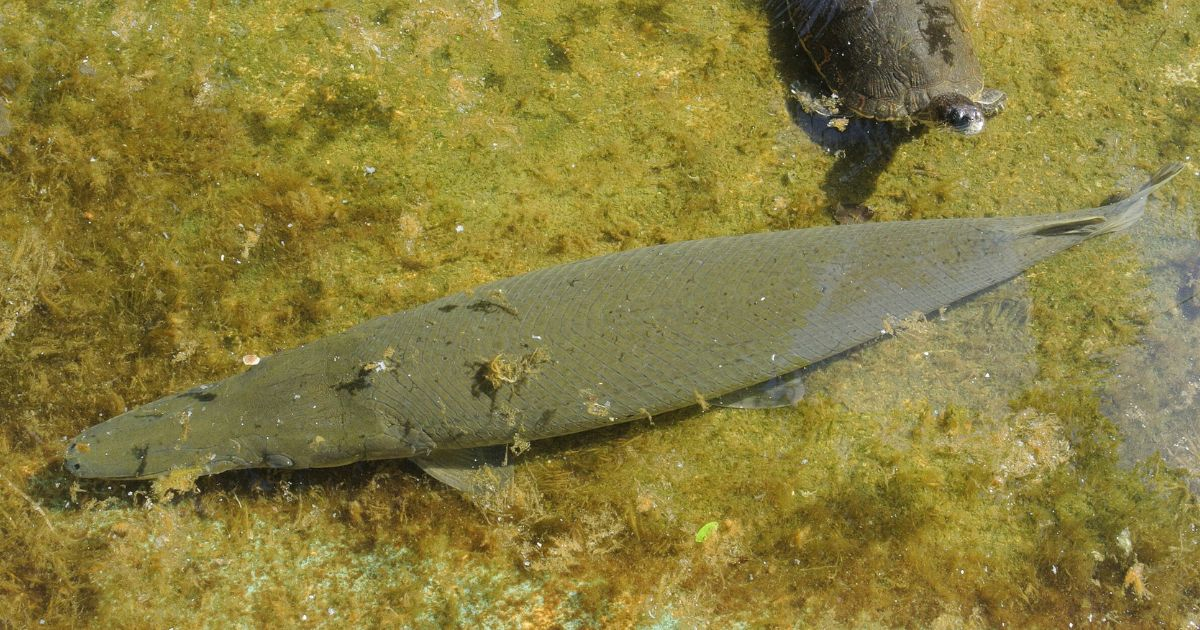
The manjuarí, a prehistoric fish considered a natural gem of Cuba, faces a serious threat of extinction in the Zapata Swamp, the largest wetland in the Caribbean.
Its lineage dates back more than 140 million years and today it survives in an increasingly fragile ecosystem.
According to a report by the agency Reuters, the species —scientifically known as Atractosteus tristoechus— has been on the Red List of the International Union for Conservation of Nature (IUCN) since 2020, classified as “critically endangered.”
The main causes of its decline are the loss of habitat, indiscriminate hunting, and the introduction in 1999 of the African catfish, an invasive species that has disrupted the ecological balance of the area.
The so-called African walking catfish (Clarias gariepinus), introduced in Cuba by government decision with the aim of promoting its breeding for consumption, has become an invasive species that is devastating the national aquatic ecosystem.
The "claria," as it is popularly known, has wiped out endemic fish and other native species, including those inhabiting rivers and underground systems, displacing the manjuarí and severely disrupting the natural balance of the Ciénaga de Zapata and other habitats in the country.
In the Zapata Swamp, a group of biologists led by Andrés Hurtado is working on a controlled breeding project for the manjuarí.
In a small breeding facility surrounded by mangroves, their team has successfully bred young specimens which are then released into the wetland with the aim of repopulating their natural habitat.
The process is complex: the fish are elusive, difficult to observe, and extremely sensitive to environmental changes.
Specialists explain that the larvae of the manjuarí, scarcely the size of a pencil, hide among the roots of the mangrove, making them difficult to monitor.
Nevertheless, researchers assure that the work is starting to yield results, as some local fishermen have begun reporting sightings of the fish in areas where it had not been recorded for years.
The project faces numerous obstacles: lack of supplies, isolation conditions, and the constant threat of predators.
However, scientists insist that the recovery of the manjuarí is not only an environmental issue but also a heritage one.
It is an endemic species, unique in the world, that has survived millions of years of geological and climatic changes.
"The manjuarí is a living fossil and a symbol of Cuban biodiversity," specialists assert, calling for greater institutional support for its preservation.
The Zapata Swamp, recognized as a Biosphere Reserve by UNESCO, remains its last refuge, but time is working against it.
Since its introduction in the late 1990s, the claria has become an ecological problem in Cuba.
This African catfish was promoted by the regime as a food alternative due to its rapid growth and resilience, but its presence has had a devastating effect on freshwater ecosystems.
The presence of the claria coincides with an increasingly noticeable degradation of the manjuarí's habitat. In Havana, two specimens of this prehistoric species were found dead in the street, highlighting the level of vulnerability that this population has reached. Although it was not clarified how they ended up there, the incident alarmed biologists and environmentalists.
The situation worsens when considering that, according to official figures, the number of endemic species of Cuban fauna in danger has increased, including the manjuarí itself.
Invasive species, habitat loss, and the lack of a coherent environmental policy are some of the causes identified in the available reports.
Filed under: