
Related videos:
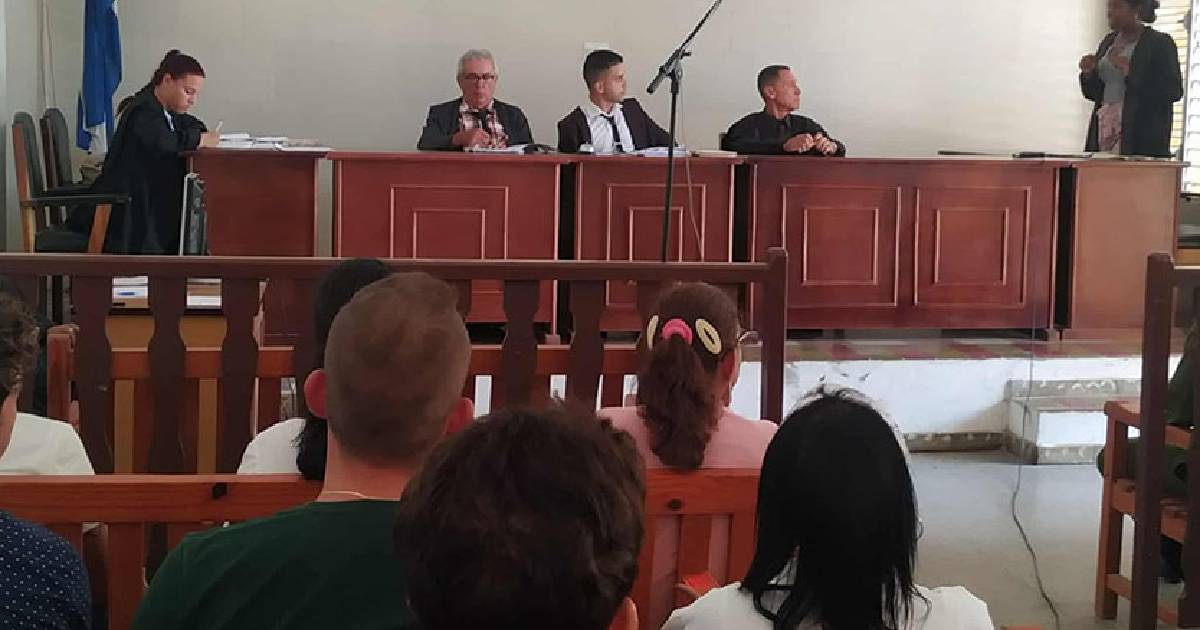
The Criminal Chamber of the Provincial People's Tribunal of Ciego de Ávila held a trial in Morón against a young man accused of carrying 206 “papers” of synthetic cannabinoid, known as “chemical”, and sentenced him to eight years of deprivation of liberty.
The hearing took place in the presence of family members, student representatives, members of political and mass organizations such as the Committees for the Defense of the Revolution and the Federation of Cuban Women, as well as delegates from sectors such as Education and Health, in what was conceived as a public act of deterrence, reported the official newspaper Invasor.
The president of the court dedicated part of the hearing to outlining the "risks and dangers" of this crime for society, before proceeding to the prosecution's case and the defense's intervention.
Despite acknowledging that the accused was only 18 years old, "practically an adolescent," the court considered the "high degree of harm" of the act and decided to impose a sentence of eight years in prison, backed by Article 18.1.3 of the Criminal Code.
The authorities presented the trial as part of the actions to combat the "harmful phenomenon of drugs" in Cuba.
Synthetic cannabinoids, popularly known as “the chemical” or “the little papers,” mimic marijuana, but are up to a hundred times more potent and have devastating effects on health.
In neighborhoods of Havana such as Centro Habana, Playa, and La Habana Vieja, police operations have resulted in dozens of arrests.
In Cienfuegos, for instance, a whole family ended up at the center of a criminal investigation, after being linked to a network selling synthentic drugs that affected around twenty young people, including several minors.
The “químico” is sold in tiny pieces of paper soaked with spray, at a low cost and easy access, making it the preferred drug for many young people amid the economic crisis.
While official alerts and exemplary penalties have increased, they have reached up to 20 years in prison for drug trafficking, the proliferation of these substances shows that the government's strategy is not sufficient.
This week, the Supreme People's Court of Cuba issued a serious warning regarding the rise in the consumption and trafficking of synthetic drugs on the island, especially in Havana, and approved a ruling that tightens the penal sanctions for those who possess or distribute these highly toxic substances.
It will no longer be necessary for a defendant to possess a pound of drugs to face charges for "relatively large quantities," which expands the scope of conviction and reinforces the policy of exemplary punishment instead of more proportional alternatives.
The Supreme People's Court specified that for synthetic cannabinoids, it will be sufficient to present toxicological and forensic expertise that demonstrates the high toxicity of the substance, the number of doses that could be derived from the confiscated material, and the alleged potential harm to public health.
From now on, even with small amounts, the classification of "illegal possession" will be processed under Article 236, section a) of the Penal Code, with penalties ranging from one to three years of imprisonment or fines of up to one thousand quotas, similar to those for drugs like cocaine.
Frequently Asked Questions about the Sentencing of Young People for Drug Offenses in Cuba
Why was a young man in Ciego de Ávila sentenced to eight years?
The young man was sentenced to eight years in prison for carrying 206 "paper slips" of synthetic cannabinoid, known as "chemical". The court considered the high harmfulness of the act and imposed a punitive sentence based on the Cuban Penal Code.
What are synthetic cannabinoids and why are they dangerous?
Synthetic cannabinoids, known as "the chemical," are substances that mimic marijuana but can be up to a hundred times more potent. They can cause devastating health effects, such as seizures, psychosis, and even death. Their easy availability and low cost have made them a popular drug among young people in Cuba.
How is the Cuban government responding to the problem of synthetic drugs?
The Cuban government has chosen to tighten sanctions and impose "exemplary trials" against the trafficking and consumption of synthetic drugs. However, these punitive measures have not been accompanied by effective preventive strategies, which has led to an increase in consumption and trafficking, especially among young people.
What criticisms have been made of the government’s drug strategy in Cuba?
The strategy of the Cuban government has been criticized for focusing on harsh punishments without addressing the underlying causes of the problem. Poverty, unemployment, and the lack of economic alternatives are factors that contribute to the rise of drug trafficking, but comprehensive policies that tackle these fundamental issues have not been implemented.
Filed under: