
Related videos:
In Cuba today, there is not a single, coherent bloc in power, but rather a triangle of authority that monitors, competes with, and obstructs each other while sharing a common obsession: to control the state, the currency, and society, while maintaining at all costs the primacy of the socialist state enterprise and the monopoly over the dollars entering the country.
The opening to the private sector, the promises to "regulate" the currency market or to "modernize" the economy, function more as tactical maneuvers than as a paradigm shift in that context: necessary illusions to buy time amid the collapse, without giving up on the dream of returning to a system of foreign currency stores and remittances channeled exclusively through state and military conglomerates.
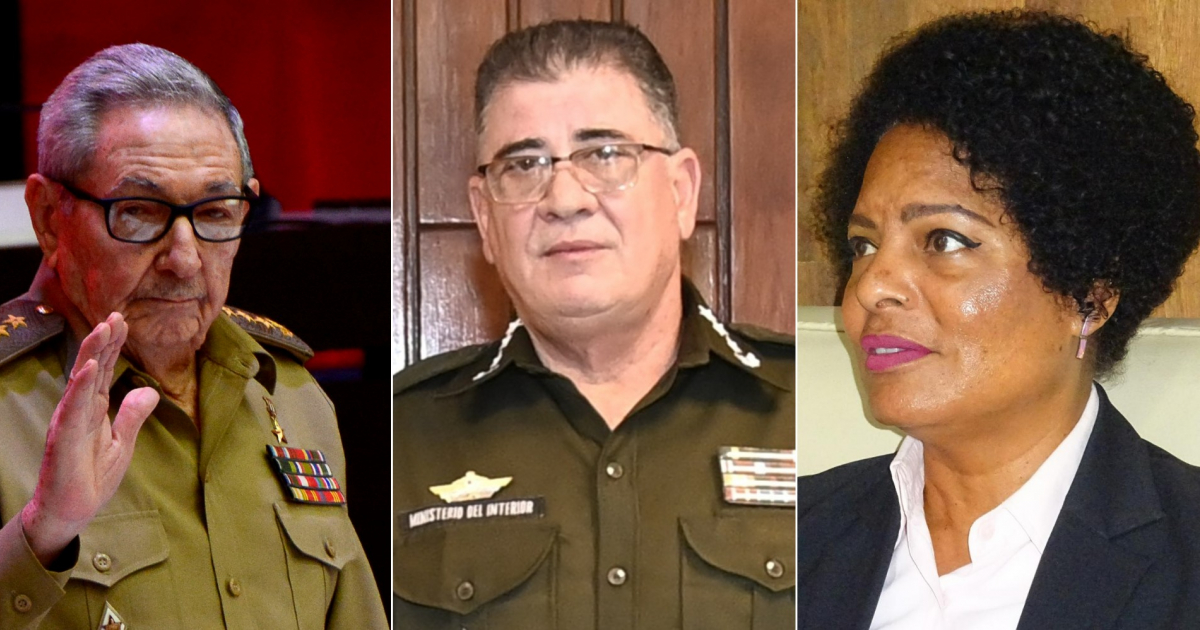
The first vertex of this triangle is the political-military elite centered around the GAESA business conglomerate, which controls the Armed Forces, tourism, foreign trade, foreign currency banking, and a significant portion of official remittances. This bloc does not govern with economic efficiency or citizen well-being in mind, but rather ensures that no dollar circulates without passing through its channels, which explains the offensive against networks of “financiers” in exile and parallel remittance schemes that, according to official data, already handle the vast majority of the money not coming through FINCIMEX or other state entities. The result is a system where the elite has lost much of its effective control over remittances, but instead of adapting, it seeks to reabsorb them through decrees, media campaigns, and police operations.
The second block is the technocratic-economic apparatus: Central Bank, ministries, and government economists who acknowledge the disaster, talk about an exchange market that “does not work” and promise to “regain control of the dollar” with new “flexible” or “more realistic” exchange mechanisms. They are the ones who explain on official programs and platforms why inflation is skyrocketing, why the peso is collapsing, and why the economy is de facto dollarized, but they never question the dogma that the state enterprise must remain central nor the dominance of GAESA over the foreign currency economy. Their margin for maneuvering is minimal: they propose to “enter the game” of the informal currency market to attract remittances and give oxygen to small and medium-sized enterprises (mipymes), while another power vertex literally criminalizes many of the actors who support that real market.
The third vertex is the repressive apparatus: Ministry of the Interior, State Security, prosecutor's office, and courts, transformed into the economic arm of repression through investigations for "illegal currency trafficking," "foreign financiers," and alternative remittance networks operating between Miami and various provinces in Cuba. The files clearly show how those who obtain dollars outside the island and convert them into pesos within Cuba are criminalized, supplying SMEs with goods imported through non-state channels or paying suppliers using parallel payment and import channels, precisely because the official banking system is incapable of doing so efficiently and with liquidity. This apparatus is not designed to resolve the crisis but to punish any economic circuit that escapes the direct control of the State-GAESA, even though the daily survival of millions of Cubans depends on that circuit.
The three poles converge in two essential points: everyone wants to maintain political power without controls, and everyone considers private enterprise a “necessary evil” that, at best, should exist subordinate to the State, and at worst, can become an enemy if it gains too much autonomy.
Hence the dual narrative: facilities are announced for small and medium enterprises, investments, and wholesale markets, while the informal currency market is pursued with zeal, entrepreneurs working with financiers are prosecuted, and the foreign currency stores controlled by GAESA are reinforced, with the aim of recentralizing remittances and consumption as in previous phases of "top-down dollarization." Private enterprise is tolerated because there is no other source of internal supply, but it is constantly reminded that it operates in borrowed and revocable territory.
The lack of a common policy among the three blocs exacerbates the disaster. The political-military elite needs foreign currency and some private activity, but it obstructs any mechanism that diminishes its control; the technocrats speak of “more realistic” exchange markets while the repressive apparatus dismantles those who make them possible; and the population is trapped between devalued pesos, unreachable dollars, and an increasinglyaggressive financial repression.
The consequences of this new witch hunt will not erupt in December: December is already “bought” because the small and medium enterprises stocked up for the year-end campaign. The real damage will come later. The interventions by the MININT in the irregular currency market have caused many small and medium enterprises to reduce or be forced to reduce food imports for the coming year. This will be noticeable in the first months of 2026, when the small markets and bodegas that currently support the vast majority of the supply start to empty.
The blow will arrive there: less food, less variety, higher prices, and more desperation. And as long as those in power in Cuba continue fighting for control and dollars, acting without a common direction and without real economic and political openness, the country won’t emerge from the hole: it remains trapped in a permanent crisis, increasingly profound.
Filed under:
Opinion piece: Las declaraciones y opiniones expresadas en este artículo son de exclusiva responsabilidad de su autor y no representan necesariamente el punto de vista de CiberCuba.