
Related videos:
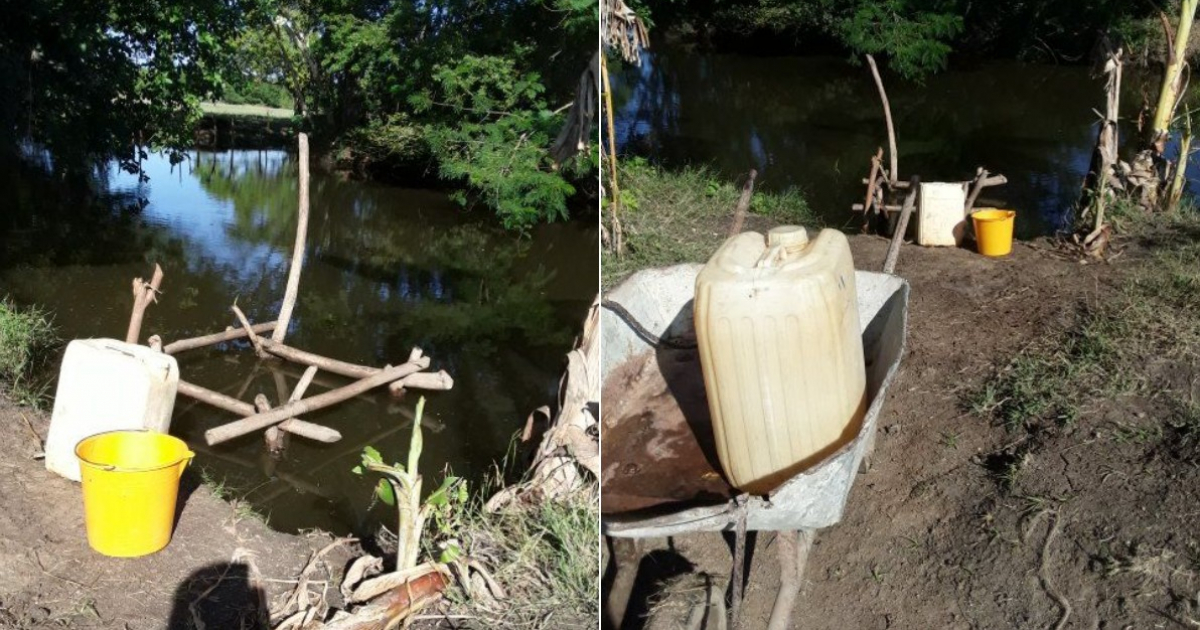
Desperation is growing in the Granma municipality of Río Cauto, where residents—including the elderly and the sick—have been without access to drinking water for over a month, forced to walk to the contaminated Cauto River or even a lagoon to obtain the minimal amount of water needed for survival.
The situation, which was already critical before the passage of hurricane Melissa, has become unsustainable due to institutional neglect and the lack of real solutions from the local government.
The resident Aricel Céspedes, in the Facebook group "Revolico Río Cauto," warned that in the town of Cauto del Paso the daily scene remains unchanged: elderly people carrying containers from the river, which has water "that cannot be consumed," while others, further away, have to resort to a lagoon that is equally unhealthy.
"Why has it become so inaccessible to carry a pipe with drinking water? It is unacceptable that this is happening and that no solution is being provided," Céspedes questioned the authorities.
In another message, the neighbor recalled that the crisis did not start with Melissa.
The turbine supplying the village has been broken for over a year, and the municipal authorities have not taken any steps to arrange its repair.
That abandonment became dramatic after the flooding caused by the hurricane, which completely contaminated the river and made it nearly impossible to obtain safe drinking water.
"After so much water, now we have to die of thirst," Céspedes protested, who also raised concerns about disabled and sick neighbors who cannot reach the river.
Meanwhile, the municipal authorities—according to testimonies—would have prioritized other areas, leaving entire communities in an extreme situation that particularly affects the most vulnerable.
The lack of oversight, responses, and effective management exposes residents to serious health risks in a municipality where the water crisis has a long history.
One month after Hurricane Melissa, the emergency continues
Despite the time that has passed since Hurricane Melissa, recovery in Río Cauto remains virtually stalled.
The floods destroyed homes, infrastructure, and wells, but the population claims that the government has acted slowly and without transparency, leaving entire communities behind.
Residents describe a total sense of abandonment: months with a broken turbine, weeks without potable water distribution, and no public plan explaining when or how the service will be restored.
Official announcements that deepened the frustration
In November, amidst a humanitarian disaster, local authorities reported that the “natural” water intended for the victims would be sold for 40 pesos per household.
The measure was presented as a "symbolic" charge to cover "logistical costs," but it provoked outrage among those affected, who found it absurd to pay for a basic resource in the midst of an emergency.
The message was disseminated by José Manuel Rodríguez Valdivia, a municipal official, who also published the communication that the mattresses given to the affected individuals would also not be donations.
The State – it was said then – "subsidizes, but does not give away," requiring partial payments except in cases of social assistance.
Río Cauto was one of the areas most affected by Melissa, with massive flooding and severe losses.
However, government measures have been insufficient, partial, and, for many, insensitive to the level of devastation.
An abandoned community amidst mud and thirst
The testimonies paint a painful picture: families unable to access drinking water, the elderly exposed to accidents along the riverbanks, sick individuals without assistance, and a government unable to guarantee a basic resource even more than a month after the cyclone.
Meanwhile, the call from the neighbors is clear and urgent:
"SOS: Drinking water for Cauto del Paso and for everyone who needs it."
Filed under: