
Related videos:
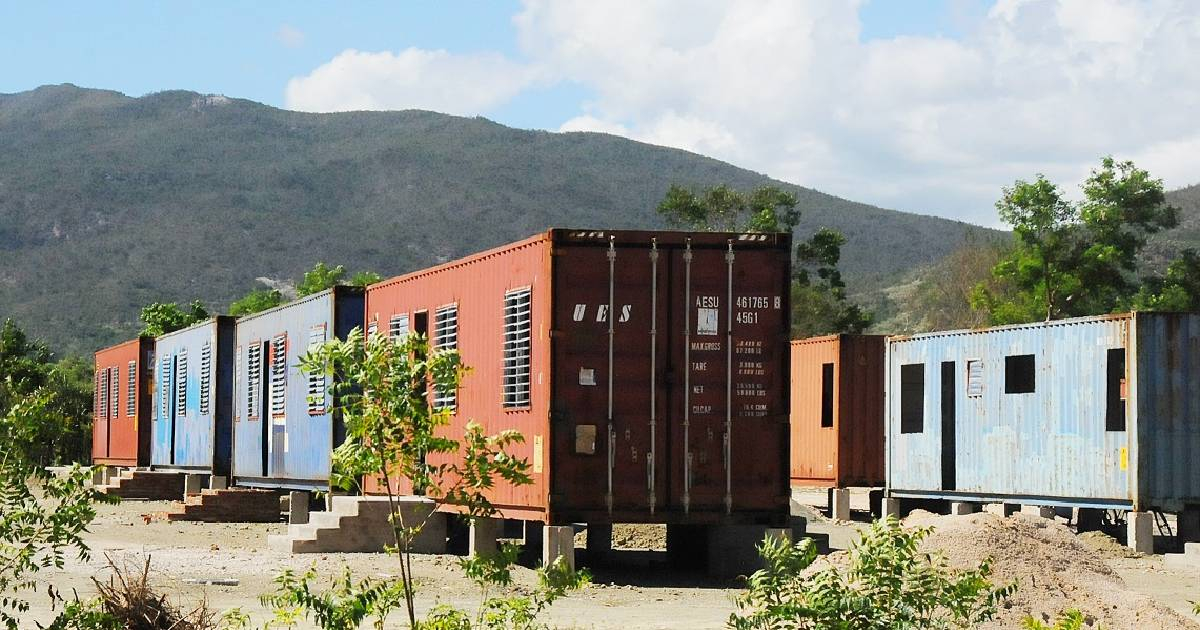
The conversion of containers into permanent housing is progressing in Guantánamo as a response to the damages caused by Óscar and Melissa. However, far from being a broad or free solution, it involves debt, reduced living space, and expectations adjusted to scarcity.
In the municipality of San Antonio del Sur, the Buena Vista settlement is presented as a pilot experience within the local development strategy through 2030.
There stand the first 15 homes built from metal containers, intended for families who lost everything after the passage of Hurricane Óscar (2024) and, more recently, Melissa, reported the official newspaper Venceremos.
Yaimara Jiménez de Castro Londres is one of the beneficiaries. A mother of two, she is renting a place in Guantánamo while she waits for the delivery of a house that will replace the wooden home destroyed by the cyclone.
Although the proposal is accepted with gratitude, her mother acknowledges that the new home will be smaller than the previous one and that the relief does not eliminate the financial sacrifice of having to pay rent for several months.
“We are very pleased with this proposal because the worst thing is to have nothing, and although the country is going through difficult times, it makes this effort for us, which we appreciate. Moreover, it’s not easy to live in a rental, even if it’s just 2,000 pesos. The new house will be a radical change, as the old one was made of wood, and although the container is smaller, at least it looks safe and comfortable. We hope everything is resolved as soon as possible,” said Mariela Londres Díaz, mother of Yaimara.
The pattern is repeated in other families. Virgen Guibert Ortiz and her mother Lina Ortiz-Mezón, affected by landslides and flooding, acknowledge that six people will have to adjust to a confined space.
"We are six, and the truth is we will be cramped there, but we will see what happens; right now our greatest need is to have a roof and a place to call home," Guibert mentioned.
The urgency of having a place of your own weighs more than the limitations of space or comfort, a logic that turns necessity into a sufficient argument to legitimize the solution.
Local authorities acknowledge that the project is not inexpensive. Adapting the containers requires electrical and hydraulic supplies, carpentry, furniture, and urban development, all in a context of widespread scarcity.
Nevertheless, the housing will not be free; rather, they "will be provided under the replacement system and beneficiaries will pay in installments, with subsidized prices, as established by state housing policy," the media outlet emphasized, without specifying the total cost.
From the Municipal Housing Director the initiative is defended as a “quick and resilient” alternative, carried out with the participation of multiple companies and brigades from various municipalities.
The schedule includes the initial delivery of 15 homes, with possibilities for future expansion of the settlement. However, this expansion is only a promise conditioned on resources that are not currently guaranteed.
The Buenavista project highlights a constant aspect of housing management in Cuba: emergency solutions that are presented as innovative, but that shift the burden of precariousness onto the affected families.
Neither free nor spacious, container houses provide basic security against weather events, but they also normalize the lowering of housing standards as an inevitable cost of surviving the crisis.
The Cuban government is promoting the conversion of shipping containers into homes due to the housing crisis the country is facing.
The shortage of building materials and the deficit of over 800,000 homes have prompted the regime to seek alternative solutions. However, this measure has been criticized for its lack of preparation and inadequate structural planning.
The main criticisms focus on the lack of thermal insulation and adequate ventilation in the containers. In Cuba's hot climate, these structures can turn into "solar ovens," making the homes uninhabitable. Furthermore, the absence of proper infrastructure and insecurity regarding climatic events have led to rejection among the population.
Filed under: